










A great movie and a great product will both lead to the same outcome: a sequel.
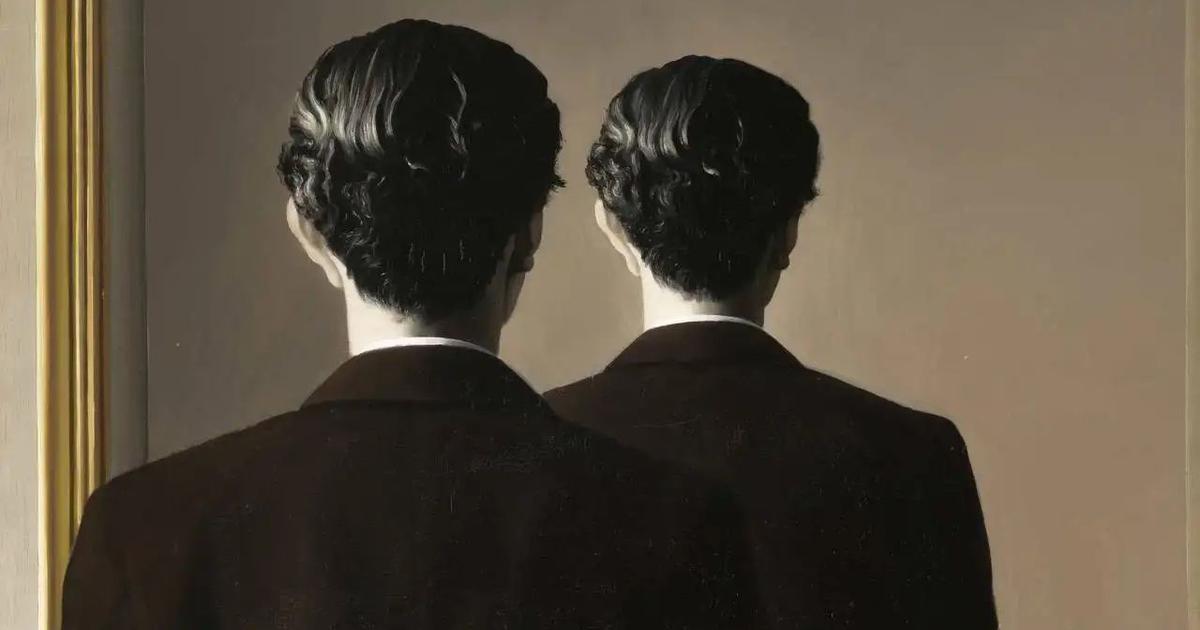
In the Mirror Technique, we consider an existing product for a user and create its mirror image for another user. Let us start with an example.
Parents are often concerned about their kids’ nutrition. They try to provide foods rich in protein. Whatever it takes to put an ounce of health into their ungainly progeny, they’re game. But what about adults?
They’re so busy feeding kids that they hardly have time to take care of their own health. Can we make a similar product for adults who also need plenty of protein? Aprotein-rich namkeen? A protein-rich tea? Anything that puts an ounce of health into our ungainly progenitors – we’re game.
What did we do here? We started with a known or popular product. We looked at the user. We found another type of user who has a similar need. And we created a mirror of the same product. Take a moment and look around you. Almost every product that you see around you can have a mirror product.
In fact, almost every product will have a mirror product. A simple water bottle will have many mirror products: a small water bottle for babies, an unbreakable one for gym enthusiasts and a steel water bottle for those who enjoy hearing crashing noises from the kitchen in the middle of the night.
There are tons of digital products we use that began as mirror products. Do you have LinkedIn open in a tab on your laptop or computer? LinkedIn was started by Reid Hoffman as a mirror product of popular social networking websites for professionals and job seekers. And thanks to him, our professional and personal lives could be separated even in this big, bad digital world.
When we try to copy a product for another user, it has to work for that user. And it can never be an exact mirror reflection, because the new user would use the mirror product in a different way. They would discover it in a different way, use it in a different way and, when angry, throw it on the floor in a different way.
Sanchit lived with his grandparents. He used the family car for his own commute to work. But often, his family needed to commute by themselves. His grandfather had to go out to a hospital for injections, or to buy something for his flourishing garden, his preferred child. And that was always a challenge, because it was not always easy to find an auto rickshaw or taxi.
Sanchit tried to help. He would try to use his Uber app to book a ride for his grandfather. But that was difficult too, because Sanchit was not always able to take out the time, and that his grandfather did not want to trouble him. Sanchit tried to teach his grandfather to use Uber on his own phone, but it turned out to be a hassle. His grandfather, understandably, found it difficult to navigate the app, understand how to select addresses, cab options or payment options. And how do you explain to a grandad that someone cancelled on him?
Sanchit thought long and hard about this problem. Isn’t there a solution similar to Uber, one my grandfather could use to get a quick cab anytime he wanted to?
Sanchit decided that he could try building something on his own.
He asked himself a series of questions to try and create a mirror product:
I find it easy to open the taxi app and put in the source and destination. What would my grandfather find easy to do?
I find it easy to select a cab option. How would my grandfather find that part easy?
I find it easy to track my cab. How would my grandfather do it?
I find it easy to verify myself with the driver by giving an OTP. How would my grandfather do it?
Sanchit spoke to his grandfather and many other elders about this problem. Everyone gave their suggestions, but something that struck him was that operating any kind of app for them was not easy for them. They’re just not used to it. But something they’re used to is talking to people on the phone.
So Sanchit started building his answers on the basis of this insight, and decided to build a Voice AI Taxi Service.
My grandfather would find it easy to call a number and tell his source and destination.
My grandfather should choose from two cab options, not more. (He would pick the cheaper option, because it’s him.)
My grandfather just needs a reminder two minutes before the cab is set to arrive.
To verify himself to the driver, my grandfather can give an identification number that is easy to remember
To test this idea, he posed as a taxi operator. He asked his grandfather to call him and tell him about a typical trip and what he needed. It worked well. He tried it with a few more people, and it worked well enough.
But Sanchit observed something. Even if the destination was clear, his grandfather did not always spell out the address correctly. And in every call, he was always concerned about the pricing of every trip. Even in a simulation exercise, his grandfather negotiated as if his inheritance was on the line.
So Sanchit came up with a solution for both problems. He decided that most frequented destinations should have a tag, a predetermined label. The label could be stated as on-call, and then a simple algorithm would convert the label into a destination. These labels would have to be recorded before the trips, and then one could make as many trips as one wanted by simply stating the two-word label of that destination. For a new destination, the address would have to be given, and the label they would like to give for it.
For payment, he decided to standardise prices. A fixed price for every 5 kms. Now you didn’t need to negotiate the pricing; you just needed to accept it. Sanchit found that a monthly prepayment was a good way to go.
And so, Sanchit came up with an On-Call Cab Service.
Excerpted with permission from One Insane Idea: Fifteen Ideation Techniques to Spark Breakthrough Business Ideas, Apoorv Singhal, Penguin India.
