




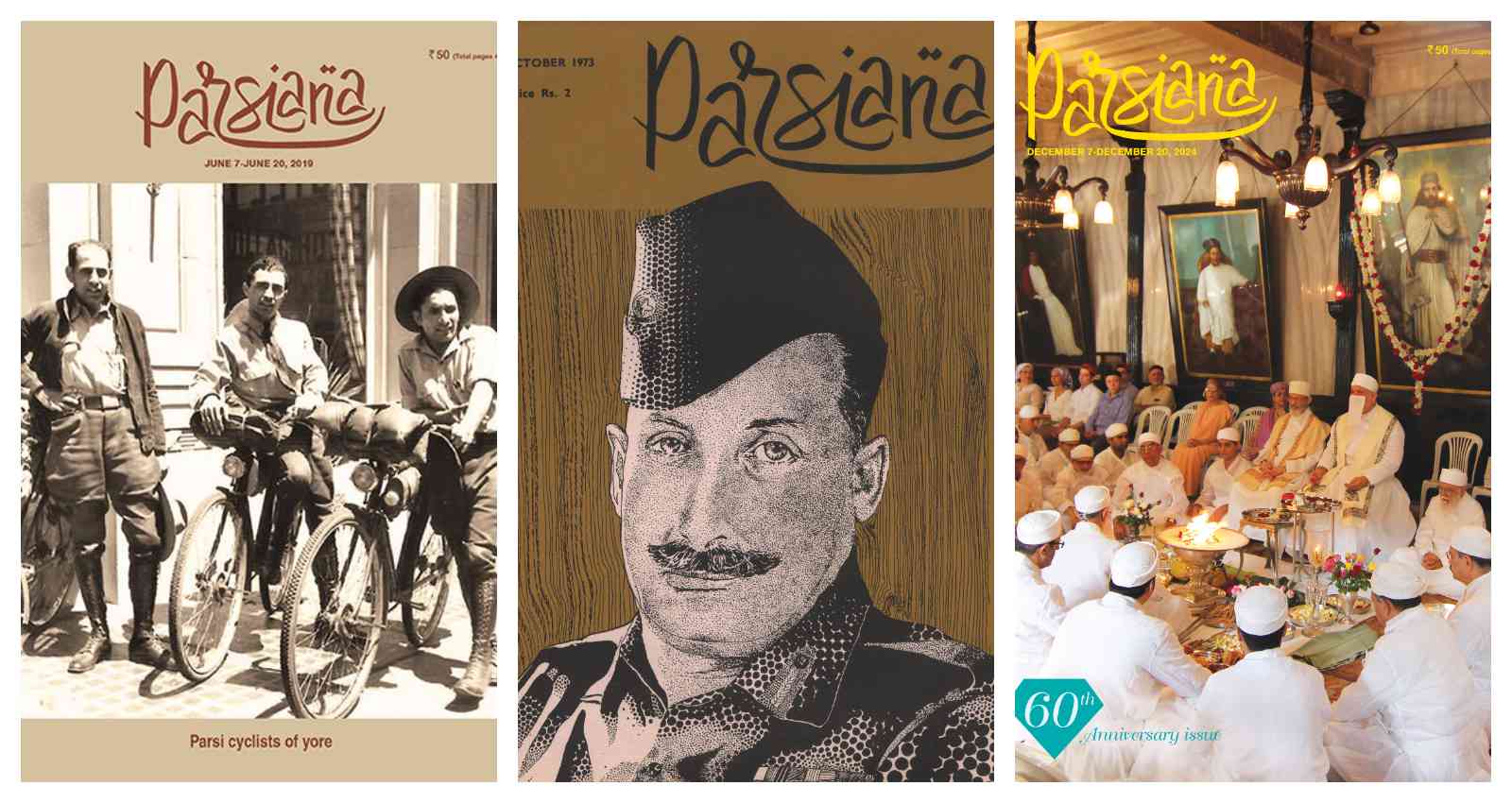
The final edition of Parsiana has rolled off the presses.
Established in 1964, the semi-monthly magazine was a vital institution for the shrinking tribe of Parsis and Zoroastrians around the world. Its pages chronicled the stories, achievements, and roiling disputes of a lakh-strong diaspora which made its mark from Mumbai to Manhattan, from Navsari to New Zealand.
Although Parsiana catered to the community, it also transcended its boundaries. Within the community’s confines, after all, were debates that mirrored national ones: democracy and fundamental rights, inclusion and exclusion, freedom of speech, and economic and social welfare. Never shying away from controversies, Parsiana captured these debates with an eye on the bigger picture.
In that sense, the magazine continued a much longer tradition of public-mindedness in Parsi journalism, one honed in Bombay during the nineteenth and early twentieth centuries. But Parsiana’s unique style and perspectives were also very much the products of its longtime editor, Jehangir Patel. In Patel’s life and journalistic career, as well as in the publication he edited, one can trace stories of larger social and political transformations in India since Independence.
Patel was born in August 1945 – not in the Parsi stronghold of Bombay but in Kashmir. He belonged to a family which had travel and migration in its veins. His maternal great-grandfather, Hormusjee C Dinshaw, head of the Adenwalla family, was known as the “maker of modern Aden”, a man who presided over a mercantile empire which spanned the Arabian Sea. Patel’s father, meanwhile, was from Bharuch but had relocated to Srinagar to seek prospects in the leather trade.
After a few months in Kashmir, the family left for Karachi. They then brought their newborn son on a navy boat destined for Manila, where Jehangir’s paternal grandfather had received a contract to supply cattle to the Philippines government. The family later pulled up roots in Bombay to decamp for London.
Even though the family returned to Bombay after two years, Patel’s maternal grandfather urged him to continue the Adenwalla family’s peripatetic tradition. In 1964, Patel left India to begin an undergraduate education at Yale University. He arrived in the United States a year before the landmark Hart-Celler Act, which opened the floodgates to immigration from places like India. His trajectory, however, was very much set by the policy consensus of the Nehruvian years. He took up engineering since, in foreign-exchange-starved India, this was one of the few disciplines for which the Reserve Bank of India would supply precious dollars.
“But my interest lay more in the humanities,” Patel recounts. Fortunately, college administrators objected to the idea of a government determining a student’s course of study and provided Patel with a scholarship to cover tuition. He switched to political science.
After his freshman year, Patel and his brother found work at the 1964-’65 World’s Fair in New York: specifically, at a steakhouse at the fair’s Caribbean Pavillion. “One possible reason that we got the job is that we looked like Latinos rather than gringos,” said Patel. The brothers helped operate a conveyor belt that ferried thousands of plates of steaks, salads, and pies to hungry customers. For their work, they were paid minimum wage, minus the cost of a steak for dinner at the end of their shift.
A few years later, having just graduated from Yale, Patel worked at another restaurant near Lake Tahoe in California. This was operated by a Parsi-Punjabi couple and catered to followers of Maharishi Mahesh Yogi, guru to The Beatles.
While the restaurant gig did not work out, it helped Patel land his first job in journalism: an editorial position at the San Francisco Examiner, part of the first-ever minority recruitment programme operated by a mainstream American paper. He then secured a position with the Hartford Times in Connecticut, where he covered labour issues.
From a student in Connecticut, to a waiter in Squaw Valley, to buying Parsiana for 1 rupee, here is my father, Jehangir Patel's journey. https://t.co/ITvVoDqkl6 pic.twitter.com/MioOwz0Wdt
— MISS BOMBAYWALLA (@siminpatel) November 15, 2023
Patel’s grandfather had urged him to go abroad; now, his mother pleaded for him to return home. In the early 1970s, back in Bombay, Patel got to know Minoo Masani, formerly the leader of the pro-free-market Swatantra Party, which had just imploded. Masani recruited Patel to help out with Freedom First, a magazine that continued Swatantra’s crusade against the statist policies of Indira Gandhi’s government.
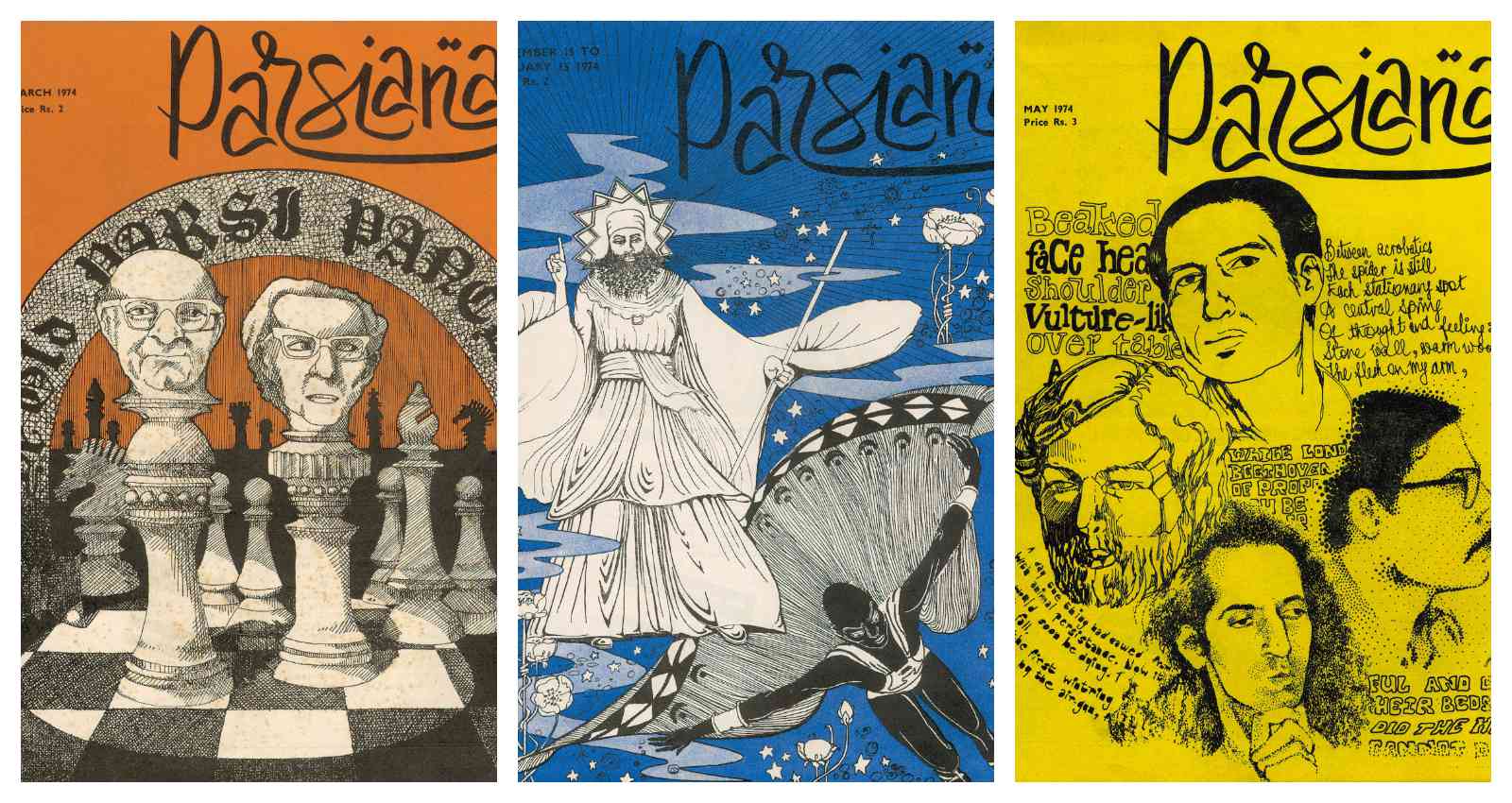
Freedom First was just one of the many publications where Patel left an imprint. It was during this time that he became acquainted with Parsiana. Then run by a relative, Pestonji Warden, Parsiana carried scholarly pieces on Zoroastrianism and the occasional translation of a religious text. Patel took over the magazine from Warden and gave it a radical reorientation. His first cover story was on rising rates of divorce amongst Parsis. In an editorial, Patel mentioned that the magazine’s well-wishers advised him to avoid controversial matters. “But a controversy is a symptom of a greater malady and to ignore it is to fail in our journalistic duty,” he wrote.
And then there was Opinion. This was a feisty journal run by AD Gorwala, a respected former civil servant and an adamant critic of Jawaharlal Nehru and Indira Gandhi. Patel, who had met Gorwala through Masani, was working for Opinion when Gandhi declared the Emergency in 1975, ordering the rigorous censorship of publications.
Gorwala refused to kowtow to censors. After Opinion’s printing press was pressured against publishing further numbers, Patel helped Gorwala take the journal underground. He found an Irani Zoroastrian on Medows Street in Fort who offered to cyclostyle editions. Patel then placed the magazines in large envelopes to evade postal detection.
On two occasions, he was hauled up before the magistrate’s court for violating censorship laws. Patel remembers becoming worried about others he was placing at risk: under the Maintenance of Internal Security Act or MISA, police could detain anyone they suspected. He fretted over the fate of the Irani Zoroastrian who had cyclostyled Opinion and also about one of his employees at Parsiana, Veera Parbhu, who had helped cut stencils for the now-contraband journal.
His worries intensified after a prosecutor began a vigorous investigation and questioned about where and how Opinion was still being produced. Fortunately, the presiding magistrate dismissed the prosecutor’s line of questioning. Patel married Parbhu in 1981.
As a small publication, Parsiana was able to elude Gandhi’s censors. While mainstream papers hewed to the government line or published blank editorials, Patel used satire to speak out against the Emergency. Responding to one Parsi correspondent who urged community members to support Gandhi’s policies, he announced in an editorial in early 1976 that Parsiana staff had begun “a collective reading of the PM’s 20-Point programme followed by a communal singing of ‘India is Indira’”.
Possibly alluding to the contemporaneous Cultural Revolution in Mao’s China, Patel quipped that staff members now held self-criticism sessions and quoted “a few passages from the writings of contemporary Congress ministers”.
Remarkably, as Patel recalled nearly 50 years later, he did not get in trouble for publishing the piece. In early 1977, after Gandhi restored democracy, he described the Emergency as “independent India’s darkest chapter”. Patel also condemned the Bombay Parsi Punchayet, the community’s apex body, for cozying up to Congress Party leaders during the authoritarian interregnum: “At a time when freedom of expression and the right to life itself was denied, should the seven trustees have jeopardized the community’s interests by siding with a morally bankrupt dictatorship?”
Apart from the Emergency, the 1970s was a time of strict austerity. Parsiana was printed by letterpress, galley proofs were assembled by hand, and contributors were requested to mail in their own photographs for their articles. Zinc and paper were in short supply – and paper had to be sourced on the black market. Staff only availed of computers years later, once models were produced that did not require air-conditioning. Nevertheless, staff numbers increased as Patel took on new publications, such as a magazine for Diner’s Club, and as Parsiana’s print run climbed to 3,000.
One of the magazine’s hallmarks was its ability to attract talent from beyond the Parsi community. It hired an up-and-coming artist, Manjula Padmanabhan, who sketched cartoons of community life. Padmanabhan’s sister, Geeta Doctor, joined as a writer (years later, Doctor’s son, the food writer Vikram Doctor, contributed his own pieces to Parsiana). Mario Miranda drew cover art, such as a scene of a gahambar (community feast) where, in true Parsi style, all eyes were anxiously trained on a man ferrying food to the table.
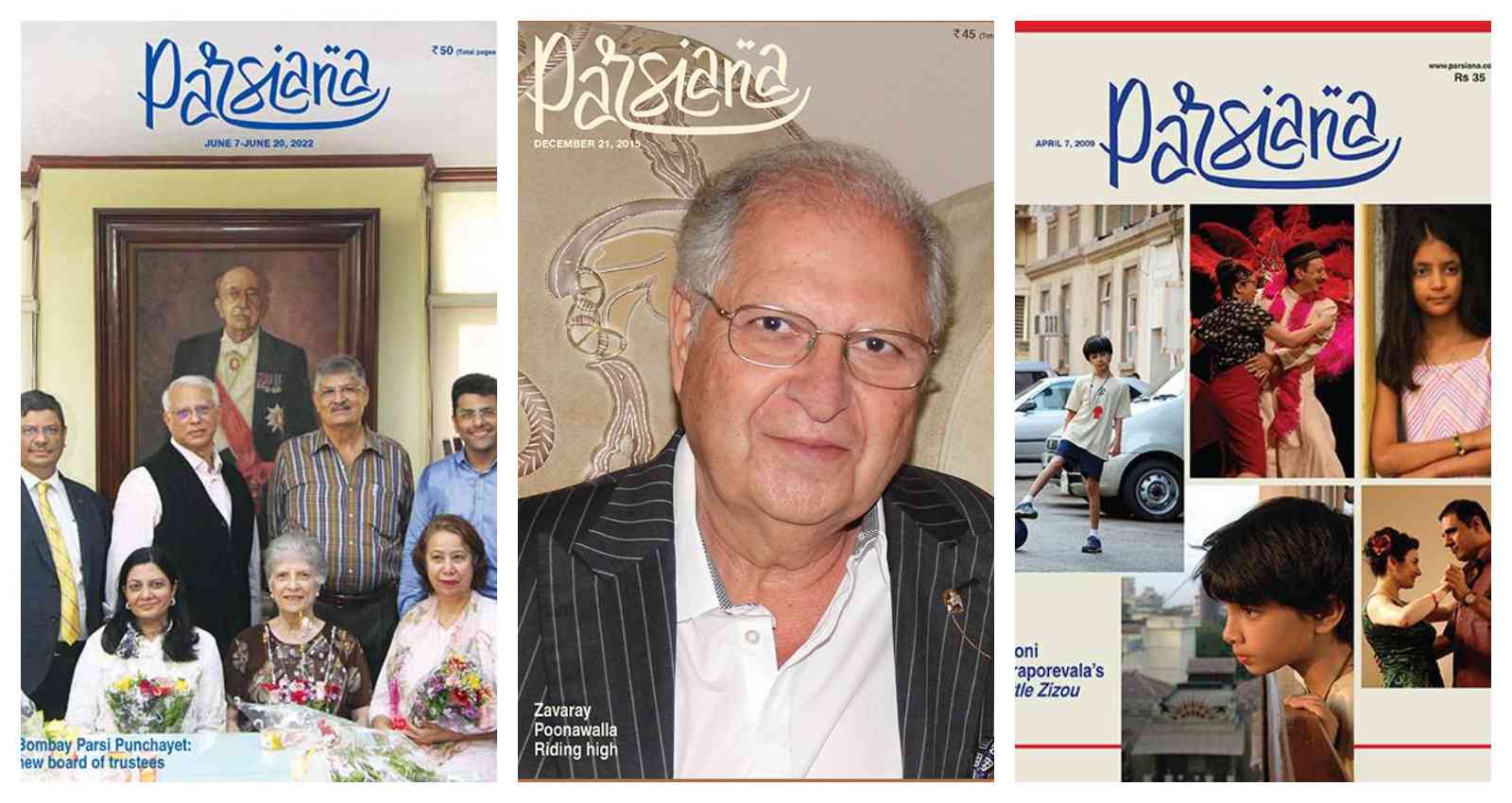
Over the years, Parsiana consolidated its reputation for in-depth reporting on community affairs and for plunging straight ahead into some of the community’s most contentious issues: the accountability of the Bombay Parsi Punchayet, the election of BPP trustees, the denial of community and religious rights for intermarried women, and frightening demographic trends which have resulted in Parsi numbers in India halving over the past eight decades. The magazine covered national events which touched Parsi lives, such as the 1992-’93 Bombay riots and the 26/11 terror attacks in 2008.
In early 2024, it commented on the consecration of the Ram temple in Ayodhya. A Parsi high priest had been present at the inauguration and several Parsi associations had held jashans (prayer ceremonies) to signal their support. As during the Emergency, Parsiana responded with a mix of sarcasm and genuine concern. Would a critical column, it wondered, invite bulldozer justice at its premises?
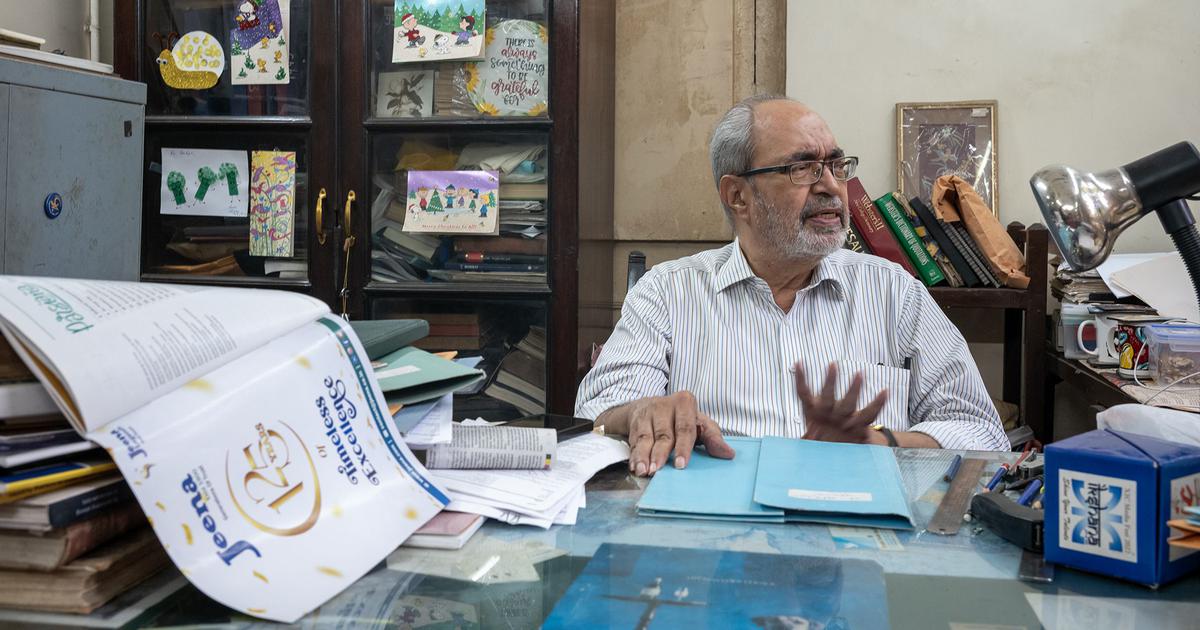
“We were especially concerned for our assorted, 1970s antique furniture, our state-of-the-art, 1990 vintage, assembled, computer system, our priceless wall art comprising pictorial calendars sourced from well-wishers, our stacks of unsold Parsiana copies,” Patel wrote. On a more serious note, Parsiana reminded celebrants of the “thousands who were killed in the ensuing bloodshed following the demolition of the [Babri Masjid] mosque” and chided Parsis for their own Islamophobia.
Those “stacks of unsold Parsiana copies,” however, were of increasing worry. By early 2025, Patel surveyed the state of affairs – declining subscription and no new entrants into Parsi journalism—and realized that it was time to fold the magazine.
As he wound down operations at Parsiana, Patel contemplated the changes he had witnessed both in India and the Parsi community. Amongst Parsis, the biggest change has been “a fall in energy levels.” “The zip is gone,” he notes, remembering times when his editorials would draw readers to his office to engage in furious debate. Now, he senses an atmosphere of indifference.
Parsiana’s closure is not just a loss to the Parsi community, but also to the once-vibrant world of Indian journalism. Its small yet powerful voice will be greatly missed.
Dinyar Patel is an associate professor of history at the SP Jain Institute of Management and Research in Mumbai. His award-winning biography of Dadabhai Naoroji, Naoroji: Pioneer of Indian Nationalism, was published by Harvard University Press in May 2020.
