





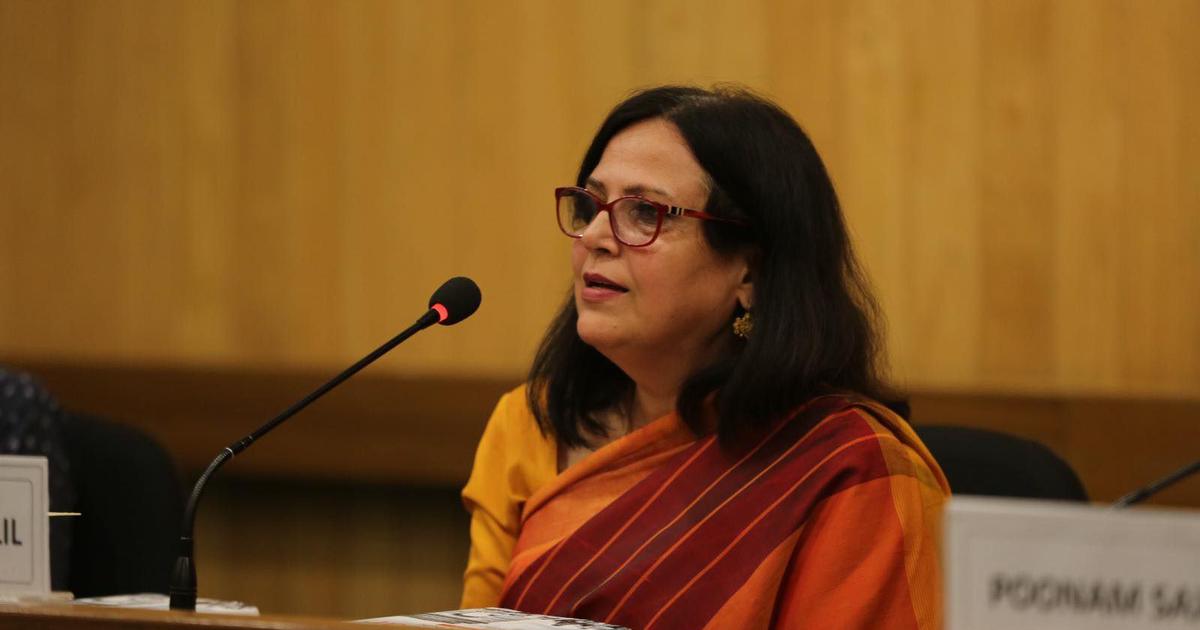
“Whose Urdu is it anyway?” asks Rakhshanda Jalil’s new anthology of translated stories. In these infernally divisive times, when language has become just another bone of contention between geographies, cultures, and political ideologies, when the language one speaks, or doesn’t, can spark violent reprisals, the question the book poses is not merely provocative; it is thought-provoking.
Languages in India have refused to be pinned into docility, flouting restrictions of region and homogeneity. Political dispensations, however, remain committed to the exclusionary cause of affixing inviolable identities to language. Urdu, subject to the same processes, has often been labelled the language of Muslims. Pulling no punches, Jalil’s Introduction engages with the obvious stereotypes associated with Urdu – that it is a language of Upper India, spoken only by “a declining minority of sharif Muslim families” – a formulation that excludes Urdu speakers of places where the language once prospered – the Malwa region, the erstwhile princely states of Bhopal and Hyderabad, even Gujrat of the 17th-century poet, Wali Dakkani. Rejecting the popular perception of Urdu as the language, exclusively, of romance and revolution, Jalil pulls together a selection of 16 stories by non-Muslim writers, from the early decades of the 20th century to the present, efficiently de-linking the language from religious identity.
The journey
Sequenced in what seems to be a loose chronology, the stories in Whose Urdu Is It Anyway? trace the journey of Urdu fiction over almost a century, beginning with writers associated with the Progressive Writer’s Movement that had come into being in colonial India of the 1930s, with the intention of having literature play an agentic role, mirroring the changes sweeping Indian life, reflecting the politics of the age, promoting a scientific and radical outlook, and combating imperialism, communalism, racism, and other oppressive structures of Indian social and cultural life. Led by a veritable bevvy of literary stars like Ismat Chughtai, Saadat Hasan Manto, Sahir Ludhianvi, and Amrita Pritam, the Progressive Movement propelled Indian writing in multiple languages in the direction of realism and social critique. Of its Urdu writers, Krishan Chandar, Rajinder Singh Bedi, Mahinder Nath, Kanhaiyalal Kapoor, and Ramanand Sagar find a place in this selection. The influence of the Progressives, their insistence on social critique and their forward-looking vision is obvious in the stories that follow as well.
In Krishan Chandar’s “The Generous One”, Daani, born in poverty, abandoned by his family to another set of poor relatives, lives on the streets of Bombay and dreams of eating his fill. Having grown into an unusually big and strong man, he wants neither power nor glory, only food enough to satiate his perpetual hunger. He rescues a young woman from hoodlums who were “buying” her from her brother, and finds in her a kindred spirit, a woman as deprived, as hungry as him. Together, they dream of a child who would have a permanent home, loving parents, and would never go hungry.
Devinder Satyarthi also writes of the same debilitating hunger in “The Tonga Driver”, a story about Ramzan, the eponymous tonga driver, and Eidu, his beloved horse, who Ramzan is unable to feed because he is caught in an unrelenting cycle of debt. While ruing his own helplessness, Ramzan is told about the socialist politics of Russia by an idealistic young man who insists that in Russia, Ramzan and Eidu would never go hungry because everything belongs to the people, an idea that remains incomprehensible to Ramzan.
Surendra Prakash’s “Scarecrow” looks back at Premchand’s Godaan. Hori, the farmer in Premchand’s novel, returns in this story set in independent India. In this new world, Hori has “no threat from the government functionary nor fear of the money lender. No tyranny of British rulers nor a share owing to the landlord”, but has a new adversary rise from his own fields to claim a share of his labour, his wages, his property.
Joginder Paul’s hard-hitting “Those Without Graves” is a sharp commentary on the unrelenting poverty of the third world. Hunger is a constant in the worlds of Daani, Ramzan, Hori and the nameless masses, separated in years but not in oppression.
Inevitably, considering the timeframe of the stories in the anthology, the representation of gender problematics in these stories undergoes a significant shift. Rajinder Singh Bedi’s Dammo, devoted mother to a disabled child, presents, to its obviously male narrator with his obviously male gaze, the romantic picture of a distressed woman in need of a saviour.
Ramanand Sagar’s unnamed woman, also a mother who prioritises her child over all else, refuses to be relegated to the category of a victim. Abducted from her village at the time of the Partition, she fights to make her way back home, only to be confronted by the disgust of her in-laws and a newly awakened understanding of the universality of women’s oppression. A similar lesson lies in store for Pammo, the protagonist of Renu Behl’s story set in rural Punjab, beset with a pervasive addiction problem.
Challenging this systemic pattern of the generational abuse of women in patriarchal societies is Mahinder Nath’s slyly subversive “A Cup of Tea”. Kamini, docile, nurturing, and attractive, is beloved of the man who has called her his wife for 12 years but believes that it would be a dilution of his progressive views to marry her. His convenient “progressiveness” never translates into a defiance of gender normatives or acknowledgement of Kamini’s labour. To him, her value lies in her submissive functionality. Pushed into marriage by his mother, who insists that Kamini must have legal rights, he wakes up the morning after his wedding to comeuppance and a wife who claims her right to leisure.
A play with form
Play with form has been a notable aspect of short stories across traditions and this selection presents some interesting examples of the same. Devender Issar’s “Mortuary” is told from the point of view of a dead body lying in a mortuary, acutely aware of its own death but not the reasons for it. As it observes the dead around itself, hearing their cries, falling into their memories, their experiences of illness, violence, rape, and murder, the story goes from the macabre to the surrealist, raising questions of culpability, complicity, and the erasure of humanity.
In “Scarecrow”, an object created for the purpose of keeping predators at bay turns into a predator himself, inverting the dynamic between his creator and himself, rising, like Frankenstein’s monster, to claim not just personhood but also power.
Ratan Singh, in “The Refuge”, writes a narrative of the Partition, giving physical form to the trauma of loss of home and history. Its protagonist, unable to identify the most valued objects before their family was forced to leave Pakistan for India, carries a room in his ancestral home with himself instead. Voicing the anxieties of all those forced into exile, he says, “Because I have not been able to put down roots in this new land, I am like a leaf that has fallen from its branch and is floating around aimlessly. When ill winds push me towards new directions and when my very being becomes bloodied and bruised as it stumbles along on unknown paths, I enter that room all on my own for a few moments.” The room, memory transformed into tangible, sensorial experience, becomes a retreat, making possible the transition from the past to the future.
To go back to the primary question posed by the text, the reader will be no closer to a definitive answer at the end of these 16 stories. The contributors to this volume belong to different literary styles, different decades, and have a disparate range of issues, as well as distinctly individual voices. There are some gaps in representation. None of the stories is from the Southern states. Of the 16 writers, only two are women. Nonetheless, this is an important anthology that debunks the stultifying stereotypes around Urdu, showcasing it as a language that tells the stories of a nation, holding multiple identities in easy balance. Many of these narratives continue to be resonant with present-day concerns; whether it is Kanhaiyalal Kapoor’s satiric indictment of hyper-nationalism, or Deepak Budki’s portrayal of the grief of a house emptied of its residents in conflict-afflicted Kashmir, or Gulzar’s chilling account of the predictability of communal violence.
The anthology travels a complex terrain, taking the reader through the anxieties of colonial India, the horrors of the Partition, the dreams of an emerging nation, and the courage of a people willing to call out injustice and inequality. For all those who continue to confine Urdu to a regional/religious, tightly sealed space, this might be a good place to start the process of dismantling.
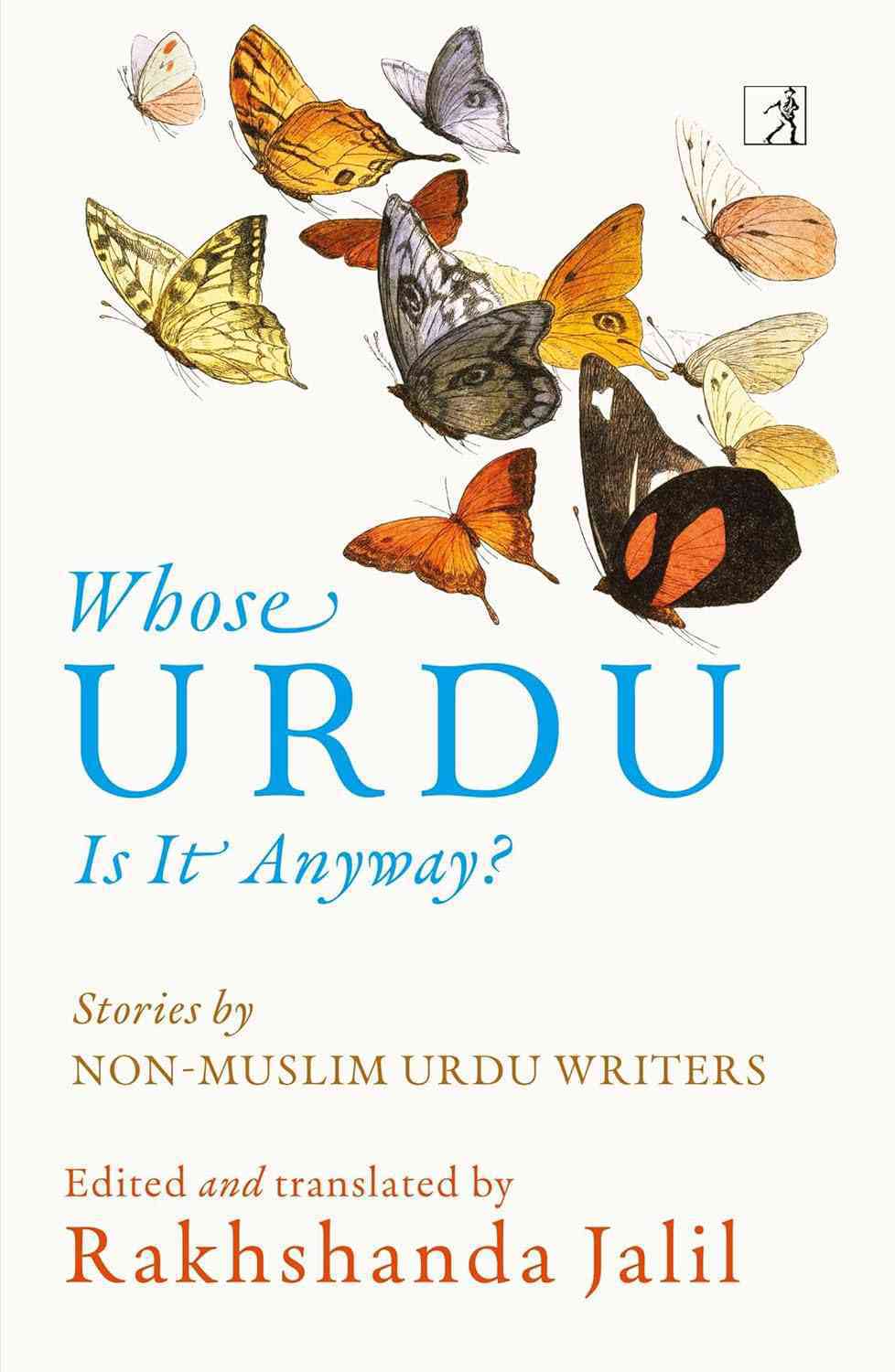
Whose Urdu Is It Anyway?: Stories by Non-Muslim Urdu Writers, edited and translated by Rakhshanda Jalil, Simon & Schuster India.
