





Elayada
At dawn
my taste buds welcomed a tender plantain leaf,
which had climbed over the wall,
unfurling
its green arms.
The steamer belches fragrant joy:
a ménage à trois – rice cakes,
melted jaggery and coconut,
snuggling in emerald sheets.
Hope my neighbour,
the owner of the plantain roots,
won’t mind
a leaf,
half-cut,
from his plentiful yard.
Chapati
She kneaded the dough of cruel words,
balled it into twelve,
smoothened each with a stroke of ghee
and spanked extra on the one which she named “Judas”.
When flattened under a rolling pin,
thin, round and fine –
twelve full moons stared at her sweaty neck.
On a hot pan
she flipped them one by one;
a few burnt on the sides,
the others puffed up complaining,
before all were shut inside a casserole, firmly.
Around the dining table,
a lacy, lily-white runner down its length,
sat grave faces.
The poker-faced chapatis gave away nothing
about the fresh scars on the mother’s face;
nor did they enquire about her bruised back,
purplish, beneath the blouse.
Porotta
In Kerala,
one can never miss a plate of this flatbread,
which rolls on the tongue
and bursts in a crispy flavour.
A few historians map
its evolution and journey from West Asia
to satiate the Kerala tongue.
Kneaded with oil, salt, milk and sugar,
the dough dreams under a wet blanket
until yanked free,
pulled, stretched, punched and kneaded again.
A showstopper –
the porotta chef displays splendid skills,
throwing this elastic flying saucer
onto the tiled platform.
On the menu christened as
“nool porotta”, “bun porotta”, “paal porotta”,
“kizhi porotta”, “coin porotta” and “kothu porotta”,
they thump their chests –
the coveted siblings of Kerala Porotta.
Seven Nights of Mourning
The ebony flag on the gatepost,
cloaked my cold heart.
We lived near the burial ground.
The moon lingered longer than the night before.
I sat on the terrace
with a bowl of rice.
The moonlit moonga hooted,
a stranger to my obstinate presence
for the past seven sleepless nights.
Bats flapped above, shushing any lullaby.
Slowly, the barren jackfruit tree in the graveyard
extended one of its arms to me –
each leaf, a finger.
My mother perched on one of its branches.
Her eyes flaming like dying stars,
long hair let down.
She slid down the branch,
draped in her Kanchipuram wedding sari.
Our eyes locked;
hers blazed –
a pair of ancestral monuments.
She always hated it
when disturbed.
She balled the rice in my plate.
I gripped the rosary.
Once, three years old,
I bit her fingers
when she tried to push
a rice ball down my throat.
Two decades later,
I wanted to taste her blood again.
*Moonga: owl
Cracked Feet
The women in my village cover their heads inside our church.
They come wrapping their pain and joy in light-shaded clothes,
pallus or shawls or scarves on their heads,
before they step inside the holy place.
These women fast on Sunday mornings.
“Not a drop of water before the church ends!’,
hiss mothers-in-law at daughters-in-law and teenagers at home.
The Bread and Wine in the priest’s hand quiver,
witnessing the weight of steadfast faith and humble hearts.
They baptise their tongues in saliva, as the last act of sanctification
before partaking in the Eucharist.
I stand watching the altar pew.
Mothers discipline their saris to cover every inch of their skin;
all of it goes in, except the cracks on their feet,
like tributaries that crisscross memory maps
of the thirties, mid-forties, sixties and eighties.
Those fissures started showing the day
when they treaded the distance between the place where they grew up
and the village they were married off to.
Those which cracked like eggs, then birthed into many,
as those feet walked across sooty kitchens, thorny fields
and carried them through births and deaths, flood and famine,
quarrels at home, bruises on bodies,
nights when a few of them kneeled down on verandas,
a child or two held close to bosoms,
because the drunken men of the house had kicked them out.
While haggling for the monthly chitti, (so that children can be sent to school,
the roof can be repaired, a daughter or son sent to “Dufai” for work,
or a cow be bought to tide over the debts),
those feet, firmly stood.
Shooing away the spirits-of-the-deceased with a Qurielaison
and walking back on the dim streets after a day’s labour,
those feet never faltered.
For them, Sundays were the holiest.
In the broken bread and dripping wine – the maimed body of Christ –
which the women shared on their side of the pew,
they tasted themselves while the feet rested for a while, on red carpets.
*Qurielaison: A Syrian Christian prayer
**Chitti: local savings scheme
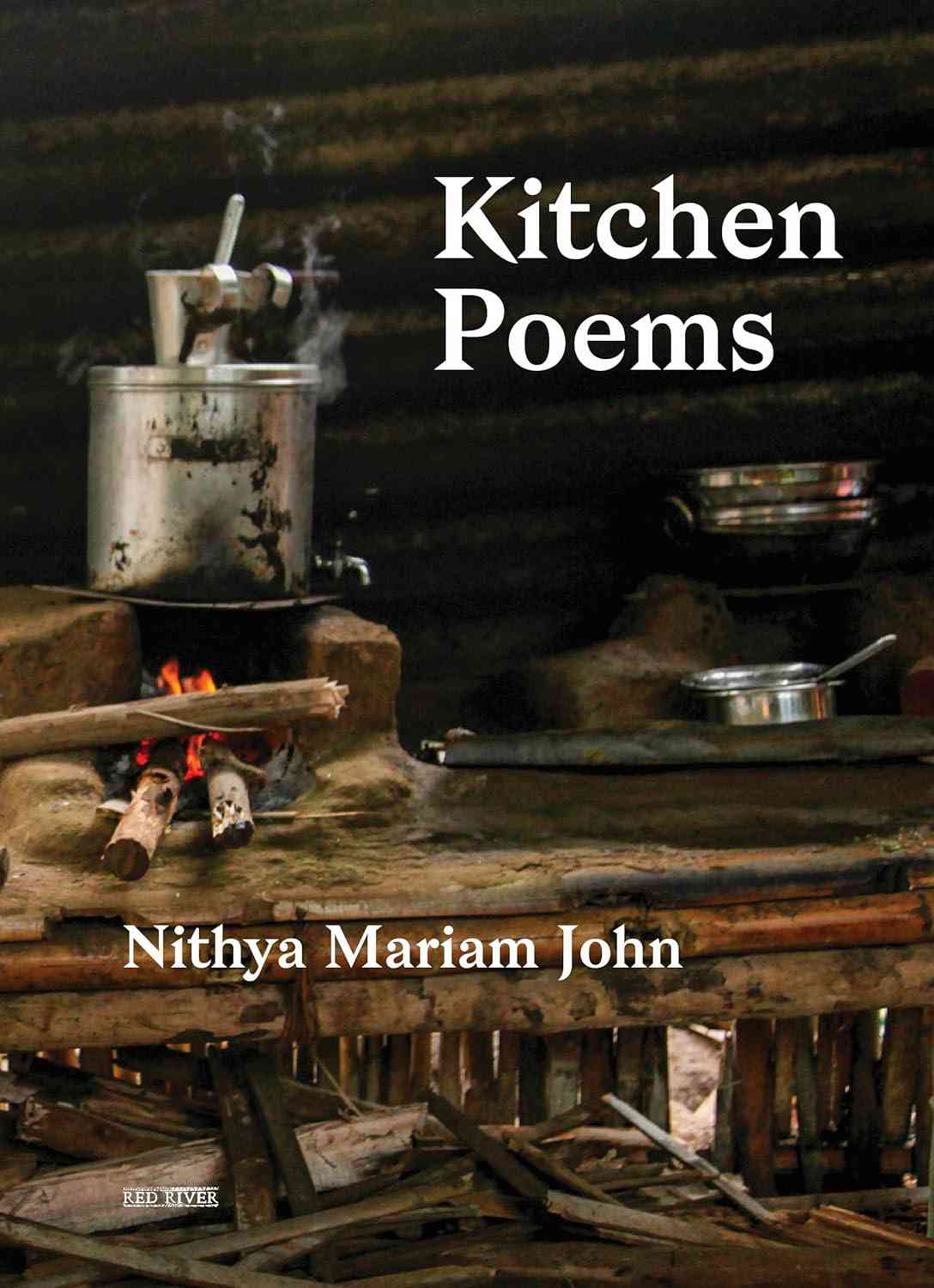
Excerpted with permission from Kitchen Poems, Nithya Mariam John, Red River Press.
