








Some books look like they are written from the head, while others seem like they are grown from the dirt. There is no doubt that Smitha Sehgal’s poetry collection God’s Brown Child belongs to the latter; it comes right from the ground, with roots, dirt, and memories all jumbled up in it. The earth speaks to you. You can smell the monsoon, taste the ocean, and feel the knowledge of the past. Sehgal’s poems are from a tropical environment, but anyone may understand them.
Her poetry is full of vitality and rawness, but it is also gentle and wild. You should trust your body, the ground beneath you, and how they work together.
She begins with a feeling, a sense of home and faith that is almost real:
“My Gods are forest dwellers,
their skin marked in burnt caramel
of the tropical sun.
On Amavasya nights
they feast on flame-torched cassava
and salted mackerel.”
Human gods
Her gods eat mackerel that has been burned and salted, as well as cassava, on Amavasya nights. You don’t hear a voice that makes the sacred appear so close very often. Sehgal’s gods aren’t simply ideas; they’re real humans who are hot, hungry, and sweating.
The divine is in the purity of life itself. It’s about sharing food and enjoying what the land has to offer. The sacred is not far away; it is a part of the joy and confusion of life.
Kamala Das had said, “The soul’s mine, the body’s mine, I must decide what to do with it.” Sehgal elaborates on this. Not only is the body free, but it is also sacred. The gods in her woods have brown skin, the sun shines on them, and they are just like everyone else.
She says to women who have been taught to keep silent,
“I am broken
into the many breaths of women
who have gone out into the desert
with feet smelling of sunset.”
Sehgal’s quiet act of resistance is to not make isolation seem like a taboo.
Sehgal’s women, like Shahid Ali’s exiles, live in both the real and the imaginary world. They bring their past with them.
And their lives are perpetually on the verge of changing.
“Each winter, caterpillars hung
on the branches, spinning sun yarns
and we smelt the warmth of hearth
rising on wintry days.”
Caterpillars “spinning sun yarns” show that making and surviving are essential to the future. Winter can also offer warmth. Sehgal’s Kerala, like Derek Walcott’s Caribbean, isn’t a perfect picture; it’s real.
Life and death occur at the same moment. In a poem, she asks,
“What is time
but a line that never ends?”
Time seems to continue forever but the poet doesn’t explain why. She thinks of time as the seasons changing and scars that heal and reopen.
“We dusted the guilt off our backs
flossed the moss lodged
in our mouths.
When it wasn’t enough,
we wrote an elegy for Earth.”
Everyone is to blame, and they know it. Moss in the mouth symbolises how heavy what we've been ignoring is and how quiet we've been. But Sehgal doesn't think about it all that much. She wants to become better. Poetry is a way to fix things. It feels like writing an elegy for Earth can repair things that are broken. Sehgal believes that creating poetry is a way to glorify God and speak out against things at the same time.
Her poems fluctuate between being active and quiet, travelling and thinking. For example,
“I bowed deep inside prayers
learning how to slip into the moonrise
or the wheels of the Malabar Express
that hooted past our feverish town.”
The Malabar Express is more than a train. The poet’s “feverish town” not only goes away, but it also changes. Her prayers change, quake, and burn with want.
But there is a softness to it all:
“Tiny braids
like swallows
in spring
Outside,
leaves glow softly
under the moon
I listen to the unsung songs
waking in your body.”
The light from the moon outside makes the leaves shine. Sehgal is getting closer. She can’t hear what we’re saying, but she can hear the music that’s playing in the background.
“I pull out the words
for potatoes and weeds.
I have lost the months
in our calendar.”
This shows how hard it is to lose something.
“If we knew –
to love like snow melting.”
In just eight words, she sums up a complete way of life. Sehgal doesn’t believe that love is about holding on. It’s about letting go and her silence implies that too:
“I slept in a room with space
filled with silence and the song of cicadas.
Night came on the wings of a storm.”
Sound in stillness
There is a sound in the stillness. “The song of cicadas” disrupts the quiet, and the storm doesn’t kill; it comes to life. The dark is full of life and vitality.
The sun comes up again:
“Mother plucked
ripe lemons and green
brinjals before noon
Those days,
we ate a mouthful
of summer.”
This is a good way to write about things that happen every day. Sehgal’s “mouthful of summer” hits you like Walcott’s fruit or Agha Shahid Ali’s saffron; the taste lingers in your mouth.
She puts hope on dry ground:
“I say, we sow poems on the skin
of dead earth, hoping
for tulips to rise again.”
There are many things that the vacant land here stands for, such as nature, the soul, and people. Her hope might not be much, but it is strong.
You need fire to be reborn:
“A volcano festers
in my throat and I feed on my fears.
Licking blood-stained claws, brooding
and grimacing even in spring,
I pray, die and resurrect
in these battles alone.”
The volcano stands for the poet’s voice and her anger, which is the boiling point of hundreds of years of women’s fights. The boundaries of light and dark merge in the song of rain and dawn. Here, sadness and happiness, darkness and light, all come together.
“In our ribs
the corners of light and
darkness mingle in the song
of dawn and rain.”
The poet also believes that quitting doesn’t mean you’re weak; it means you’re strong.
“…throw if you must
this half-naked body into the eye
of a maelstrom, spiralling in
grief, let the briny wind soar high
on the tides…”
Sehgal is fine with failing – something good can come out of this too.
“Run your fingers over the pages
of my poems
smelling of sesame flowers.
Count the seasons
that fall in love with my scars.”
Right now, Sehgal is being honest with herself. You can read her poems, but you can also see, hear, and smell them. What are those marks on her skin? She doesn’t keep them a secret.
“What if the Sea came in, the expanse of flood
sweeping away this ledge, coconut palms,
thatched-roof hutments
unmooring the boats.”
This isn’t just poetry; it’s a reflection of what’s really going on: climate change, disruptive nature. But the women in Sehgal’s poems keep going.
“A woman must go on, be it rain
or sun as the maestro sings
Tum bin Kachuna Suha,
there’s no rhythm in my blood,
only the language of faraway rain
that gathers grief after each war.”
Finally, the brown deity shows up. He is injured, sacred, and too human:
“The Brown God howls,
the Brown God burns,
the Brown God limps on our streets.
Go away, Go away,
they chase after him, pelting stones
one each for drought, flood and maladies.”
They throw stones at him, one for each of the three problems: being sick, not having enough rain, and having too much rain. The brown deity picture is the best one by Sehgal. He is all-powerful and punishes individuals who hurt the earth.
Sehgal writes from the edge in Brown God's Child, where prayer and protest meet, memories become myths, and the body becomes the land. Her voice is powerful and full of life.
Cassava, mackerel, moss, lemon, tulip, and cicada are some of the words she uses to talk about renewal, rebirth and resurrection. Women hold up planets, gods stroll on bare feet, and the Earth is in pain yet still breathes.
In Sehgal’s world, sadness brings new life, tranquillity hums, and time never ends; it just keeps going. Sehgal tells us that the land remembers, and so should we.
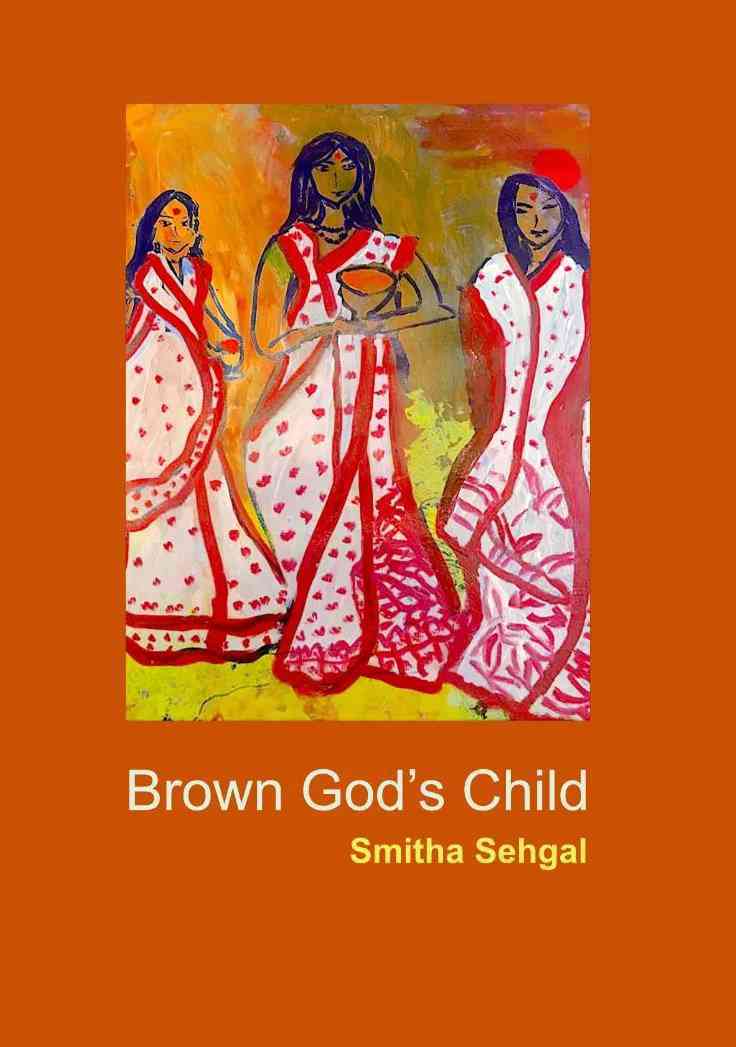
Brown God’s Child, Smitha Sehgal, Erbacce Press.
