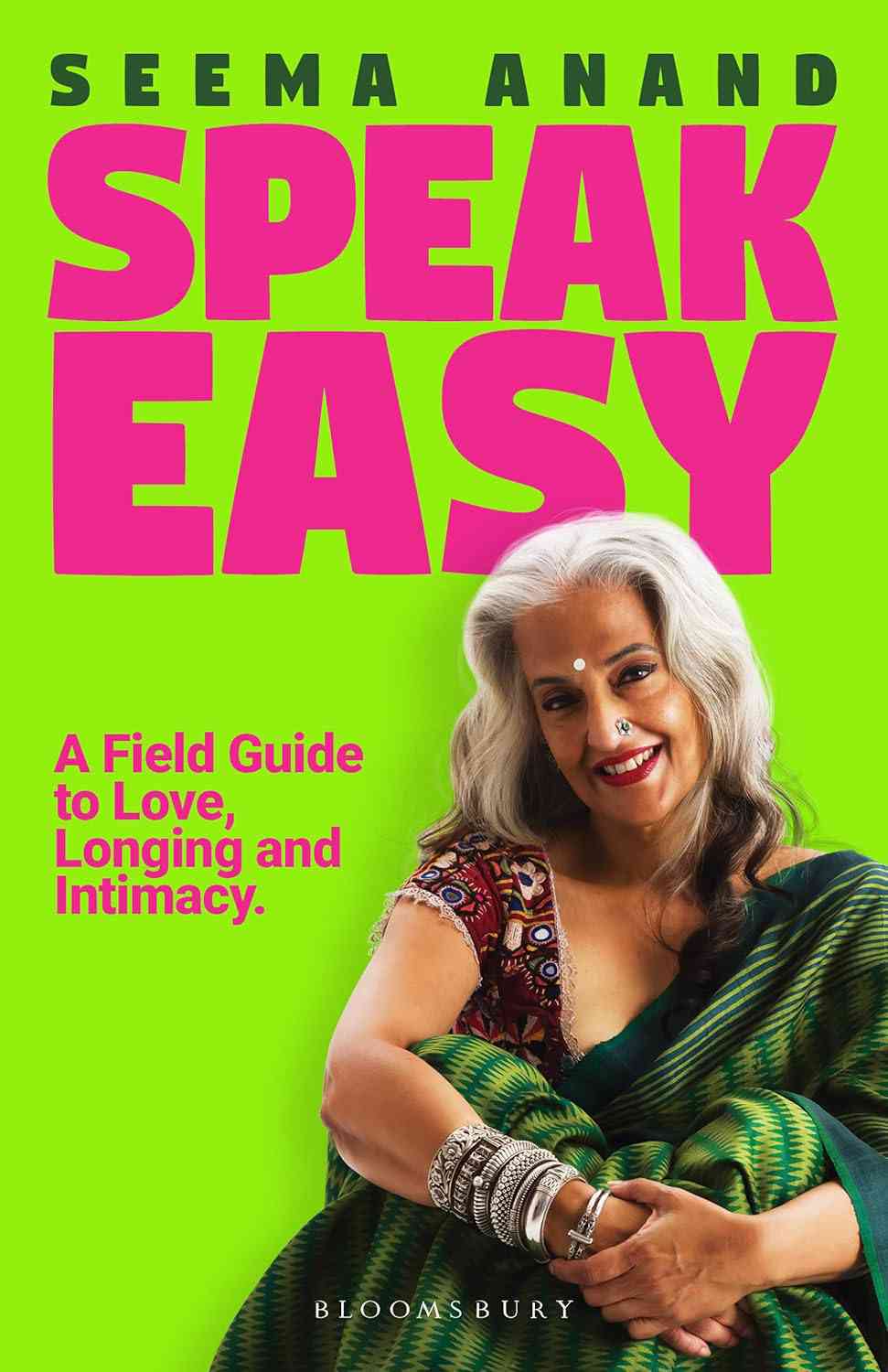




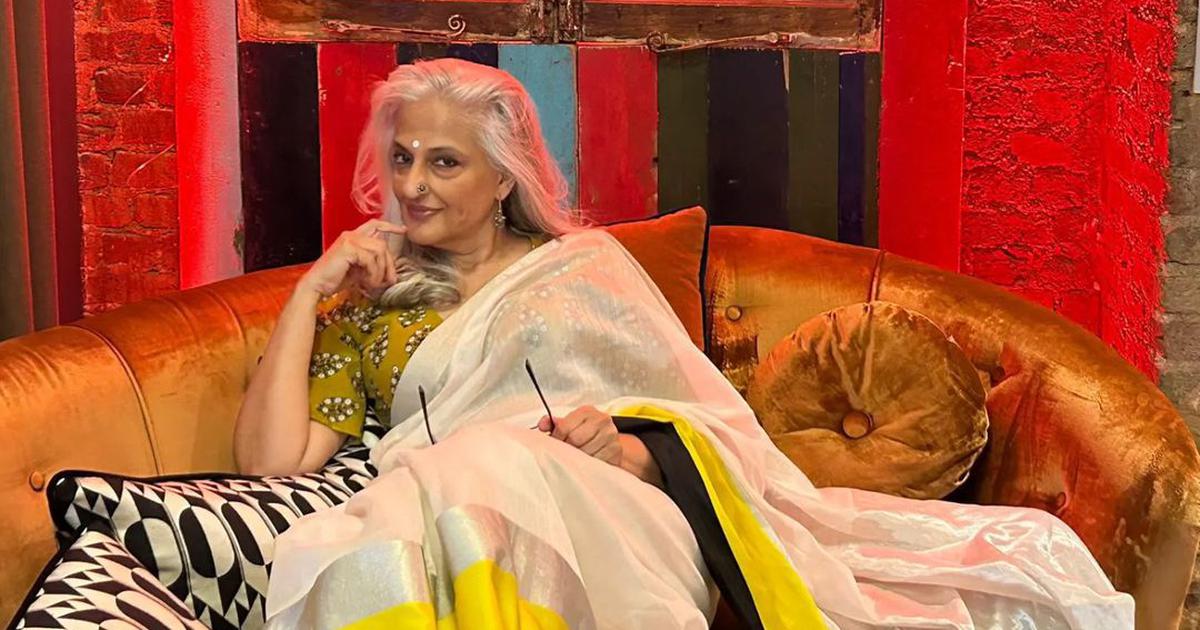
Seema Anand wears many hats; she is an author, a sex educator, and an authority on the erotic texts of ancient India. All of her skills come together in her new book, Speak Easy: A Field Guide to Love, Longing and Intimacy, in which she answers questions about relationships, kinks, intimacy, self-love and more from her readers and followers. The book, written in a question-and-answer format, draws not only on Anand’s own considerable experience but the expertise of several leading figures in the world of sexual health, medicine and even adult content.
Scroll spoke to Anand about the book in a wide-ranging interview. Excerpts from the conversation.
What gave you the idea for the book?
When these questions just kept coming in more and more, and over the years, became really nuanced and detailed, I realised that one cannot respond to them on a 60-second reel on social media. It needs more advice. It needs more context. And it was also important that people could have the answers as a reference for longer. It was also about wanting to tell people that, okay, you’re not the only one asking these questions, because if I’ve published one question, there are a million other people who’ve actually written the same thing to me, and I’m not even exaggerating when I say million! When you try and do it in brief, like in a column or a reel, I actually find it leads to more questions and more issues.
How did you decide the structure of the book? It has a Q-and-A format rather than a straightforward narrative format.
So there was a lot of debate on that and I was very particular that I wanted to keep it as a Q-and-A format, because it is these questions that make the answers so real, and make the problem so real. There’s one question in there, which is about this woman saying that her husband wants to be a cuckold. It was so real that if I had taken a (general) topic on cuckolding, it would just not have been the same, whereas this makes it more relatable. Some of the questions are also written in quite broken English, and I was like, I want to keep it like that. There is an authenticity to that and other formats don’t always convey the intensely personal desires or feelings or fears that you have, right?
Why did you decide to collaborate with experts on certain chapters, rather than drawing from your own experience?
I wanted this book to be as helpful as possible, like I really wanted people to be able to say, This makes sense. For instance, my experience is not that wide-ranging with BDSM and kink. But also Dana Shergill (BDSM expert and educator), with whom I collaborated, brings something very different to the table. She is using it for healing trauma, as therapy, which I had not come across from anybody else before, and I loved that idea. With erectile dysfunction, not being a urologist and not being a man who experiences it, I didn’t feel I had that capacity (to talk about it). For the chapter on anal sex, I spoke with a colorectal surgeon, because again, I needed that from a doctor’s point of view, to understand the anatomy of the rectum. It was required, but also, here was finally somebody who agreed to talk about anal sex from a medical perspective. You wouldn’t believe how many people were like “Hum nahin kar sakte” (We can’t do it) because of the judgment involved. With squirting, I had actually reached out to a few people, all within the sex work area, who are known for their ability to squirt on demand. It’s just sharing information to whatever extent one is capable of, and you can take from it what you need to.
There is a section on queer people in the book, but it’s the shortest section. And as a queer person, I wish there were a little more focus on the community. But the impression one gets from the book is that it is mostly aimed at cis heterosexual women. Would that be correct?
So we actually started with wanting to include a lot of the questions from queer people. But I think what I decided to do is that I’ve kind of tried to take them along with other questions. So, for instance, there is this guy, a married man whose wife has died, and he finds himself going to male sex workers now as a straight man. I interviewed two male sex workers, and they told me that 70% of their clients are actually straight married men. And I am a very firm believer that labels should not be so hard and fast.
Yes, you say early on in the book that it is best to think of sexuality as fluid.
Yes, exactly. For instance, the chapter on anal sex… For me, that was a very important chapter, and I got an equal number of heterosexual couples and gay people writing on this. So for me, again, that became something that was going out to both sides, rather than just one… I think I was trying to talk more about experiences that people feel emotionally, which I think is quite human, as opposed to specific (to any particular gender). I think that’s what I was going for. The section on pain during sex is definitely addressed to women, because I took the questions that come in the largest numbers, literally; the largest number of questions that come to me from men are on erectile dysfunction, and from women on pain during sex. That one was definitely for women, for people with vaginas, basically.
Something I really appreciated during the gynaecological discussions was that it consistently said people, instead of specifically women, which includes, for example, trans men and non-binary people. You collaborated with a lot of experts for the book. Did you feel the need to get a queer expert for the queer sections, or did you think that you could draw on your own experience as a sufficient well of information?
We actually did speak to a couple of queer experts on this. There were a few people who did not want their names to be put down. I also approached people whose work I knew personally and whom I could trust. I also think that the way that we experience pleasure and practice pleasure is very culturally based. I think that how I view intimacy is very different to how the average American would view it. That made a lot of difference for me.
Another chapter that we actually dropped was on HIV. We wrote one, with somebody who is one of the biggest names in HIV treatment and research in the UK, but it was dropped as they felt there are too many variations to advise anything. We had another one on certain illnesses, like as sexual health and epilepsy. Again, it’s somebody that I worked with, but we wrote the chapter and took it down because she checked with her hospital, and they said she couldn’t do it.
Did you face a shortage of experts in India on the subject?
The thing is, I haven’t lived in India for a long time, and unlike what most people think, I’m not actually very active on social media, because I find that it bothers my mental health a lot. So I don’t know a lot of people over here. I’m trying to increase my arena of people and the number of experts I know. Without mentioning names, there were some people whom I spoke to on certain things and I did not like their work. I felt that I needed to know their work over time before I could put my name to it. If I lived here full-time, maybe I would actually get to know more people.
In your opinion, which aspects of our legal and healthcare infrastructure need to be improved to deal with sexual health-related issues, such as sexual assault, male victims of sexual assault, marital rape and so on?
So I think that even before we get to the legal and healthcare system, it’s the story on the ground that needs to change, because I have seen how we can put laws into place, but unless people are geared to accept that this is an issue that has to be taken seriously, nothing actually will change. Let’s say, in the healthcare system, the first thing that I would like to see is some form of education available to me that teaches me what I should do to even look after my sexual health. I would want a really professional level of test kits that are provided in terms of in cases of sexual assault (and evidence) kept in a non-contaminated place, because I’ve also seen this not being done over here. It’s almost like nobody cares. And that’s why I said that the first thing that needs to be done is it has to put in people’s minds that this is important and it has to be taken seriously. So I think it has to start with that.
How you take someone’s medical history depends hugely on what the doctor thinks they’re going through, and if you take people from rural settings, from lesser education settings, they cannot have recourse to the law. I’ve heard a lot of nonsense in court cases in recent times about “divided responsibility” (between victim and perpetrator) when somebody is attacked; there needs to be a standard procedure that says that this is not acceptable, it is a crime that needs to be investigated, and this is worldwide, not just in India.
On a similar note, what aspects of sexual education do you think need the most attention in India? Would it be, for example, family planning? Would it be something like cervical cancer risks? What do you think is the most lacking?
Sexual education in India at the moment is zero. Most people focus only on the idea that sex ed should be about two different genitals coming together, which is the smallest part of the whole thing. We need to begin with understanding consent, teaching kids about it from a very young age, and coaching them through the emotions that they are going to go through. We need to teach them about rejection. We need to say to both girls and boys that somebody that you like is going to say no to you, and everybody goes through it. We really do need to begin with actually teaching that these feelings occur.
How did you first decide to go into this kind of work, and did you face any objections from, say, your family or your friends?
My work in erotic literature started when my third child was born. I remember sitting up one night breastfeeding her, and thinking that the stories we tell define our identities in society, but we never tell stories of a woman’s right to her own body, like her body is somebody else’s property, and she has to get permission for her pleasure. And I just remember thinking, I don’t want this world for my child. I want her to grow up knowing that she is the owner of her own body, you know. So it started from there. And I was like, Okay, what are these stories that we’ve silenced? I want to actually try and discover those. As I started talking about the subject, I found that people started writing in because there are so few safe spaces where people can go and ask these questions.
I think it’s just a desire to be able to help. I feel that I need my children to have a safe space in me, no matter what their needs are. So it’s just about trying to create a safe space.
Have you ever faced any kind of threats or any kind of adverse situations for the work that you do?
I mean, that’s par for the course, right? So in the beginning, it was abuse; it used to be death threats. Now the trend, unfortunately, is to give rape threats, and it’s become so common, the language they use, the things they tell you that they will do to you. You know, there was a point a few months ago where I was almost thankful that I was not in India, because I really was frightened. It doesn’t happen often, but I really was frightened. It was scary to think that at one point I even considered that while I’m here, I’m going to hire security for myself, because it’s very insidious, and it gets under your skin after a while. And the number of men who make very suggestive comments, or say, “Oh, well, you’re this age now, you should be now praying. What the hell are you doing?” And it’s almost like the country is going from bad to worse, because today, there is no fear left in thinking that if I speak badly to somebody, or if I treat a woman badly, or if I treat somebody badly, that there are repercussions, because there aren’t.
That’s very sad to hear. On a similar note, are you facing increasing censorship from social media platforms because of AI-driven algorithms?
At the moment, my Instagram handle is being put under a veil. Last year and the year before, they were telling me that my content had been restricted, and then there was a lot of uproar and protests. But now what they do is they don’t tell you that they’re restricting it. They just make sure that it is restricted. So, for instance, you find that out of nowhere, the level of engagement, the number of views, is so low that it’s just not being watched. I don’t know whether one should put money into it to see if you can reach more places. We tried it a while ago when we were all being censored heavily. Some of the creators had tried putting money, and then it would be okay for a day, and then it would go back down again. Basically, they don’t let any of your content appear on the Explore page. It is extremely difficult. For creators, after you reach a certain number of followers, like 500,000, Meta gives you an advisor, somebody that you can reach out to. We were not given an advisor.
There’s a lot of debate surrounding sex work. So there’s one part of the debate that says that sex workers need to be empowered, need to be given rights, need to be allowed to unionise, and, you know, look after their own interests. And there’s another argument that asks to ban it completely, saying that it is exploitative no matter what the circumstances are, especially because a lot of women and young girls are trafficked into it. As a sex educator, what side of the debate do you fall on?
I personally don’t think that you can take any one side of the debate. I do think that there is a lot of exploitation, but there are also a lot of people who do it knowingly and willingly. Whether it is exploitative or not, banning anything is never going to work because there is obviously a huge demand for it. I personally think that unionising it and making sure that there is protection for sex workers is better. The moment you ban something and it goes underground, the violence goes up against and the amount of exploitation triples, because then you cannot even go out and raise noise about it, because then you are the one who will be penalised.
And as a matter of fact, this is what happened. If you remember in the years when HIV started, and homosexuality was illegal, people wouldn’t go to doctors because they believed that if they were caught with this, they would end up in prison and be seen as criminals, and that made things so much worse. Exploitation is not going to go away just because you ban something. People even need protection from the pimps and have somebody to turn to. If I absolutely had to pick a side, it would be that I would obviously want a world where there is no trafficking. But I also think that people who are in the industry have to be protected, right?
Do you have a message for the Indian youth?
When I was growing up, and even now, the one thing that we are never taught is relationships – how to actually have a relationship, how to navigate it. I just want to say that relationships need to be built. You have to work very hard to make your relationship successful. All relationships go through down times when things are bad, whether it is what you’re doing in the bedroom or how you interact with each other. These things can all be worked on. And the second thing is boundaries. I find that boundaries are so important, and nobody teaches us how to set boundaries, and so most of us think of boundaries as either you’re being punished or you’re punishing somebody. But they are important for you to feel safe. Some boundaries are hard boundaries, and they’re absolutely non-negotiable. Some are soft boundaries, where gradually, as you navigate each other in a relationship, you understand that you can adjust them. I think that those are the two things that I would really like people to understand – that they are not something to be ashamed of, but actually to work on.