




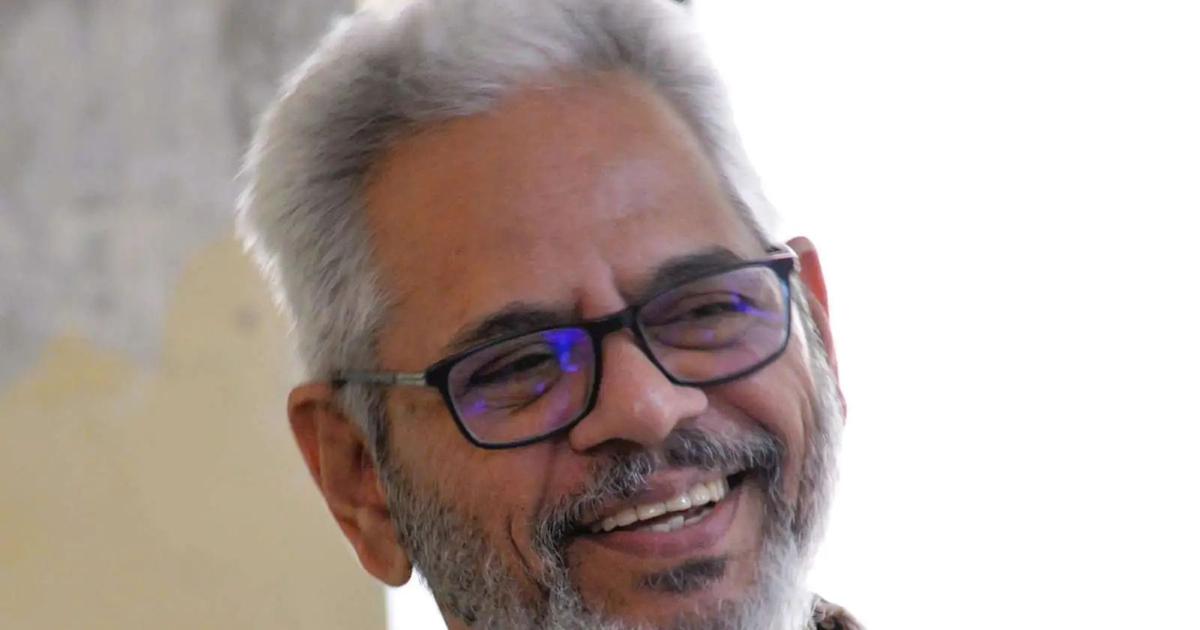
Mohan Babu founded Chaaya Publishers in Hyderabad, India, in 2017 to focus on fiction and nonfiction in Telugu. With over 200 Telugu titles published – more than half of which are translations – Chaaya Publishers is now strategically focused on bringing the best of global contemporary literature to the Telugu reader through its ambitious “Videshi” project.
In this conversation, he talked about this project, bringing in translations from fifteen foreign languages into Telugu and his plans for Chaaya Publishers.
Tell us about the journey of Chaaya Publishers.
The story of Chaaya Publishers is less about a formal business plan and more about a community passion that grew wings. We started about 10 years ago, and back then, we were the Chaaya Resources Centre. Our core activity was holding monthly literary meetings – lively, passionate discussions about a specific novel or a collection of short stories. These gatherings weren’t just for critics; they were for writers and avid readers to connect and challenge each other.
Around nine years ago, the natural next step was publishing. I began by helping a couple of writer friends put out their books. We started with original Telugu poetry and prose. But the real turning point came when we started translating great literature from other Indian languages. We brought in the works of great writers like Kannada writers Vivek Shanbhag and Vasudhendra, and Tamil writer Jeyamohan, among others. The response was immediate and overwhelming. It showed me that our readers had a hunger for narratives beyond our borders, and I recognised we had a responsibility to bridge this gap, focusing heavily on bringing quality translations to the Telugu market.
This strategic pivot fueled our growth. We quickly moved from just two initial members to a dedicated, eight-member team. This small, passionate team, supported by a growing network of skilled translators, is the engine that drives Chaaya Publishers today. We now have two talented in-house editors, a design expert, and our full-time CEO, Arunank Latha, who manages the complex world of rights acquisitions and market development.
Tell us about your Videshi series, which you launched at the beginning of 2025.
My own reading history heavily influenced the Videshi Series. I was fortunate to be exposed to excellent translations from a very young age – think of the profound works of 19th-century Russian masters like Tolstoy and Dostoevsky. But today, the world has changed so much with globalisation, and literature is changing too. Many talented international writers are charting the realities of life in this new age, exploring complex themes like migration, globalisation, and gender issues. The painful realisation was that Telugu readers were largely cut off from this contemporary global conversation.
We decided this had to change. Our core idea for “Videshi” was simple: we must bring high-quality translations of current, globally-relevant foreign literature directly to our readers.
We started with a modest target, but the moment our team started working aggressively – reaching out and building relationships – we found an incredible wealth of world-class, often award-winning literature. We decided to be much more ambitious! We proudly named the series “Videshi” (meaning Foreign) and significantly ramped up our target. I’m thrilled to report that we have secured rights for 25 exceptional titles from 15 diverse foreign languages, including Scandinavian languages like Norwegian, Finnish and Icelandic, as well as French, German, Danish, Italian, among others. We successfully launched five of these titles this year, and the remainder will be finished and published by the end of 2027.
What are the major challenges you face in publishing these translations?
Publishing international translations involves managing challenges across three complex areas: rights, language, and capacity.
Firstly, the acquisition of rights is a marathon, not a sprint. We are hunting for the very best – Nobel, Booker, and International Booker Prize winners. We have to meticulously research and scout for great writing across various genres. Then comes the critical part: we have to convince major foreign publishers about the vitality of the Telugu market, often educating them about our language and readership size, before we can obtain the exclusive rights.
Secondly, the linguistic bridge is challenging. For many languages, we simply don’t have professional, literary translators directly available in Telugu. This forces us into the “relay translation” route: we must acquire rights for a highly regarded English translation first. We are extremely careful here; we only work with English translators and publications of the highest repute, ensuring their translation procedures are diligent, thereby guaranteeing the fidelity of the final Telugu version.
Finally, scaling our capacity is a constant effort. To manage 25 books over three years, our internal resources were stretched thin. We had to significantly expand our translator and editor pool. This involved inviting hundreds of writing samples from new translators, selecting only the best, and then training them. Furthermore, to maintain the gold standard of quality, we have formed our team with three more highly-experienced freelance editors who are dedicated exclusively to managing the robust editing and quality assurance of the high-stakes “Videshi” series.
What does the future look like?
Our vision for the future is twofold: to deepen our roots domestically and to project our voice globally.
On the domestic front, we will continue to stabilise and expand the “Videshi” project. We aim to establish a consistent pipeline, publishing 25 titles of foreign literature into Telugu every single year. We will also intensify our efforts to reach out to readers, especially young people, to ensure we are adding new readers who are excited about this global literary exchange.
The second part of our plan is genuinely thrilling: taking Telugu literature to the world. We recently ran a successful six-month online Telugu-to-English translation workshop, where six young mentees learned from the highly respected French-to-English translator, Ross Schwartz. The big idea here is to use these trained translators to export high-quality Telugu literature to the UK and US markets, allowing our brilliant writers to finally join the Western literary conversation.
To cap it all, we are elevating the literary community through events. We hosted the Chaaya Literary Festival a few months ago, the first major initiative of its kind for the Telugu language, and it was a massive success. In the next two years, we will globalise this event by inviting foreign writers and English translators from abroad to participate. We are determined to build strong, lasting cultural bridges made with the powerful, universal material of translated literature.
