



Back at the hotel I nod off over Amitava’s novel and fall asleep without turning out the light. At some time in the night I am shaken out of sleep by the slap of raindrops on the windowpanes. The sound and smell of mountain rain are different. Different, and rather sharp for urban sense organs. My mobile says it’s 4 in the morning. The rain is pelting down. Switching off the light and returning to bed, I notice the streetlight entering through the window and sliding along the sheets. I have to get up again, and as I’m about to draw the curtains, I stop abruptly.
A shadowy figure in a raincoat is standing beneath the lamppost across the road, looking up at my window. Since the source of light is behind the figure, I can’t see the face. I remain rooted to the spot. We’re staring at each other. I spotted a similar shadow on my way to Chowdhury Villa, watching me in much the same way. Is it the same person? I can tell my feet are pulling at me like a railway engine. To open the door, take the stairs down to the lounge, and cross the road to the spot beneath the lamppost. They want to plant me opposite the figure standing there. I don’t realise when my hands have balled themselves into fists. I draw the curtains, I have to sleep. I won’t be able to start my work tomorrow unless I sleep.
It’s past 6.30 when I open my eyes again. There’s dim daylight outside the window, and a drizzle. A thick blanket of fog is spread over the roads, houses and hillsides. The streetlamp is still switched on. No one is on the street.
I am so lost in my thoughts about yesterday’s incidents and the shadow I spotted at night that I don’t even realise someone has come up to me as I have my breakfast in the lounge and has said excuse me twice. The sound of knuckles being rapped on the table jolts me out of my reverie.
A tall, thin young man. Thirty at the outside. Jaws covered with stubble. Broken nose, a shock of unkempt hair, bright eyes, a scar on the left cheek. Overcoat and muffler. The umbrella in his hand is dripping. He’s scowling at me, he looks a little annoyed because I’ve been late to respond.
“My name’s Siddhartha. My uncle Arun Chowdhury told me last night about you. He asked me to meet you if possible, since I may be able to help you with your story as a resident here. Only if you need help, of course.” A grim young man, lacking even the courtesy of a smile. I look out the window. The screen of fog is lifting.
There are usually very few tourists in Darjeeling during the rains. Besides me, there’s a solitary foreign woman sitting in the lounge, and a Bengali couple. Their child is running around. The woman is plump, with all the traditional trappings of a married woman, and is dressed in a spectacularly tight pair of jeans. The family is speaking in Bengali-accented English among themselves for no earthly reason. “Bukun, sit here, don’t be naughty.” The child, though, is screaming in Bengali. The husband looks harmless. He’s reedy, with a receding hairline that’s left a bald patch in front. His shorts are pressing down on his hairy thighs. The child, racing around the room, collides with Siddhartha’s knees. Siddhartha doesn’t even spare him a glance, only moving away slightly. Is he a robot? Or perhaps born surly?
“I see, I didn’t know of you.” I hold out my hand to shake his. I know Arun Chowdhury has two brothers, one of whom lives abroad, while the other one manages the tea business. I didn’t make enquiries about their children.
“I don’t live here, I’m here on vacation. My father lives near the mall, but I spend most of my time at Kaka’s.”
“Do you live in Calcutta?”
“No. Dublin. But never mind me.” Siddhartha looks at me sharply. Arun Chowdhury’s family is annoyed with me for raking up the past. He’s still standing, so I gesture towards the chair opposite mine. “Please take a seat.” Siddhartha hesitates for a moment before sitting down. “I was asking about you for the purpose of my story,” I tell him, “because I have to interview all of you.”
Siddhartha extracts a tobacco pouch from his pocket and begins rolling a cigarette in silence. Something occurs to him, and he speaks through clenched lips out of politeness. “I hope I’m not interrupting your breakfast.”
“Not at all. Coffee?”
“Tea please, thank you.”
“I adore Dublin. I’ve never been there though. James Joyce, Seamus Heaney…”
Siddhartha nods. “The Trinity College building where I have my office is called the James Joyce Library. A century ago it used to be a pub where Joyce went to drink. You could say he’s their national pride.”
Leaning back in my chair, I take another good look at Siddhartha. I have to admit they’re all good-looking in the Chowdhury family.
“I’m keen on hearing your version, Siddhartha. How you view your uncle and the incident. Although you weren’t born then.”
“I’ve been close to Kaka and Kakima since childhood. I used to spend most of my days with them. This time too I’m at their place more often than not. It was Kakima’s influence that led me to mathematics. And so to AI as the subject of my PhD. Kaka made sure I read. Not just mysteries, but also literature, history, books on cinema, from all over the world. You must have seen how big his library is.”
“Are you the only child of your parents? Please don’t mind my asking, I need this information for my story.”
“I have two brothers, both much older. Neither of them lives here. One is in Calcutta, the other in Hyderabad. I’m the only one close to Kaka. But I have no idea how this personal relationship might be relevant to your story.” I bite my lips. They feel dry, chapped. I was so absent-minded this morning that I forgot to use lip-gloss. If Siddhartha is unhappy with me, it’s best to sort it out right away. “Please don’t mind my asking, but I have to. Are you or your family annoyed with me for some reason? Or are you unhappy that I’m here?”
“You’re here to do your work. What can I possibly have to say about this?”
“I’m here with your uncle’s permission.”
“Then that’s all there is to it.”
“But still, Siddhartha, feel free to tell me if something occurs to you. I’m a professional journalist,” I smile, “I won’t mind. In fact, if I feel I’m not welcome here, that’s fine too. Just that I’d like to know beforehand.”
Siddhartha sips his tea, holding his rolled-up cigarette between his fingers. His sullen expression doesn’t leave him. “Neither Kakima nor I wanted you to come. This man has been suffering for 44 years over what happened, we didn’t want to prolong his agony. No one likes to go back in time to open old wounds Ms Bhattacharya. Kaka had accepted our argument and asked you not to come. But then he changed his mind, I don’t know why. I’m not angry with you personally, I hold no grudges. I apologise if my behaviour suggested as much. I’m just annoyed by this whole business.”
I’m silent. What can I say anyway?
“The mystery you’re chasing has haunted Kaka his entire life. He doesn’t sleep well. I’ve often woken up in the middle of the night to find the lights switched on in his room. When I go in, he’s sitting there, awake. So silent that I think he’s meditating. I tiptoe back to my own room. On some nights I find him reading his files of old newspaper clippings.” Siddhartha shakes his head. “So futile to keep going back to the past. What good can it do.”
What Siddhartha has seen is valuable. It’ll be useful for my story.
“I’ve been away from Darjeeling for quite some time. I went to the Indian Institute of Science in Bangalore for my Master’s, then worked there for a year. And then to Dublin when they invited me for a PhD. It’s been nearly seven years since I left Darjeeling. I come here on vacation now. But every time I set foot here I’m anxious. I’m scared that something has happened while I’ve been away, I don’t know, maybe something new has been discovered, something so shocking that the family has again sunk into an undefined grief and fear. If something that happened long before my birth chases me this way, what must it be doing to Kaka? Your coming here can be meaningful in only one way, and that’s if you can solve this mystery.”
“But I’m not here to solve the mystery, I’m here to do a story.”
Siddhartha turns his handmade cigarette round and round absently. “The subject used to come up at home sometimes, more so when I was a child. Kaka never said anything. Once I asked him in the course of a conversation, do you still brood over it? He looked at me for a long time and then said, old sins throw long shadows.”
The combination of clouds and fog has darkened the morning. Pedestrians are coming to life like fireflies on Mall Road. “Don’t 44 years make for a long enough shadow, Ms Bhattacharya?”
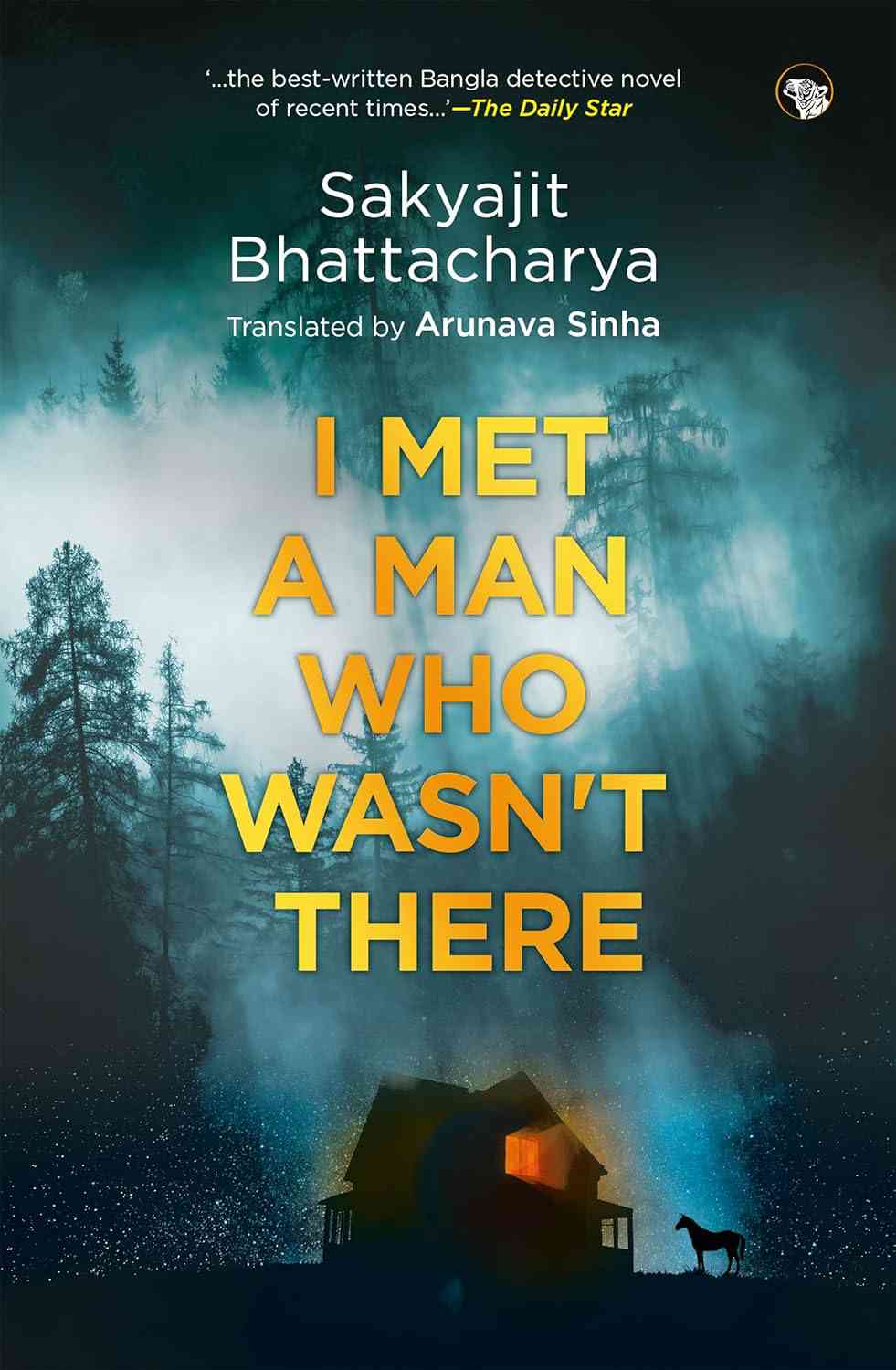
Excerpted with permission from I Met a Man Who Wasn’t There, Sakyajit Bhattacharya, translated from the Bengali by Arunava Sinha, Speaking Tiger Books.
Disclosure: Arunava Sinha is the editor of the Books and Ideas section of Scroll.
