











“Little bits of truth, popping out like lizards, saying, “Here am I. You know me. You know me quite well. Don’t pretend you don’t.”
Agatha Christie’s 1944 novel, Absent in the Spring, written under the alias Mary Westmacott, has no crime in it – let alone a murder. No one does anything wrong, no cruel words or harsh blows are exchanged; in fact, everyone’s exceedingly polite and proper, and most content with their place in the world.
Joan Scudamore, wife of an upper-class English barrister, is travelling back to London from Baghdad on train. Her younger daughter, who has recently had a baby, lives there with her husband, who’s a PWD engineer in Iraq. After a long time in the “Occident”, Joan is eager to return home to her beloved husband, Rodney. However, bad weather leads to a breakdown in the railway services and she’s shored up in a rest house in Tell Abu Hamid, a small town somewhere between Aleppo and Mosul. The company she has is an Indian manager (who naturally only speaks broken English) and no one else. She wouldn’t have minded this long-ish layover had it not been for what her old friend Blanche had said to her on a chance meeting on the way. Blanche’s careless jokes about Rodney’s roving eye and Joan’s goody-two-shoes nature bug her, and with endless time on her hands, Joan decides to decipher exactly what Blanche might have meant.
Family life
The uninspiring food, sultry sun, and long walks in the arid streets of the small desert town make her reminisce about her life back home. At first, Joan is, in a self-smug way, proud of how well her children have turned out. The daughters have married well and the son, following an unexplained bout of madness for the farming life, actually settles into one with success. Even after years of marriage, she and Rodney are as much in love as ever before. This evaluation brings her joy – she has been a good wife and mother. She even compares Blanche’s messy marriages and life to her own, and concludes that Blanche was simply in no position to pass judgments on someone else’s family life.
But the heart does not still. Joan’s thoughts return, first, to Rodney. They were happily married, but it had not always been a smooth ride. She recalled a handsome woman who lavished attention on Rodney and how much he enjoyed it. A more recent incident strikes her – Rodney had said he was glad to have her travel and he hadn’t waited for the train to depart before turning around and leaving. She had paid no attention to these until now, but now, in the desert, where it was “light and only light”, she couldn’t hide herself from her own misgivings. She begins to sense Rodney’s dissatisfaction with their marriage and his patriarchal ways, which back home seemed quite charming, are now seen by Joan as a lifelong dismissal of her as an equal partner.
This is best illustrated in how the couple deals with their children. Joan is traditional in her ways and beholden to propriety. So when their elder daughter Averil falls in love with a married man, Joan is hasty in handling the situation. On the other hand, Rodney takes a more understanding view of the relationship. They are at loggerheads at this important junction of parenting – and Rodney dismisses Joan’s concerns as being too conservative and naïve. This is repeated when the couple hits a crisis with their younger children, Barbara and Tony. Joan does not appreciate Barbara’s daredevilry and her fondness for the no-gooders, while Tony’s disinterest in his father’s law practice frankly surprises her. She deploys advice and threatens to straighten out her daughters but Tony, stubbornly, clings on to his passion.
This, Joan, considers her failure.
So it goes
The successful marriages of her daughter, however, do not turn her into the more favoured parent. Averil seeks advice from her father, Barbara calls her father “Dads” for he addresses her as “Barbs”, and Tony, too, as Joan recalls, quite inexplicably preferred to have his father by him when he’d fall sick as a child. Joan’s obsession with respectability leaves no room for human error – and what are lifequakes for her children are viewed by Joan as threats to the family’s standing in society.
In modern psychological terms, Joan would probably be classified as a narcissistic parent – parents who see their children as extensions of themselves, lacking empathy, being overly critical, and prioritising their own needs. Joan, of course, is unfamiliar with the phrase, but this long period of isolation forces her to acknowledge the fact that she has caused great misery to those she loves best.
What Joan mistakes for peace at home is actually her family deliberately creating distance from her from the daily goings-on of their lives. Joan, who considers herself so unlike Blanche, has made a royal mess of her life in her own way.
And yet, Christie is not harsh in her treatment of Joan. Women like Joan, despite being wealthy and well-respected, had little to call their own. Social standing mattered a great deal. Joan stresses that she is happy not to have been a career woman and that she is best-suited to domestic life – but her anxieties stem from not having an identity of her own. Her control-freak nature, if one wants to call it that, is her most natural way of preserving order. In the most absolute way, Joan is as helpless as her daughters, who too, were not allowed to marry out of choice or imagine a life outside the confines of domesticity.
In Christie’s novel, there are no detectives or the police to bring the axe down on the criminal; here, a woman’s heart is the judge, jury, and executioner all at once.
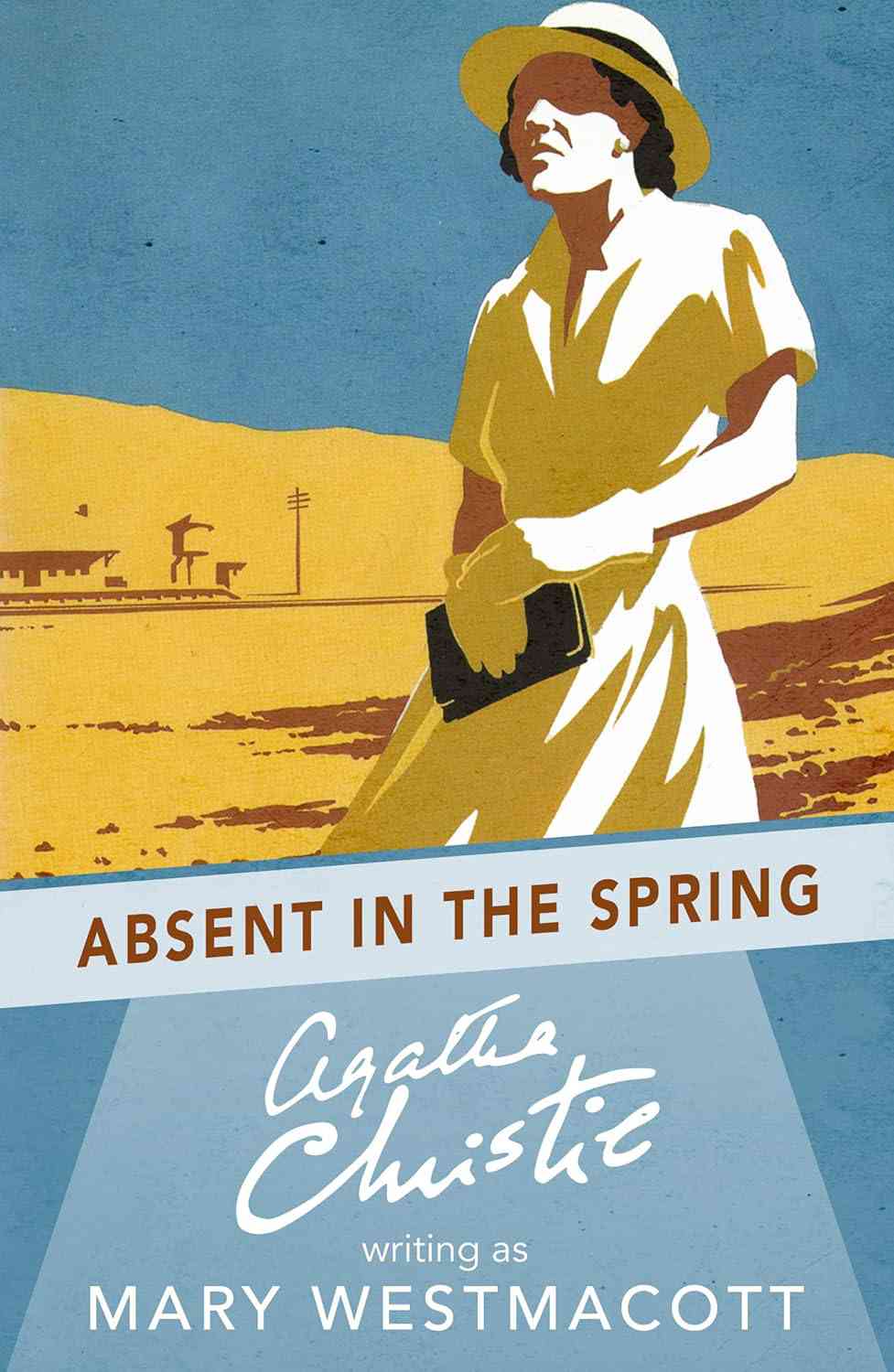
Absent in the Spring, Agatha Christie writing as Mary Westmacott, HarperCollins.
