





The more “silence” became an integral part of my life since childhood, the more I asked myself why I found it so difficult to express myself and speak out. I grew up in a home where my siblings and parents were always chattering away. My mother, in particular, talks constantly – to living beings and non-living things alike. She can be found speaking to pets, people, her cooking vessels, or anything else in front of her. My sisters were often up to mischief, and they’d blame me to escape my father’s beatings. I also felt intensely that I did not belong in my family, even though there was a sense of familial relationship.
A feeling of belonging to a physical space, saying, “This is my space, these are my people, this is my body”, is never easy for those experiencing dysphoria with their assigned gender. Yet, with some effort, even in spaces where a person is not accepted or allowed to express themselves, they can find something to claim as their own. It took me years to make my body my own, to feel a sense of belonging to both my body and my mind. It is sad that sometimes even those closest to you, like partners, will not understand the discomfort or dysphoria. Visible dysphoria is addressed to some extent through the efforts of movements for social justice, which also help build sensitivity around body and mind dysphoria. But the subtleties of daily life, work, physical processes like menstruation – which many trans men refuse to even speak about (which needs to be respected) – and physical height, especially for trans men, are often not seen or ignored. Sometimes, this issue provides fodder for ridicule or common jokes. In our community group, one of my trans man friends unfortunately became a guinea pig for a doctor to explore a chest surgery. Post-surgery, he discovered that his surgery had not been performed properly. One of the partners of another trans man made fun of his uneven chest on seeing him bare-chested at home. The same person who ridiculed my friend had to be reminded that their own partner also had a share of inconsistencies that did not fit the conventional “man” box.
Another instance comes to mind. I had bought a motorbike, but my ex-partner refused to ride pillion with me and, in front of everyone, said it was because of my height (I am quite small-built). Apparently, it made her feel unsafe. This experience left me devastated and unnerved for several months. Ethics, politics, sensibilities – nothing helped me address this issue except sharing my sense of devastation with my very close friends. Even imagining a space where it is not just about being accepted but where we – as trans people – have a sense of belonging is the most difficult part of life. To construct a dignified existence in a non-queer and non-trans space is a daunting task, similar, I think, to what any other minority community must feel in a society that is insensitive and majoritarian.
I knew my sense of gender and the people I was sexually attracted to were not considered common. After all, the norm imposed on us is heterosexuality. In my childhood and teenage years, I could not articulate this as clearly as I am able to now. But I just could not hold back from expressing my gender. It was obvious that I could not be a “woman” according to the assigned gender norms prescribed by society. It was not fear that stopped me from expressing my sexuality. Expressing sexuality is taken for granted but only for cis men; no one else is supposed to. Even male-assigned trans people are traumatised for expressing themselves, and therefore, are forced to hide their true feelings, like us. Being born in a female body means you are expected to be a “good” woman. I had many silent thoughts about gender, gender assignment, the promotion of moralistic behaviour that conveniently serves patriarchy and discriminatory standards of gender constructed by social morality. All of these fit neatly into their assigned places – like pieces of a jigsaw puzzle in a patriarchal society.
The only form of sexuality that is shown in media, books, and magazines is (mostly) heterosexuality, through advertisements, cinema, theatre, songs, music, lyrics, poems, art, culture, etc. Even though there are representations of different kinds of sexuality in temple sculptures, paintings, music, and other arts, they are either silenced or consciously ignored. The constructs of heterosexuality define how a woman should be coy after sex, how a man should assert his manliness after sex, how a family identifies that the husband and wife had sex, and finally, how it all leads to reproduction.
Mass support is organised around reproductive heterosexuality, which is normalised through the privileging of the family as a unit, with society, health and administrative systems, welfare schemes, the economy, and social morality all being structured to support this unit and reinforce a Brahmanical, patriarchal, and heteronormative society. My friend, Rumi, often shared with me how, even as a child, he found this system abnormal. He found it odd that while talking about sex was considered taboo, sex itself was evident in many layers of society and even openly discussed within families in the context of reproduction and family lineage. For people like me, whose orientation was not hetero, this overwhelming presence of heterosexuality was not easy to live with. Everywhere you look, heterosexuality is so normalised that it seems as though no other life systems exist.
Even today, in most progressive movements for social justice and human rights, when people come together, they engage with each other through heterosexual norms and conversations based on social morality. Within families, in general, people do not engage with us – the non-heterosexuals – especially if we are single. Heterosexual families, their recognition, and the support systems they can access are the only norms. Conversations like “How is your husband? How is your wife? How are the children?” are all seen as courtesies, but in actual fact, they reinforce the heteronormative, binary-gendered family systems. Not because they are asked to, but because such courtesies are not extended to queer and trans people, even in most progressive circles. For many activists, acceptance of queer and trans people only means acknowledging their existence: a smile, a nod, and a namaskar perhaps. There is a common trend of not looking beyond the heteronormative perspective, and furthermore, of not acknowledging the emotions and ways of trans people’s lives.
I have always avoided fights and prefer to respond to anger and violence with silence, especially when it comes to personal issues. But I am also very short-tempered. That might be because I tend to bottle up so much frustration that I cannot express myself openly. If someone tries to regulate me by saying, “This is what women should do, and you should also do the same,” that is where I draw the line. I will refuse to even go anywhere near that task or chore. At the same time, I would always insist on doing what I was asked not to do. This pent-up anger and frustration ended up affecting me adversely later in life – whenever someone insisted that I not do something, for whatever reason, I’d feel the same pressure to resist.
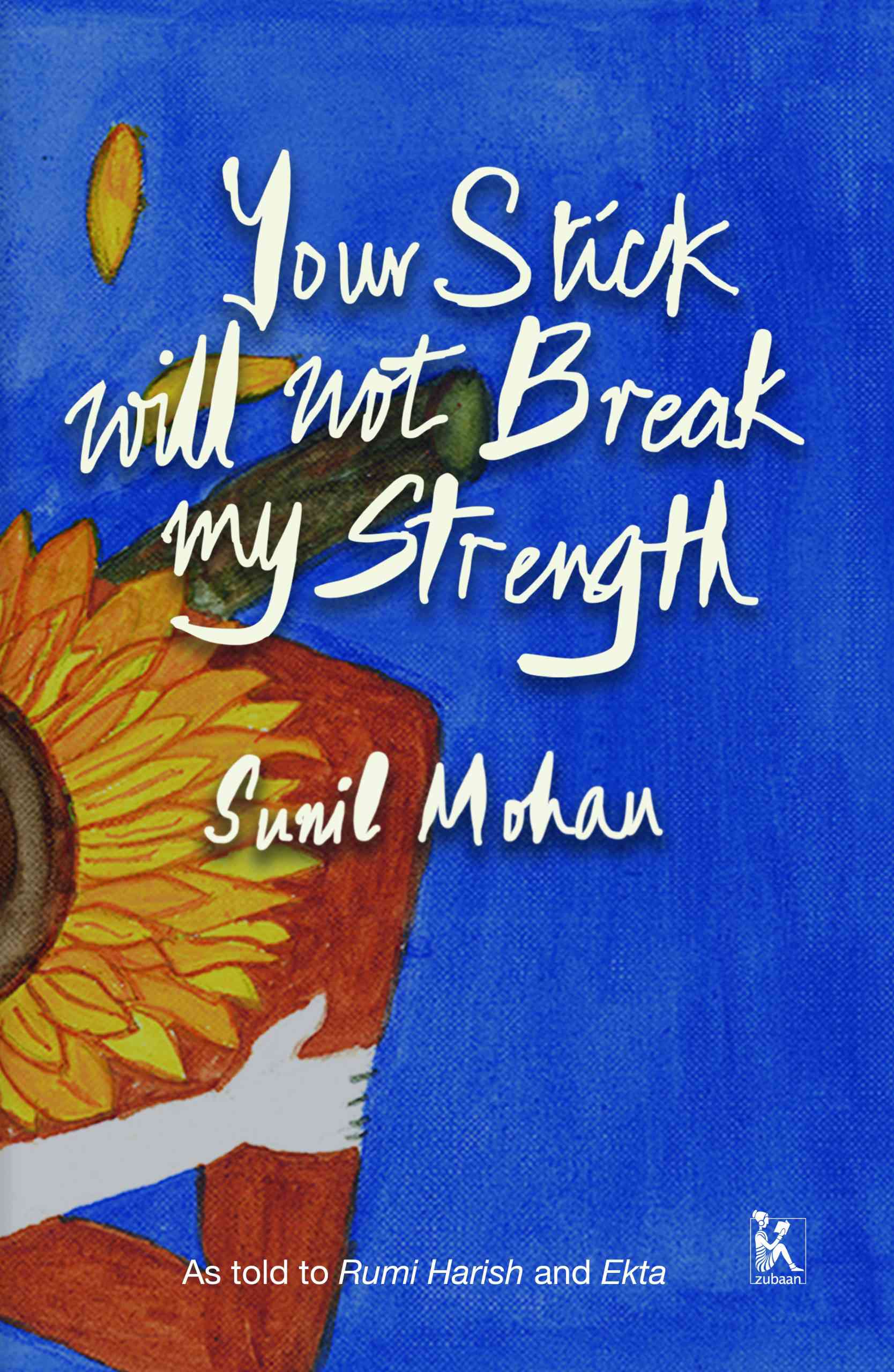
Excerpted with permission from Your Stick Will Not Break My Strength, Sunil Mohan, as told to Rumi Harish and Ekta, Zubaan Books.
