
Thinking of the famous, and oft-repeated, advice that Lord Krishna gave to Arjuna when the latter was flummoxed about whether he should turn against one of his own in the Kurukshetra War, or be faced with the humiliation of not fighting against injustice, Acharya Digdarshi, a devout Gandhian, in Pratibha Ray’s novel Uttarmarga, wonders if he should leverage the wisdom advocated in the epic Mahabharata to “inspire [the poor, illiterate peasants] to rise against the oppressive zamindar and join the freedom movement”.
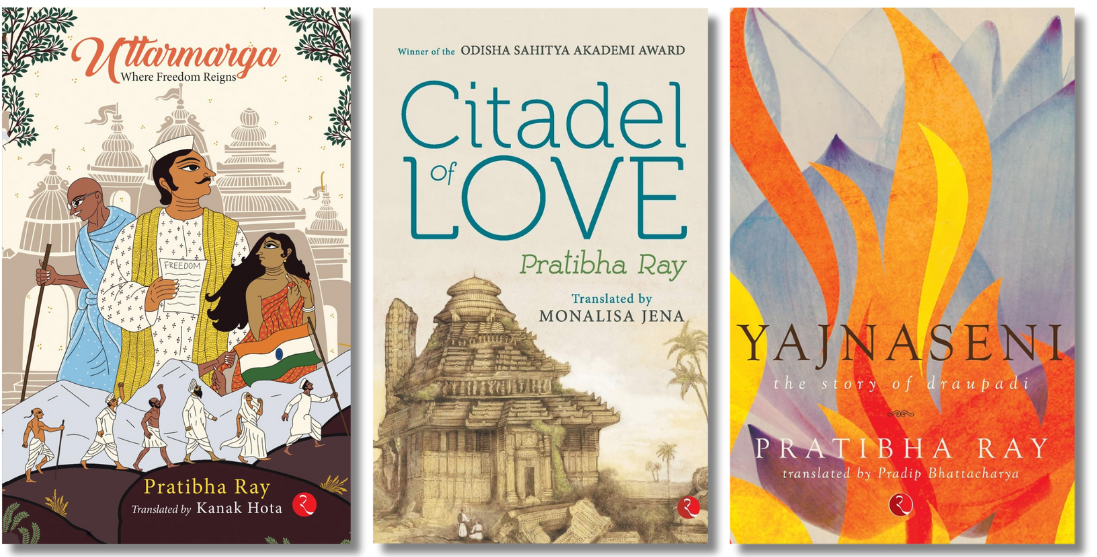
Published in Odia in 1988 the novel was published in English translation in 2025 by Kanak Hota, who named it Where Freedom Reigns. This conundrum that Digdarshi is faced with helps Ray put things into perspective for her readers: that the Indian freedom movement wasn’t nationalistic in the sense that one is often attuned to understanding it, and that people at the grassroots level were organising what’s lost in history, which is why she felt it necessary to foreground these unheard foot soldiers in her novel.
In her defiance towards the elites who were bestowed with, or assumed, this privilege to speak on everyone else’s behalf, Ray’s literary politics is clear – she wants her readers to keep their eyes and ears open so that a different narrative that isn’t their own is not manufactured.
Carefully translated by Hota, keeping its measured intensity and matter-of-fact storytelling intact, Where Freedom Reigns is as much contemporary as it is a classic. Both the writer and translator were at the 2026 Kerala Literature Festival in Kozhikode, the UNESCO City of Literature, where the duo discussed not only the novel but also emphasised the need for more translations from one language into another, not limiting the discourse to translations into English alone.
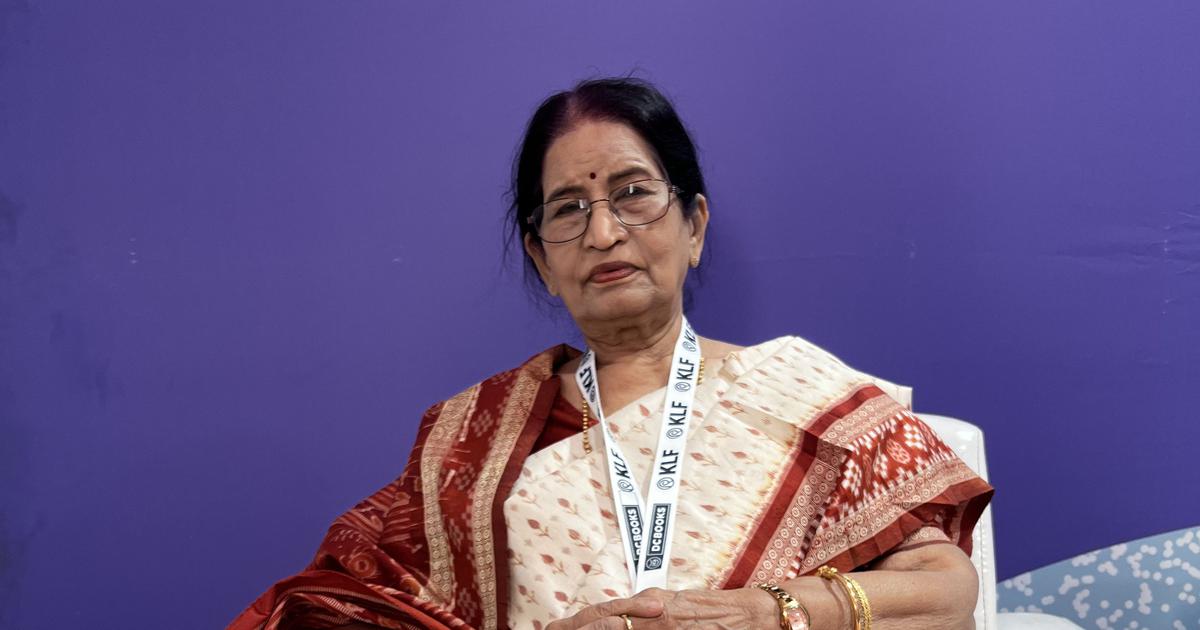
In an interview with Scroll, the Padma Bhushan and Jnanpith awardee, and the first woman to have won the Moortidevi Award, pushed back against the homogenisation of the freedom struggle, reflected on her writing career, and talked about why translations matter. Excerpts from the interview:
Uttarmarga was published in 1988 and was translated into English in 2025. Your first novel was published in 1974, and over the years, your works have been translated into several languages. Given that you’ve witnessed a significant shift in the demands of translations from one language into another, I was wondering if you would like to reflect on the publishing industry’s approach towards translation and how translation as a practice itself has evolved.
I think translations are better nowadays, because readers are seeking them seriously. In my case, Kanak Hota, who now lives in the US, was constantly in touch with me, discussing the book to get its inner sense correct. We were corresponding a lot during the period of translation. I think the book turned out well because she loved the book from her heart before translating it. And that’s important, because translation should not be imposed. It should come from the translator’s love for literature.
Sadly, there’s no encouragement or inspiration to translate works. In a multilingual country like India, this is a contradiction because religion and politics divide, and only literature connects. We need to give more respect to literature and translators.
I always say this: language is regional, but literature is universal. We’ve read Tolstoy in translation. Now, we’re reading even Mark Twain, who wrote in English, in other languages. So, translation is required; it’s a necessity. I’m very fortunate that I’ve been translated into Malayalam, and I think there’s someone who’s translating my works from Odia into Malayalam directly. A few people have translated from Hindi into Malayalam. I can’t read Malayalam, but I’ve heard from Malayalam readers that they quite enjoyed it, so it has opened up a new readership for my works.
The freedom struggle narratives, which at least I’ve read, largely centralised the Partition of India, by which I mean the Punjab side, but when one reads a variety of works, they realise how differently the struggle against colonialism looked. Particularly, women’s works have unravelled different layers of this struggle, which was for a long time hinged on masculinity, fist-fighting and whatnot. Would you agree if I say that gender has a role to play when it comes to storytelling?
When I write, I’m not a man. Or a woman. I’m a writer.
When I portray a man’s character, I become a man. When I’m writing a woman’s character, I become a woman. When I’m telling you a story about a tree, I feel that tree’s pains and sufferings, because I sense we’re torturing trees. Every writer should be doing that, in my view, understanding who they’re writing about. So, it doesn’t have to do with a woman’s perspective.
I wrote Uttarmarga because no novel talked about the unsung heroes of rural India. And even history failed to document or remember them, so I wrote about women who participated in the freedom struggle, who sacrificed their lives, but history failed to document or remember them.
I never write in ink, sitting on a chair with a table by my side. I write in blood, rooted in the soil where I belong, narrating its suffering. What I do in my writing, I practice in my life.
Talking about roots, my next question should be about what your childhood was like, and how it helped shape your literary life.
I was fortunate to have been born and brought up in a family where boys and girls were treated equally. For his time, my father was very liberal and modern. He used to say that his daughter would become a pilot or a doctor someday. When a small poem of mine came out in a newspaper, he declared that his daughter would become a poet. That was the best reward for me in my literary career. My childhood was the best period of my life.
My father educated and groomed us equally. He was very encouraging, naturally, because he used to write poems on the freedom struggle. But I didn’t read my father till I began writing. I came to know about his works later, when I wrote Uttarmarga. After his death, I was going through his files and discovered his writings, and there I discovered a note about the freedom struggle of rural Odisha, and a list of names of men and women from our village, its unsung heroes. That file became my handbook. I consider that to be a divine instruction from my father: to write a novel on these unsung heroes.
This signals to me that documentation exists sparingly, like your father’s notebook. Given that there’s a rich oral tradition of storytelling and remembering historical events, and more so where you come from, could you help share how folklore and oral storytelling informed your writing?
Absolutely. India is rich in folk literature. But it’s dying, fading away.
Because I’m very close to my village people, I’ve heard the oral folktales, and they’ve had a significant impact on me and my writing. There are several words I’ve used in my novel based on them. If the character needed that word, I didn’t change it; I used it. A writer, you know, has no independence to use such words because it’s not the writer’s language. It’s the language of the character. So, whenever I write about the rural folks, I use such words. Rural culture, which India is very rich in, is something that will inform all the upcoming writers if they pay attention to preserving it.
The structure of Uttarmarga is cyclical. It makes me wonder if you employed a nonlinear structure because of the richness of its use in Indian epics. Then, given the way the novel begins and ends, you were, in a way, hinting at the “history repeats itself” maxim. Could you reflect on the same, please?
It’s a mental phenomenon, actually. A writer doesn’t do anything consciously. This is an internalised process. When you become the situation, you become the time, you become the character, then only a story gets written, or takes shape.
A writer doesn’t write; the story writes itself.
This is eerily similar to how the Daisy Rockwell translation of Geetanjali Shree’s Ret Samadhi, Tomb of Sand, begins, “A tale tells itself.” I must ask you how you see these two major recognitions – the International Booker wins of Shree and Rockwell’s in 2022, and Banu Mushtaq and Deepa Bhasthi’s, with Heart Lamp in 2025. There should be more discussion on how to nurture translations, secure funding, etc, don’t you think?
Yes, as I said, in a multilingual country like India, there should be more encouragement for translations. There should be government-funded translation bureaus in universities. More scholars should come forward to support translations. And translators need to have command of both the languages, the one they want to translate from and the one they want to translate into. They must internalise the novel, thinking they’re writing one, not translating it.
In response to a question, you noted that telling a story is an intuitive process. But one has to arrive at this point to write something, isn’t it?
Thinking actually takes more time than writing. The seeds of a novel are planted several years ago, before you start writing it. It can take 20 or 30 years for a story to arrive, and it may take you a lot less time to write it.
In my view, this happens because before fertilisation, the seeds should mature. Thinking matures your writing. You should be deeply meditating on the soil about which you want to write. So, cultural awareness is important. You should know the topic, the subject you’re writing about. You must be closer to it. You see, when a tree grows, it can break through walls or break the hill, so if you love everyone without discrimination, your writing will develop like a big tree, its branches will touch the horizon. I share these metaphors because I’m rooted in my soil, and every writer should be faithful to theirs. The present attitude, “Today, I’ll write, and tomorrow I’ll become famous”, I don’t find it appealing. I taught for 29 years. I was in the Public Service Commission for six years. I raised three children. I had a family. Writing alongside fulfilling these responsibilities is what I’ve done. I never neglected any of my duties. Had I neglected my children, or my home, or my classes, I’d have felt very bad. So, I’d go on to do all that, and late at night, I’d write. I’ve written all my novels at night when everything was silent, there was no demand from anybody, children were asleep, household work was done, and my class preparation was over. That was the time when I wrote, for that’s the time I had for myself.
But that must’ve been incredibly harsh on you. To tend to all these demands, which, even if you don’t think patriarchal, were made on you. Had those tasks been divided somehow, you may have had more time to write.
I feel that one must be faithful in everything. Whichever role you have to play, you must play it faithfully. Otherwise, you can’t be a good writer in my view. For me, that was being a good mother, a good wife, a good teacher. You can’t cheat on any of these roles. Otherwise, you’ll be consumed with guilt.
You know, when I won the Jnanpith Award, all the media people came and asked my daughter, “How do you feel your mother is a great writer?” And she said, “We never knew that our mother was a writer. She wrote when we were asleep, so we didn’t know she was writing.”
My writing time was my writing time, so they weren’t aware of it. Nowadays, women are getting the liberty to do everything. Several of them are coming out to do what they want, so if they want to write, they can devote time towards it. They won’t waste it on anything other than that.
But today writers are writing in the age of AI, too, alongside all the other demands. I’m curious to know your views on this fear that’s looming over everyone’s heads, whether it’s manufactured or real, one doesn’t know, that AI will make writers redundant.
No, not at all. AI is our brainchild. It’s not God.
You can point out mistakes AI makes, can’t you? I asked AI something the other day, and I pointed out its mistakes. It gave a wrong answer basically. Knowingly, I asked this question, and it offered an incorrect response. I replied, “You’re wrong”. It said, “I’m right”. So, I elaborated it for the program, saying this is right, and you’re wrong. Please note down your mistakes. And it thanked me.
AI cannot be a master, and you cannot be its slave. You can teach AI.
They won’t supersede us. Thanks for saying this.
AI is very helpful, actually. You get all sorts of information. You can’t know everything. Suppose you’re writing something, but you have to go to the place you’re writing about to know something. It’s not always possible to go everywhere, so ask AI, and it helps you with all the descriptions and historical background. But it’s your duty to check. You have to be very careful because AI commits mistakes, so how can it supersede us?
What are you reading now? Are you in touch with your publishers or translators to get more of your works translated?
I’m always busy with publishers, writers, and readers. And I say, I’m always writing. Recently, my novel on the Kalinga War came out, Dayanadiru Niranjana. No one has touched that area for the novel form. It was released recently.
I’m writing something which hasn’t crystallised yet; I’m still thinking. As I said, thinking takes more time than writing.