




The funeral procession had started out. It was a small one, a poor one. A young man was at its head, cradling a small corpse, holding it parallel to the Earth. The corpse was wrapped in a new white cloth. This was anointed with haldi-koonkoo and bore a small garland. The young father’s clothes were dirty, betraying his poverty. Clutching the young father, an old man tottered after him. He had only one eye, the right one; the left one was completely shut. As the old one-eyed man tottered along, he turned his head constantly, looking from left to right. He was followed by ten other men. Their clothes were also dirty, betraying their poverty. Bringing up the rear were two young men. Their clothes had been ironed seven or eight days earlier and had been in constant use since. The starched smoothness was long gone but the folds remained. The funeral procession turned into a narrow lane. On either side, were the rear-ends of big houses, bungalows and the city’s fabl’d waadaas. If a house or two faced the lane, their doors were closed.
It was 2 pm. It was hot. No one was around. And the poor funeral procession wound its way on.
The lane was not entirely one-way. Somewhere along its length it was punctured by another road.
Down this puncturing road came a scooter and it bumped into the young man carrying the little corpse. The little corpse fell from the arms of the young father and hit the ground with a dull soft thud.
As the small corpse fell, the young father made a desperate, reflexive grab for it but when he failed, he swooped down, again as if by reflex, to pick it up again. Duplicating these actions, the one-eyed man who had been clinging to the young man tottered wildly and when he had regained some semblance of balance, made haste to straighten the garland around the neck of the corpse.
Confused by all this, the young father walked on until he was some distance from the scooter. He had no idea what he should do and so he came to a standstill, cradling the corpse in both arms. The one-eyed old man stopped too, adding his bemusement to the bemusement of the young father.
The funeral procession disintegrated. It gathered again around the young father and turned into a questionnaire.
“Did the bones break?” one of them asked.
A second said, “Check if the skull cracked.”
A third agreed, “Yes, check the head first.”
The fourth: “Such a wee thing. Bones must have broken.”
Meanwhile, the scooter had skidded to a halt but its rider had managed to keep his balance. The rider was not a young man. Although he had not fallen over, he had suffered a scare. When he saw that two young men in clothes that had been ironed eight days ago and worn consecutively since were heading towards him, he grew all the more scared. All the strength drained from his limbs and he lost control of his scooter. The scooter toppled on to his right leg, and then fell over to the right. The rider followed suit, falling over with the scooter. The sound of the man falling mingled with the sound of the scooter falling.
The two young men in the clothes that had been ironed eight days ago had arrived on the spot. One of them picked up the scooter and set it on its stand. By that time, the other had sat himself down on the street and taken the scooterist’s head in his lap.
The funeral procession stopped in its tracks, unaware of what was going on; its members stood about, staring in the direction of the fallen scooterist.
The one-eyed man tottered up, pushing his way through the crowd and asked one of the young men in the clothes that had been ironed eight days ago in a halting voice, ‘What is to be done?’
“Get on with it. We’ll settle this and catch up,” said the second young man whose lap was temporarily occupied by the head of the fallen scooterist.
A jeep roared by.
The old one-eyed man tottered back to the funeral procession. As he approached them, he waved his hands, urging them, “Move on, move on.”
The group re-organised itself and the one-eyed old man took his place behind the young father. The funeral procession started off again.
The two youths in the shirts that had been ironed eight days ago and not washed since, stared at the fallen man, wondering why he did not open his eyes. The first young man tried a gentle slap to the cheek but the eyes remained firmly closed.
Another scooter bearing an entire family – a father, mother, son and daughter – came by. The husband slowed down as they passed this tableau of three. The entire family took in the scene. The little boy, squashed between the husband and wife, asked, “What happened, Aai?” The husband accelerated and the scooter passed out of sight.
“What now?” the first young man asked the second.
A pair of young men, double seat on a cycle, rolled past.
“What happened?”
“He’s unconscious,” said the young man in whose lap the scooterist’s head lay.
“Your buddy?” the double-seat asked.
“Chhya. Don’t know him from you. We saw him fallen like this, so we stopped,” said the youth in the shirt of eight days’ use after its ironing, the one who was standing up.
“So why did you stop? Leave him there…He must be drunk,” said the double seat. And on they went, the cycle weaving a little under their combined weight.
The youth in the ironed-eight-days-ago shirt, the standing one, bent over and sniffed at the fallen man’s mouth.
“Not been drinking, no,” he said.
“So, should we just leave him here? He knocked down our poor baby, didn’t you see?”
“So, what do we do?”
“Slipper sniff?”
“Try it.”
The first youth pulled off one of his slippers and held it under the nose of the recumbent man.
Two senior citizens, women, walked by, casting them sidelong glances.
The scooterist moved his head. The first young man readjusted the position of the slipper so that the scooterist might get a good sniff. More head movement. The first young man applied the slipper again. The scooterist grimaced, screwing up his eyebrows, his lips, his entire face. He pushed away the slipper, opened his eyes a little to squint around and then opened them fully. The second young man helped him into a sitting position.
“Feeling okay?” The second young man asked.
“Yes,” the scooterist mumbled and slowly got to his feet.
The first young man threw his slipper to the ground and put his foot back in it and dusted the scooterist’s clothes down.
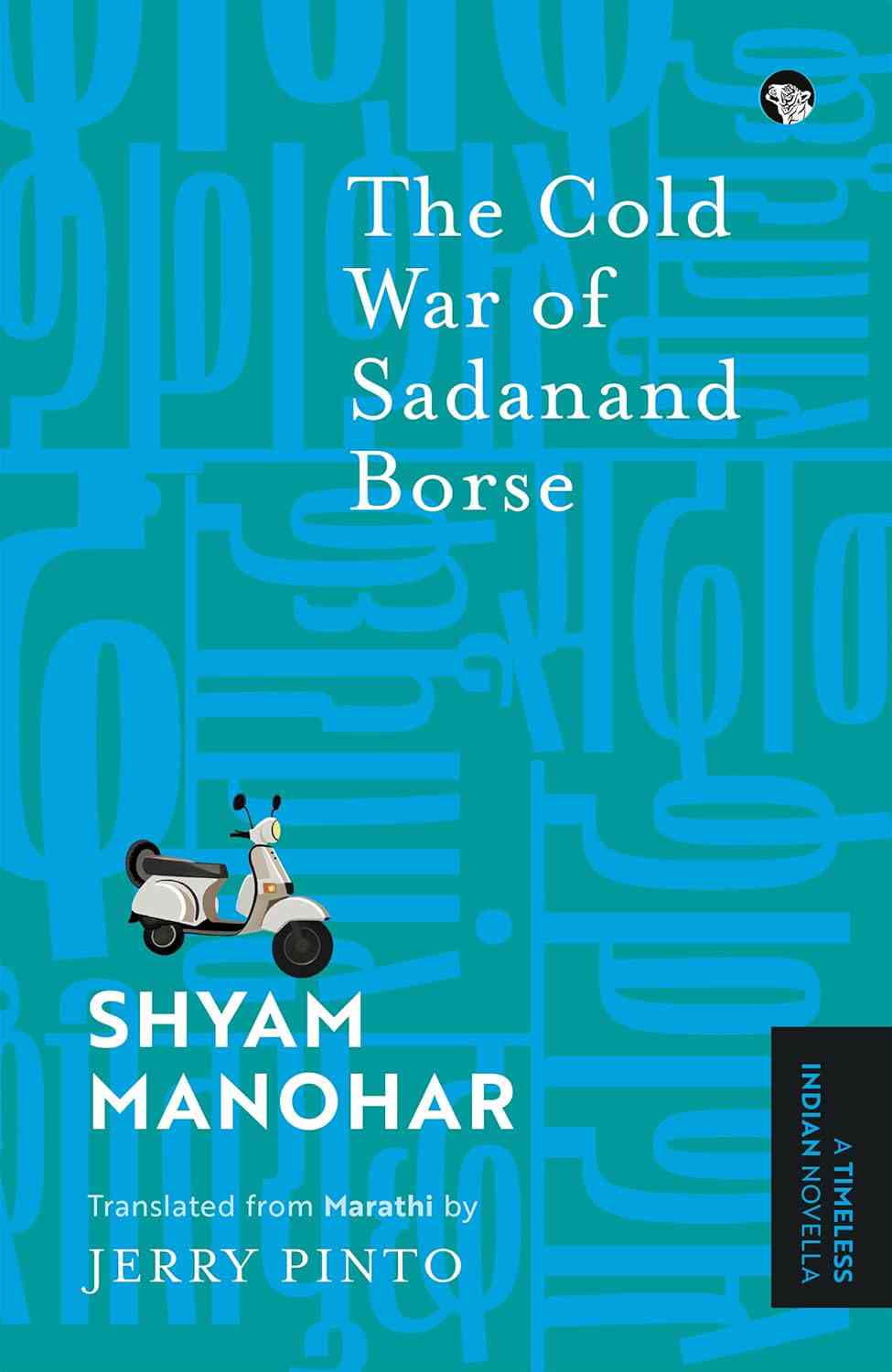
Excerpted with permission from The Cold War of Sadanand Borse, Shyam Manohar, translated from the Marathi by Jerry Pinto, Speaking Tiger Books.
