





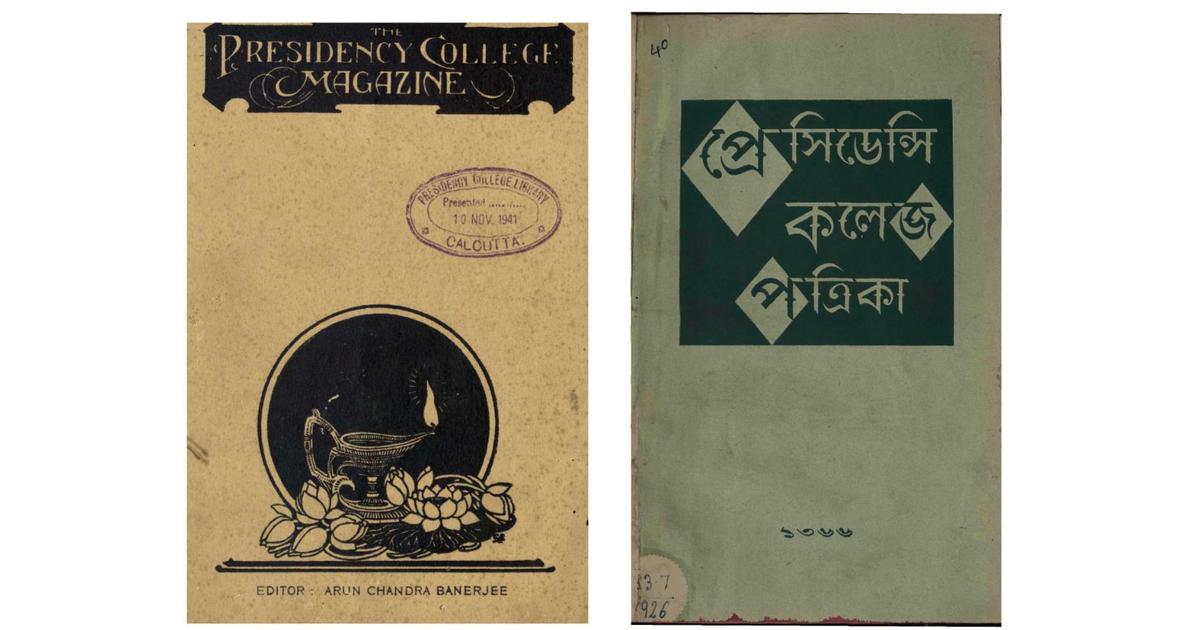
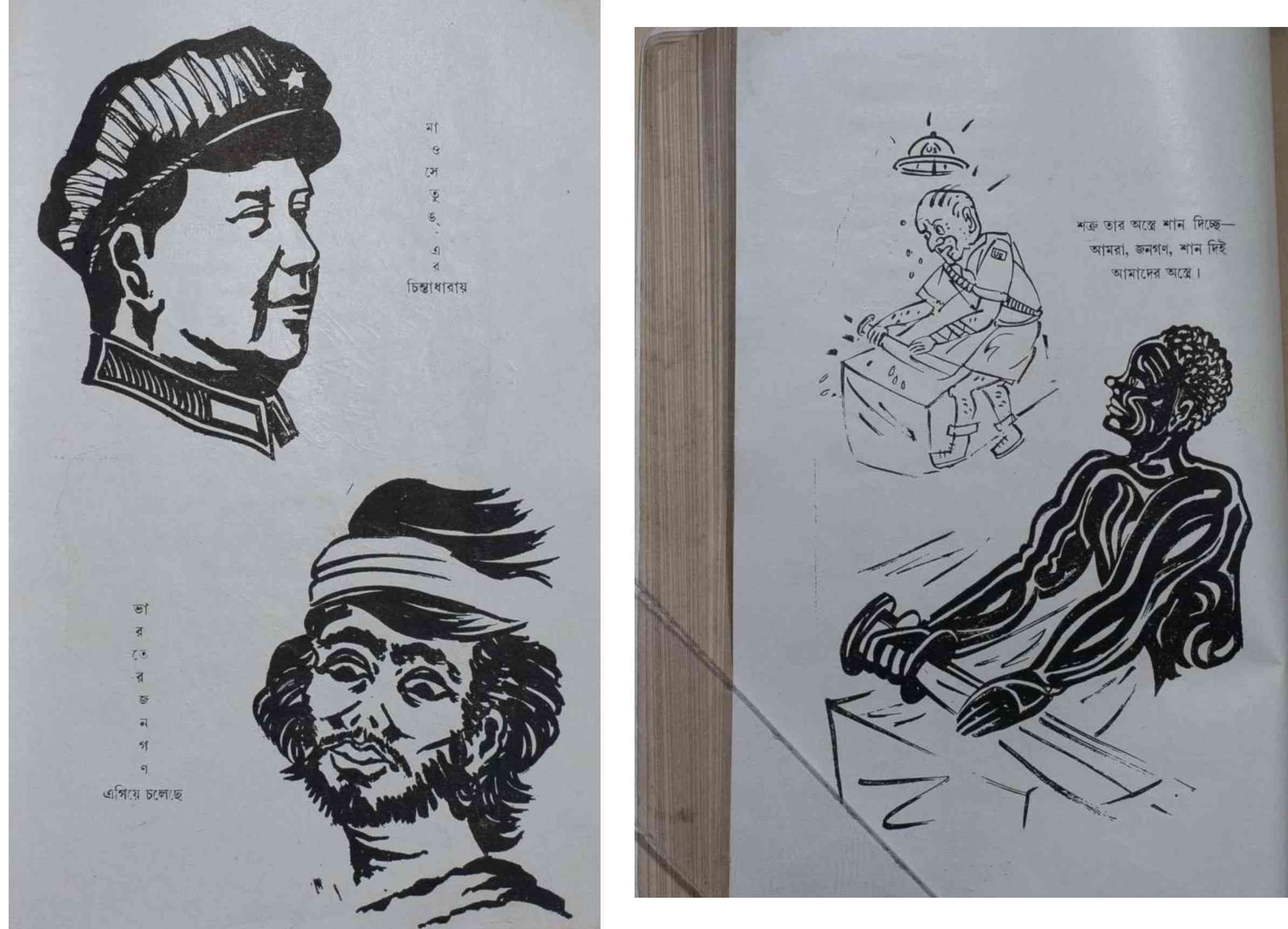
This book is the result of a multi-year collaboration between the editors. We received a grant from the University of Chicago Center in Delhi to continue the valuable work of digitising the archives of the Presidency College, a project that was begun by Swapan Chakravorty. But the Covid-19 pandemic threw many best-laid plans to the winds. Ours was no exception. Long conversations on Zoom prompted us to invite a small group of scholars who were interested in reading parts of archives already assembled or items that inveterate research assistants continued to collect from people’s homes. For example, one copy of the 1968–69 volume of the Presidency College Magazine that survived as the rest were pulped by the government of the day for the radical leftist content of the entries was traced to the personal collection of a professor of history at Jadavpur University. He was a student of the college when it reopened after the height of the Naxalite agitation. The copy he received had been set aside by librarian Prabodh Krishna Biswas, who secretly kept a copy with himself.
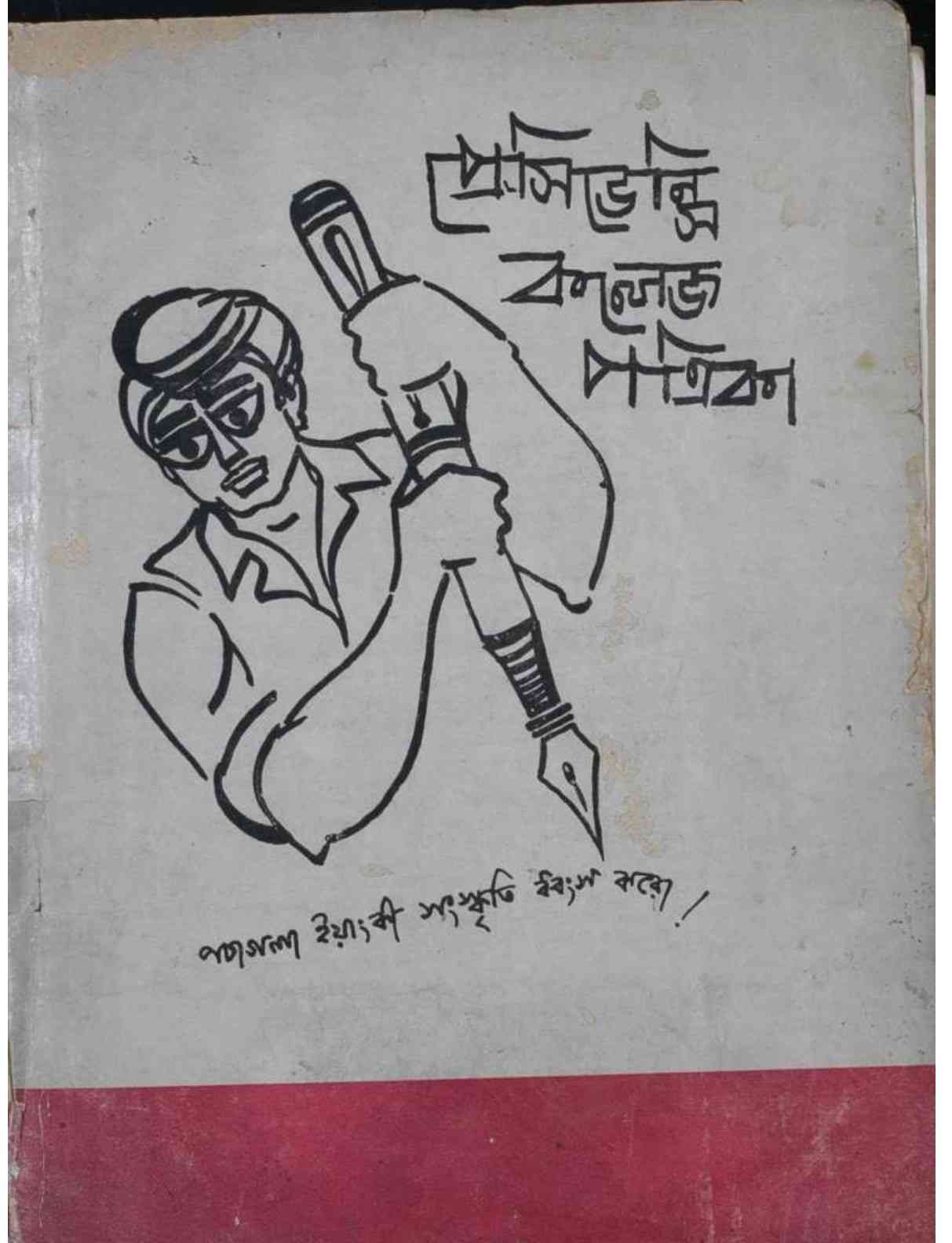
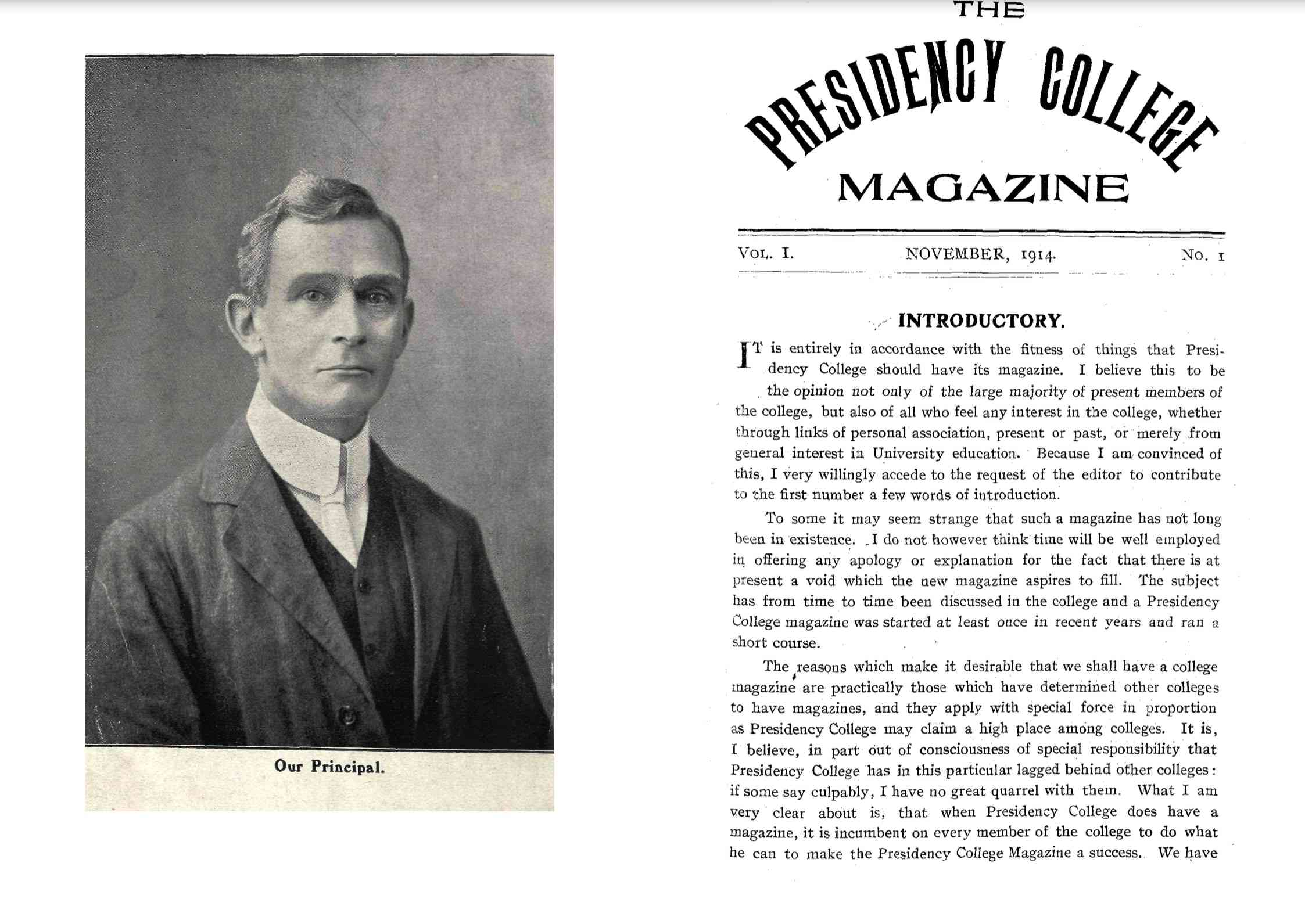
We realised very soon that archiving the records of an institution like the Presidency College is a process that never ceases to throw up surprises. To stay with the subject of the college magazine, we were under the impression – from writings by the first student editor of the magazine, Pramathanath Bandyopadhyay, and Henry Rosher James, the principal of the college who actively curated it, as well as accounts in the centenary and golden jubilee volumes – that it was first published in 1914. Prior to that date, the college magazine had a sporadic existence from 1905 onward in manuscript form. We were wrong.
An article in 1998–99 that appeared in the Autumn Annual, the publication of the Presidency College Alumni Association, makes detailed reference to a government file that was “preserved in the Historical Section of West Bengal State Archives (WBSA). This is a B-Proceedings file of the Government of Bengal, Education Department, No 4-P/28 of 1905.” The article by Ladli Mohan Raychaudhuri, a former professor of history in the college, was entitled “Swadesi and Presidency College.” Raychudhuri was also director of the West Bengal State Archives, and it is possible that he encountered the files during his tenure. The said files, however, are marked as “Missing” in the archives.
The contents of the file, reproduced in some detail by Raychaudhuri, are fascinating. They contained correspondence between PK Ray, the first Indian principal of the Presidency College who was also a professor of philosophy, and Alexander Pedler, the Director of Public Instruction and former professor of chemistry in the college. Pedler appears in this book in his role as a chemist in Madhumita Mazumdar’s chapter. In the correspondence, however, Pedler is, as an agent of the imperial government, much perturbed by a complaint of sedition he received from someone writing under the pseudonym “Truth.” “Truth” complained that an article entitled “Mussalmans in Bengal” by one Nares Chandra Sengupta in the Students’ Magazine of the Presidency College contained seditious content. The files in the WBSA that Raychaudhuri reproduced but we have not been able to examine firsthand, contained the correspondence between the college authorities and the government, responses from the student editorial committee, a response from the author of the article, and a reproduction of the article.
In his letter to PK Ray, Pedler stated that he found the said article in the October 1905 issue of the Students Magazine seditious and inquired if Ray or anyone else exercised supervision over the contents of the magazine. Accusing the author, Nares Sengupta, of “gross misconduct” and demanding that “he be called upon to show cause why he should not be rusticated” and that the names of the editor and the managing committee of the magazine be revealed immediately, Pedler pronounced that the magazine “must cease to exist.” The departmental secretary went a step further than Pedler and blamed the principal, Dr Ray. “Dr Ray is also responsible for the starting of the Magazine. He is to blame for not supervising its character. This is another example of the lamentable lack of discipline at the chief Government College.” The secretary urged “sharp action” against all those who were responsible for the publication of the article and also strict disciplining of the college and the Eden Hindu hostel that “are present centres of sedition.” Lamentably, Dr Ray readily acknowledged the charge of sedition levelled against the student; he went two steps further by impounding all existing copies of the magazine, offering to expel the author of the article from the college, and cancel his postgraduate scholarship. Not only Sengupta but the entire managing committee, he noted, had been asked to show cause for why they should not be “punished for indiscipline.”
In the detailed response by the student editorial managing committee to the principal, the secretary, Sukumar Chatterjee, observed that their committee was “democratically constituted from among students in the college” and that “we did not know that it was necessary to ask the permission of the authorities.” Without seeking to justify Sengupta’s writing directly, the student rejoinder did quote at length from the editorial statement published in the first issue of the magazine:
The one eternal rebuke hurled against the students is that all their interests are centred in the university curriculum and their vision confined within the four walls of the classroom. Our little magazine aspires to stimulate free thought by undertaking to publish what students may think out for themselves. It desires to supplement the education imparted in schools and colleges. Its ambition is to change the attitude of the students – from a state of mere passive receptivity of bookish information resulting generally in an intellectual nausea, to that of conscious activity – by providing them with a medium of exchanging the thoughts among themselves.
Having read the article, we now know that its contents were a critique of the British policy of divide and rule and of “Hindu zemindars” and “dubious philo-Mussalmans” who made common cause with that policy. Written in the same month when Lord Curzon, the governor-general, effected the first partition of Bengal in 1905, it is an engaged response seeking to understand that calamitous event. In 1925, Sengupta would be elected president of the Workers and Peasants Party of Bengal and in 1934 president of the Bengal Labour Party. In these capacities, he was on friendly terms with communists such as Muzaffar Ahmad and Soumendranath Tagore. He was also a successful advocate in the Calcutta High Court who wrote novels.
In 1905, however, Nares Sengupta was a mere postgraduate student at the Presidency College whose scholarship risked being rescinded. His response to the principal’s summons, therefore, is worth quoting at some length.
… Sir, I have been asked by you to explain my conduct in contributing an article to the Students’ Magazine headed “Mussalmans in Bengal.” I understand that it has been taken to be seditious. I beg to state, however, that in writing the article I had no intention of exciting hatred or disaffection against the Government, but only incidentally criticised Government policy. The article was written in extreme haste, and if there is any passage in it which you consider objectionable, as seditious, I sincerely regret that it should be there and am willing to withdraw it publicly if you consider it necessary. As to the discussion of politics being against rules of discipline in a Government College, I beg to state that when I wrote I was under the impression that the magazine had no connection with the College…
The letter concludes with another round of apologies and an acknowledgment that all issues of the magazine were being recalled.
This account of an article in a non-extant number of the college magazine is significant for several reasons. It shows the iron grip that the imperial government expected to exercise over its most elite institution in the colony, and the insecurities aroused when that grip seemed to loosen. It also demonstrates the alacrity with which a college administrator, who is remembered with much fondness and respect in college chronicles as the first Indian principal who also started the first philosophy seminar, acted when his own position was in the line of fire. Versions of such administrative canniness abound in past and contemporary histories of educational institutions around the world. Sengupta was pardoned, unsurprisingly not by Ray but by Gordon, the secretary in the department of education. While the students in 1905 seemed more accommodating than they would be even a decade or so later when the college had its first closure, the incident and the responses it elicited from the managing committee and the author show that Presidency students took seriously their mission to “supplement bookish information” with free thinking, a tendency that earned them the epithet of Young Bengal in the 19th century. Finally, the story illustrates something about our method in this volume, where we undertake to write histories of a fabled institution with an ear to contrapuntal notes that we might hear from archival gaps and absences.
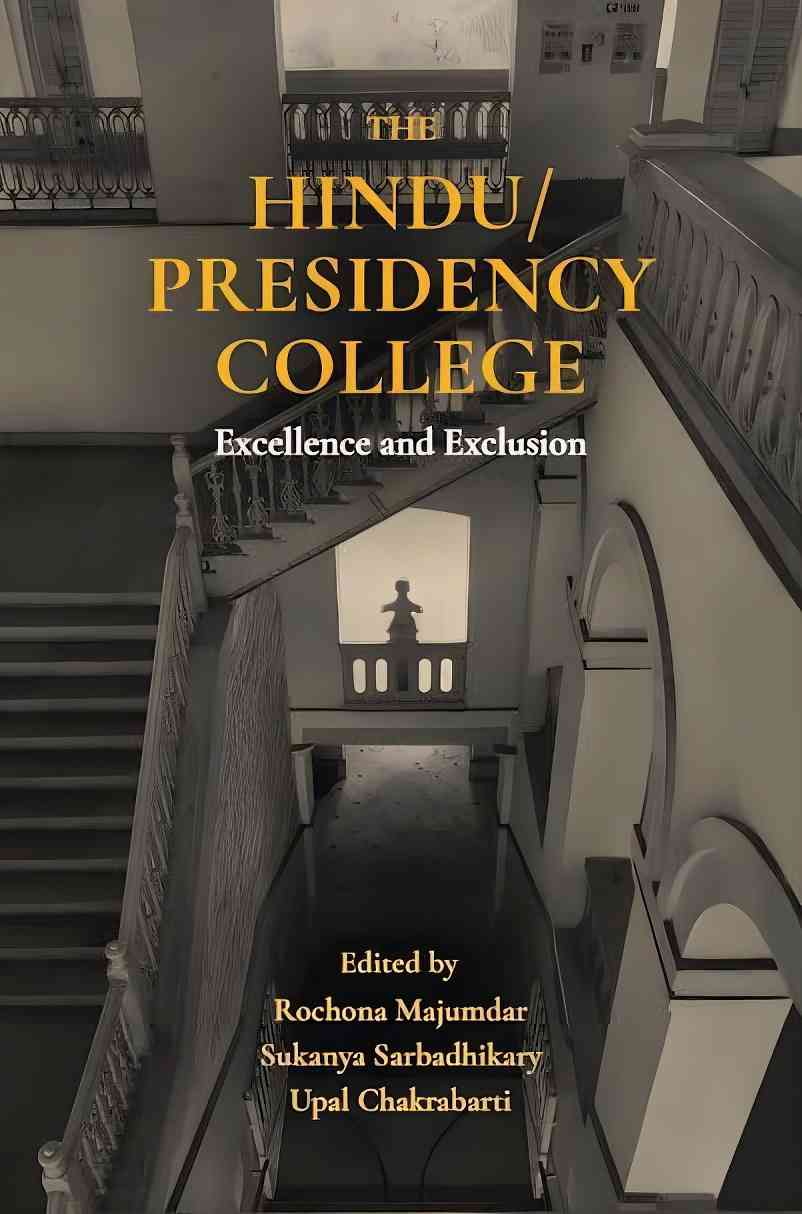
Excerpted with permission from The Hindu/Presidency College: Excellence and Exclusion, edited by Rochona Majumdar, Sukanya Sarbadhikary, Upal Chakrabarti, Cambridge University Press.
