



A flat expanse of land dotted with red patches of millet fields and thirty-odd homesteads dropped into its midst like bits of flotsam – that was Bangarwadi.
The walls of most houses were made of mud, the roofs thatched with straw. A few had flat terrace roofs. Each house had a front yard, some small, some large, in which stood drumstick and neem trees fed on wastewater. Behind the houses were sheep pens fenced in with thorny branches of the Babhul bush. A broken cart wheel leaned against a wall here and there. Everything normal.
There were no streets to speak of besides the single cart track. People walked in the spaces between houses. Several front doors of houses bore locks. A couple of children played in front of a house. The houses cast shadows on the dust-filled path. Stray dogs and black-and-white hens sat here and there in the shadows, eyes closed.
Women peered out of the houses that stood on either side of the path. The children abandoned their games and ran indoors. Further along, I spotted a maidan and a massive neem tree with a platform built around its base. As soon as I noticed the cool shade of the tree, I made for it like a frizzled fowl. I took off my cap and wiped the sweat off my face. I stamped the dust off my feet. My sweat began to dry in the shade. I felt better.
I was ravenous but where was I to find water? There was nobody around to ask. I could eat my dashmis dry, but my throat was parched. All the moisture in my mouth had dried up leaving behind a salty taste. I wanted water but I did not want to leave the cool shade of the neem to go looking for it. I sat with my arms around my raised knees, doing nothing. Not a sound was to be heard. Even the crow couple sitting on a branch above my head was silent.
A little while later, a man loomed into view. He was walking down the path I had taken. Even as I thought I would call out to him, tell him why I was there, ask him where I could find water and eat my dashmis, the fellow was standing before me. His head was wrapped in a red turban. He wore a loose, gathered shirt. The hand that held up a corner of his dhoti also held a tall spear. His face was large and long with prominent cheekbones. He had a straight nose and a heavy moustache, smoky with black and grey hair. His bloodshot eyes looked me up and down with not a hint of inhibition. He ran his fingers over his moustache and spat into the dust. It felt as though he had spat on my face. I shifted uncomfortably, lowered my legs and looked around.
“Are you the egg man?” he asked me in a scolding voice.
The question worked like a slap that brought me down to earth. For a moment I was lost for an answer. Then I realised – my pajama had let me down. It had turned me into an itinerant Muslim egg buyer who went from village to village with his pouch of one anna coins. I was confused. Nonplussed. I smiled in embarrassment. Then I raised my knees, fixed my cap properly and said, “No. I’m a teacher.”
My answer did not disconcert the speaker. Shifting his weight from his left to his right foot, he repeated, “Teacher?”
He did not believe me. How could this knee-high stripling in a dusty pajama and a faded striped shirt be a teacher? He was of an age to be going to school himself and wiping his slate with spit. Who would call him a teacher? Even if some did, who would have him as a teacher? Rubbish talk.
I rued my lack of years and not being dressed in a dhoti and coat. Speaking assertively, I said, “Yes. I have just been appointed. I have joined today.”
Turning his horizontal spear upright, the man held it before him like a flag and said, “Rot. What’s a teacher to do here? The school don’t run. Where are the kids? Think the Govmint doesn’t know? Rubbish tomfoolery!”
He tightened his turban and was gone, spitting once more in the dust. I did not have the courage to follow him down the narrow path. I felt humiliated. As humiliated as I used to feel when I went to school in torn shorts. This one encounter was enough to drain me of all spirit, hope and enthusiasm. I decided to go back the way I had come and resign from the job. I would not be able to deal with this. No school could run here, no children would come. The place had no use for a school or a teacher or education. Such were my thoughts, sitting dejectedly under the neem tree. I had forgotten my hunger pangs and thirst of a while ago. I wondered why I had come to this parched village at all and felt suddenly very lonely.
It was then that an old man with a white moustache came from the forest end, leaning on his cane. His eyebrows too were white. He held down the coarse blanket round his shoulders with a silver-braceleted hand. He dragged his feet encased in thick slippers and stood before me. Shading his eyes with his hand, he peered at me appraisingly, like one trying to identify a lamb that had strayed away from the flock.
“Why are you sitting here, son?” he asked.
“I’m the school teacher,” I said.
“I’ve been appointed to the school. Today is my first day.”
“Arre, why sit here then, being the teacher? Sit in the school.”
The old man’s words gave me a little hope. He was not like the spearman.
“I don’t even know where that is.”
The old man raised his cane and pointed to a long building down the street. “That there is the village hall. Two rooms in there is your school.”
“That there?”
“And what? Go now and sit in there.”
“Sit alone? Where are the children?”
“Gone after the goats, haven’t they? They’ll be back by and by. Won’t stay in the forest for sure.”
“Are there enough for the school to run?”
“Oi yes. Heaps. And more coming. Ten-twenty marriages happen in a year. Then kids happen. You go do your teaching.”
Amused, I jumped off the platform, picked up my bag and said, “Where can I find water, please?”
“That’s what we’ve been shouting for. Summers, this land is a desert. There’s one trough out there, see?”
Looking down the by-lane he pointed at, I noticed a trough built of stone and lime.
“If you are not one to mind shepherd people’s water, I’ll get you some.”
“Why would I mind? I could fetch it myself if I had a water pot.”
But the old man called out from where he stood, “Hey there, Anje. Get a pot of water for the teacher.”
A female face peeped out of a house far down the lane. The old man shouted out the same order again and we walked to the school.
The taluka teacher had already given me the key. “No need to hand over charge. No children, no school. Take the key. I’ll send in my report saying I’ve handed over charge.”
I unlocked the school door. A rush of fetid air hit us. The uneven floor was pitted and covered in dust and sparrow shit. The old man whipped the blanket off his shoulder and used it to sweep away the dust and litter. Much of it flew up and settled back on us. I choked and coughed. When the place was a little cleaner, the old man threw his blanket down, not spread it, threw it, and said, “Sit you down.”
Supporting himself on his hands, he too lowered himself to the floor. He placed his cane beside him and said, “There. Now have your bhakri. The girl’s getting water.”
I pulled the bhakris out of my bag. They were tied up in a piece of old dhoti.
“Will you have some, Baba?” I asked.
The wrinkles on his face deepened with laughter. “You think I stayed empty until now? Filled up twice and time for the third. Go on. You eat.”
I felt a little awkward. But hunger overcomes inhibitions. Just then an ebony-dark girl showed up. She stood outside the door and placed a pot of water on the threshold. She gave me a fleeting glance and fled. The old man sat with one knee raised. Bending sideways, he plucked the tobacco pouch tucked into his dhoti and groped around in it. I watched him as I wolfed down my bhakri. He wore nothing besides a turban on his head and a half-dhoti around his waist. His colour was as black as the soil he tilled and the sheep he herded. His body was wiry. White scratch marks covered his feet where thorns and bushes had caught them. His hair was completely grey. His eyebrows bristled like a pigeon’s plumage, his moustache was thick and white, his beard was finger-long and the hair on his chest curled. His face was a network of wrinkles. The veins in his arms and legs stood out, knotted in places. It was difficult to tell his age but you could see he was spent.
With a plug of tobacco in his cheek, he coiled the cord of the pouch neatly around it and asked, “Where would your village be?”
“Quite near here. Vibhutwadi.”
“So, who are you there?”
I gave him all the information that the question implied. He told me of people he knew there.
“You are one of us then,” he said laying his hand on my back. Then he edged towards the door to spit.
My spirits lifted. I decided I would not feel so alone in this village of shepherds after all. There was someone here who would talk to me and show me affection. A few more such people and life might turn out to be quite bearable.
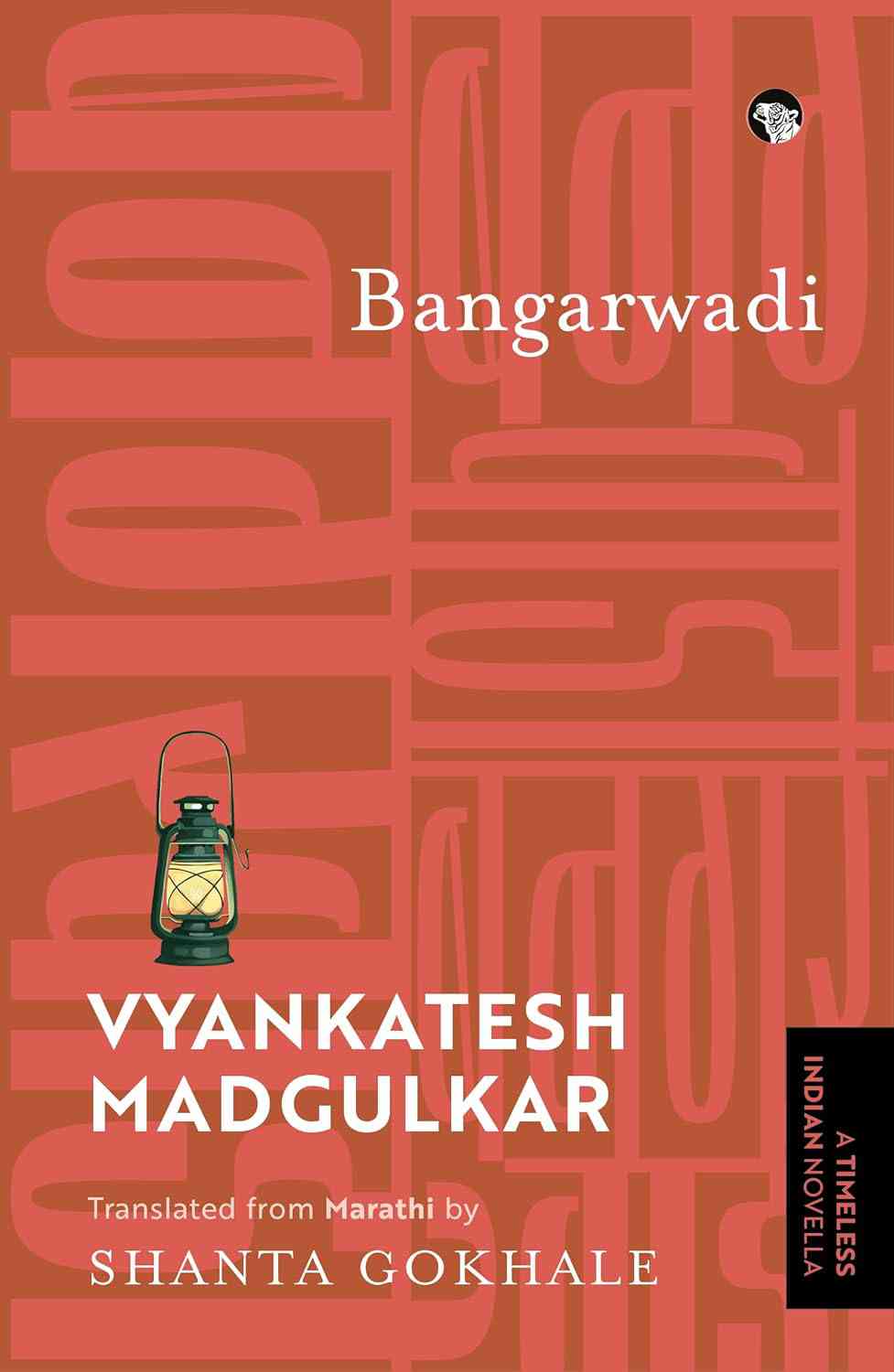
Excerpted with permission from Bangarwadi, Vyankatesh Madgulkar, translated from the Marathi by Shanta Gokhale, Speaking Tiger Books.
