






“do I look like a woman who has a man, I am a man, Dhana, my body is just a detail…”
Rene Karabash’s She Who Remains begins with an epigraph from Ismail Kadare’s 1978 novel, Broken April: “The Kanun was mightier than it appeared. It reached everywhere…” Even for the reader in India who knows nothing about life in the Albanian highlands, “kanun” is a familiar word. The law. These laws in the highlands are sealed as traditions and prejudices – often brutal in their punishment of those who violate them. And the worst crime, it seems, is to be born a woman.
Karabash’s debut novel, first published in Bulgarian in 2018 and translated by Izidora Angel, has been shortlisted for this year’s International Booker Prize.
Girl, woman, other
Bekija is the stronger twin that survived. Her birth brings no joy to her father, for she is not a boy; worse still, he was promised a boy but he died before he could be born. Her father’s apathy is mixed with frank hatred for her. When he finally does have a boy, Sále, he is even more displeased – the son has no penchant for violence, he dances, he prefers his grandmother’s company. His displeasure terrorises the family; physical abuse a constant threat over the children and the mother.
A groom has been arranged for Bekija, and her “purity” is vouched for again and again. Meanwhile, the bride-to-be struggles with her gender identity and grows close to Dhana, a girl similar in age. She’s secretive about their relationship and her mother brushes it off as a natural intimacy between girls who have mostly grown up around boys.
Bekija is raped before marriage. She is no longer pure. What is a matter of life and death for her is the ultimate show of masculinity for the young man who violated her. In her village, the rape of a woman is no trivial matter – a bullet is included in every bride’s trousseau. Her new husband may shoot her if he discovers her to be “impure” on the wedding night. Death inevitable, Bekija declares herself a sworn virgin and begins to live like a man. Her name is now Matija, the twin whom she ate up as a foetus.
Living like a man opens up a whole new world to her – she smokes and drinks, socialises with other men in public places, stays out at night. A daddy’s boy.
Paying with blood
A woman can never live outside herself. The personal freedom from being a man comes at a great cost. The former groom is slighted, and a blood feud is announced. Bekija’s father or her brother Sále must pay with their lives. Vengeance is pursued to death. Averse to all forms of violence since he was a child, Sále flees to Sofia and changes his name. The siblings correspond with letters, as Sále impresses upon his sister the urgency to leave the village and adopt a more rational, gentler way of life.
She Who Remains feels instantly familiar to the Indian reader – the preference for a male child and the neglect of the female, the unreasonable obsession with virginity – and one immediately settles into the narrative. Though a slim novel, it is not easy to fly through it – Karabash uses no full stops and breaks are indicated with spaces, italics, and prose poems. This is typically a difficult format to follow and it indeed slows down the reader, yet there are no issues of coherence. The poetic, disjointed style accentuates both beauty and barbarity – you cannot believe that all the horror is contained within something so rhythmic.
The Albanian highlands feel otherworldly, and not like the place where such violence could be commonplace. The flowing sentences, the repetitive incantations, the letters from the outside give the novel a fable-like feel. The love between the two women assumes mythical proportions, where a brief union is followed by a sudden yet permanent severance. The characters start to feel increasingly unreal, their madness and bitterness slowly closing in on them. She Who Remains is a tender elegy on love unrealised, made all the more tragic by a ravenous hatred for the weak.
Also read:
International Booker shortlist: Wives cry tears of blood in ‘The Witch’
International Booker shortlist: Life after the revolution in ‘The Nights are Quiet in Tehran’
International Booker shortlist: Daniel Kehlmann’s ‘The Director’ novelises the art of propaganda
International Booker shortlist: Ghostly men and ghosts of men in ‘On Earth As It Is Beneath’
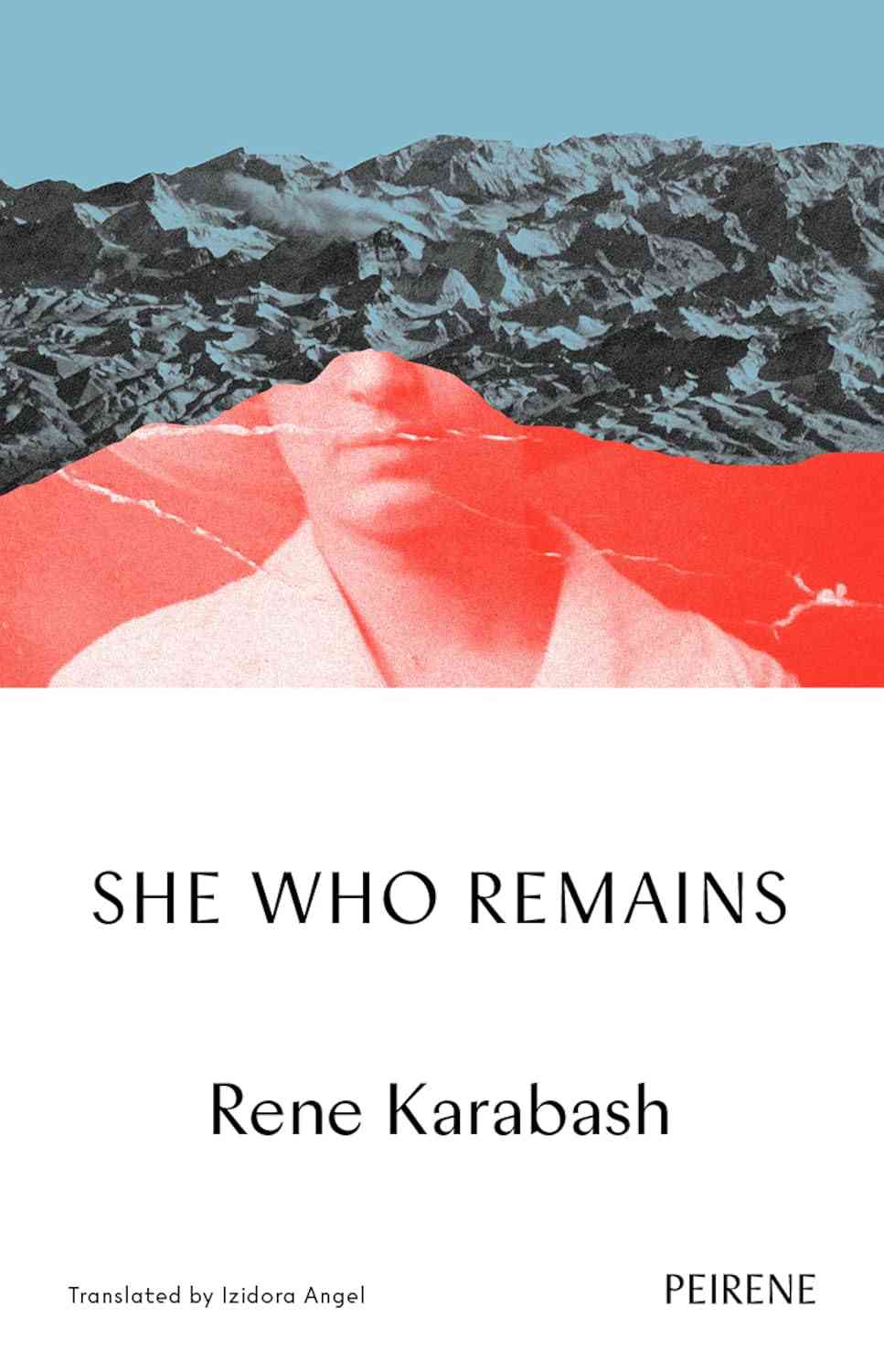
She Who Remains, Rene Karabash, translated from the Bulgarian by Izidora Angel, Peirene Press.
