







Freckles
The skin of Asian elephants is generally grey or dark grey, but the forehead, trunk, ears, and cheeks display pinkish or light-coloured patches, where pigment-producing cells (melanocytes) are less active or absent. This gives their head and trunk a spotted or mottled appearance. These marks become more visible with age and are unique to each elephant, much like freckles or fingerprints in humans. Since elephants are closely linked with lotus ponds, these pink marks are called “lotus marks” or “padmaka”, as mentioned in the Sanskrit work, Naiṣadha-carita.
Beauty
In the Kusa Jataka, a prince named Kusa (whose name means grass) is born with a face like a lotus bud – ugly but radiant in virtue. His wife, Pabhavati (whose name means radiance), is compared to a fully bloomed lotus, showing the tension between outer and inner beauty, a recurring Buddhist theme.
Impermanence
In the Abhinha Jataka, a young man earns his living by collecting lotuses for sale. The lotus fades away each time, which is why there is a daily demand for fresh flowers. He reflects on the impermanence of beauty and realises that all worldly pleasures fade like the flowers he gathers. The lotus becomes a lesson in impermanence.
Character
In the Padakusalamanava Jataka, a young man is executed unjustly. When his head is severed, a lotus springs up where the blood falls, showing the triumph of innocence over violence.
In the Mahapaduma Jataka, when a virtuous man is exiled and later betrayed, his steadfastness is compared to a lotus unstained by mud, echoing the ideal of detached purity amidst corruption.
Desire
The lotus is a popular metaphor for desire. The leading motif is evidently the attraction the flowers exercise on bees. This is seen not as a honey-making labour but as a selfish quest to satisfy lust. Indian poets enjoy humanising the bee as a male serial womaniser, among other things, and for this reason, the flowers he visits represent the objects of his desire. The bee often gets trapped in the nectar, unable to escape when the lotus petals close at sunset. Thus, the bee drowns in desire as humans are destroyed by their addictions.
Woman
In temple art, a woman holding a lotus bud indicates a virgin, while a woman holding a lotus in bloom indicates a mature woman. Her desire is the nectar of the lotus. The bees are the men who seek her attention.
The Kama Sutra, or the ancient Indian erotic manual by Vatsyayana, composed around 500 CE, described women in different ways. One type of woman was called the Padmini or the “lotus woman”. She was differentiated from other women who were equated with conch-shells (Shankhini) or elephants (Hastini). The lotus woman had round breasts, a pointed nose, golden skin, graceful gait. She was respectful of elders. She ate little. She loved white flowers and garments. She smelled like a lotus and her vulva was a blooming lotus. She was sexually pleased by the lotus posture of lovemaking.
Romance
The lotus blooms during the monsoon ( June–September), in full watery splendour. The hamsa (bar-headed goose) that migrates to Central Asia in order to breed returns only after the rains (October–February), when the lotus begins to wither and seed. Classical Sanskrit poets made this seasonal separation a metaphor for yearning (viraha). The hamsa wanders over drying lakes, calling mournfully for its vanished lotus. The padma (lotus), closed and sinking, awaits the dawn that will never come.
In one of his verses, the Tamil poet-saint, Tirumangai Alvar, uses a striking image of a female crab watching her mate trapped inside a lotus. Two crabs made their home in a water lily, which opens at night and closes with sunrise. The female crab was expecting young ones, so the male went in search of food. At dawn, he entered a blooming lotus, gathered honey through the day, but when the sun set, the lotus closed – and he was imprisoned within. By morning, he managed to free himself and rushed back to the lily. But at sunrise, just as he reached home, the lily petals shut tight, barring him from entering. Thus, the male crab, trapped between the cycles of the lotus and the lily, could not return to his waiting partner.
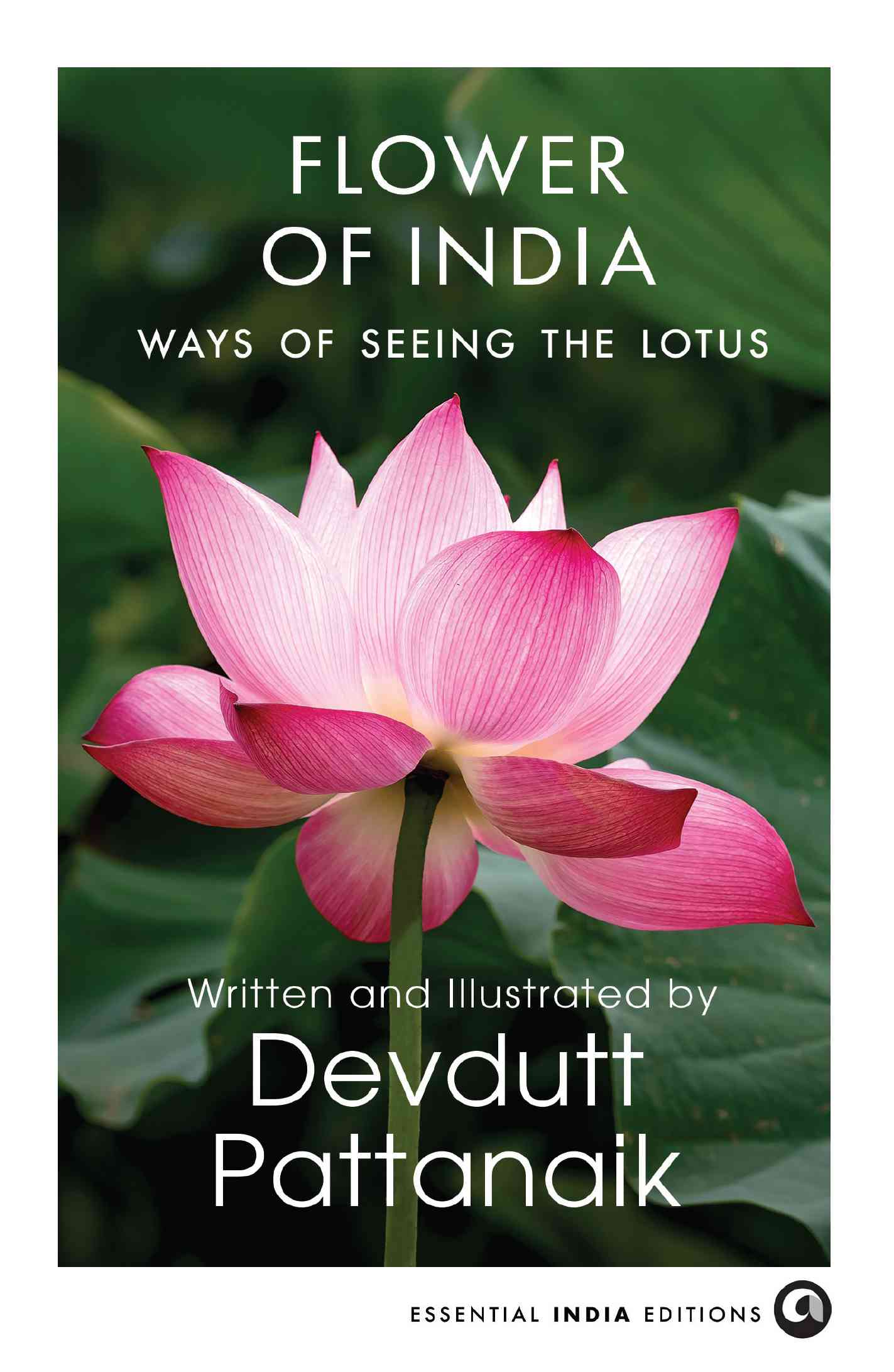
Excerpted with permission from Flower of India: Ways of Seeing the Lotus, Devdutt Pattanaik, Aleph Book Company.
