





When the airport taxi stopped at the gate of my guest house in Tashkent, I found myself in a house that was probably 100 years old, with an inviting courtyard adorned with fig, apricot and persimmon trees. The air smelt earthy, like the onset of spring, as though the trees were exhaling the aroma of the earth. Before showing me to my room, Gulnara – my hostess with beautifully wrinkled eyes and hair hidden behind an oramal (traditional cloth kerchief), who appeared to be in her sixties – invited me for a steaming cup of green tea and tender melons so sweet they could’ve been injected with sugar. Watching the crimson sun make its final descent towards the horizon, Gulnara and I chatted in broken English and Uzbek/Russian words I struggled to decipher but tried to interpret through her expressive eyes. She wistfully reminisced about her childhood in Bukhara, the Soviet times, the mohallas (neighbourhoods) of Tashkent and the way the city had changed since she had arrived here as a new bride. By the time I went to my room, I felt like I had arrived in the house of a friend’s grandmother instead of a country unknown to me.
If I didn’t need to fly into Tashkent, I probably would have skipped it, given my preference for spending time in the countryside. I had given myself all of the following day in the city, but my expectations were low. With its broad avenues, tree-lined walkways, homogenous buildings and busy streets, it appeared right out of the Soviet era – seemingly devoid of soul and character. Thanks to Gulnara’s recommendations, though, I found some of its ancient charm in small by-lanes. Just like she’d described, old mohallas with stone and mud houses built around vine-covered courtyards could still be found here and there. I peeped in to see raucous kids playing a game of marbles instead of being absorbed on their phones! Tashkent was named after these traditional neighbourhoods, she had explained, literally meaning “stone place”.
The city had been built and destroyed multiple times. In the 13th century, its Turkic and Persian influences were battered down by Genghis Khan’s army. It flourished on the Silk Road till it was taken over by the Soviet empire in 1930. A massive earthquake levelled nearly 80% of the city again in 1966, during which much of the old city and its sundried adobe houses were sadly destroyed. I imagine the city’s character completely changed when it was rebuilt as a Soviet city.
Given the fancy cars that ply the modern streets of Tashkent, I wondered why everyone talked about the Tashkent Metro until I went underground. After the 1966 earthquake, the Soviets sent their best artists to design the Tashkent metro, which also doubles up as a nuclear bunker! Each metro station has its own theme. The Alisher Navoi station – with its dome-shaped ceilings and poetic illustrations on the walls – is an ode to the 15th-century Uzbek traveller who is considered the national poet of Uzbekistan. The station called Kosmonavtlar – cosmonauts – is designed to represent our galaxy. Its tunnel-like dark walls are dedicated to famous Uzbek and Soviet cosmonauts, including the first Russian woman to go to space. Eager to escape the hot afternoon heat, I took the metro to the Hazrati Imom Jome Masjidi (the Friday mosque). Amid the whitewashed walls, under the intricate ceilings, I watched the sunlight pour through the domed windows, creating an aura of peace within.
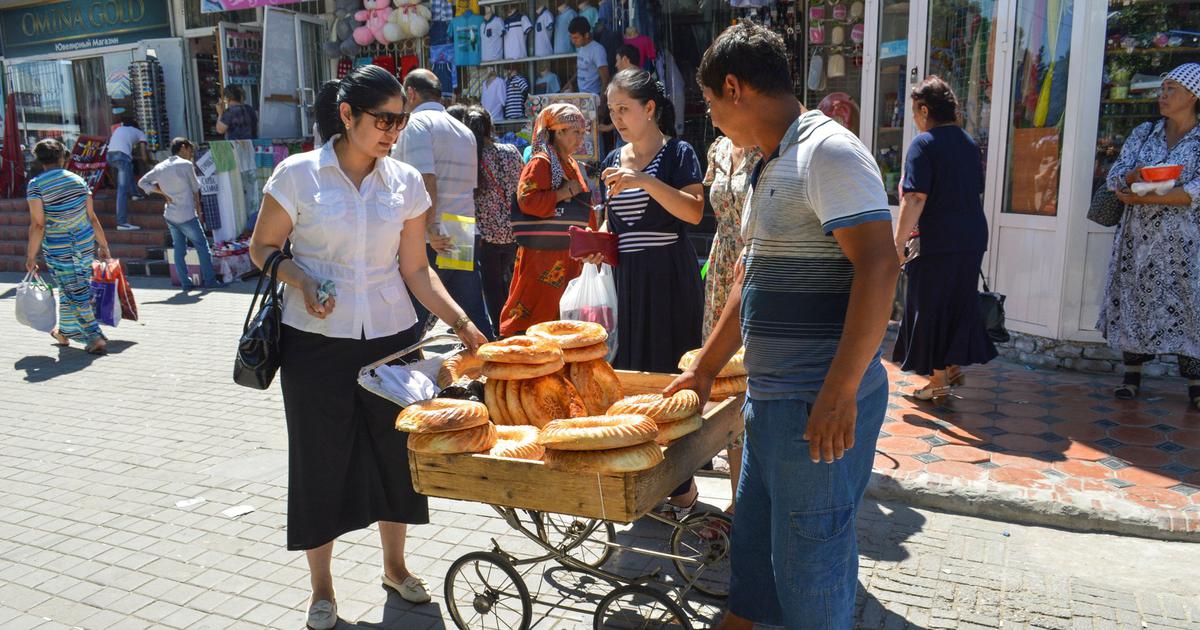
Strolling around the lively Chorsu Bazaar and walking back to the metro at dusk, I lost some of that peace, though. A middle-aged man with gelled hair, a pointed nose and missing teeth stopped me to ask where I was from. As I uncomfortably mumbled under my breath, he boldly announced that he wanted to spend the evening with me, flashing a creepy smile on his ageing face. I declined and hurried off into the last rays of light, regretting ignoring my mother’s long-standing advice, no matter where in the world I was: be wary of strangers; get home before dark. More catcalling followed me into the metro station, which now felt like a cramped, crowded space rather than a work of art. “Beautiful.” “Hello, madam.” “Where are you from?” Part of me was tempted to retort with a wisecrack, but I held my tongue, not knowing whether it would provoke aggression. I refrained from making eye contact and, as I’d been trained on the streets of Delhi many times, I ignored the words and focused on getting myself out of there as soon as I could. I wore my headphones with no music playing, boarded the metro, stood close to other women on board, got off at my stop and quickened my step, falling in line with a local woman going in the same direction as me. Relieved to finally be home, I felt weird about the city and its mixed character.
Over the past several years of travelling solo, I have devised plenty of ways to protect myself as a woman on the road. Choosing to stay with a local family in a small homestay or guest house was one. This gave me the feeling of a safety net and an immediate local connection, for there was always someone looking out for me. I was pretty sure that if I didn’t arrive home by a certain hour, Gulnara would sound the alarm. Even eight years and several countries after I embarked on my first solo trip, butterflies still flapped in my stomach when I planned to travel alone in a place yet unknown to me. When I sniffed trouble, my inner voice still chided me, asking, Are you crazy? Uzbekistan was no different, and with an unpleasant encounter on the very first day in the country, that inner voice grew bolder.
That’s the thing with solo travel – it can be rewarding and daunting in equal measure. When travelling alone, I often swing between two opposing emotions: am I courageous to travel alone or am I naïve?
I’ve long thought of courage as the ability to acknowledge that I have a comfort zone, and to be consciously willing to push it. Sure, it makes me uncomfortable and vulnerable. It even fills me with fear. But I’ve found that personal growth and some of life’s greatest experiences happen on the outer edge of the comfort zone, and courage is the only way to chart that path.
I recounted the better parts of my day to Gulnara the next morning over breakfast, which was laid out on a tapchan – a traditional lounge seating, with carpets and cushions placed on a raised wooden platform, and soft folk music playing in the backdrop. Under the shade of the persimmon trees, I relished the sweet melons again, along with some delicious Uzbek obi non (bread baked on a traditional baking stone in a local bakery) and home-made apricot jam, politely declining Gulnara’s offer of eggs and meat. When her sons appeared, she told them, amused, that I only ate melons. Could they pack me some for my long journey ahead?
As a travel writer, I had learnt early on that travelling on a trip carefully curated by tourism boards often only painted a rosy image of the country. I had made it my personal rule to arrive early or stay on after curated trips, to travel slow and sometimes solo, so I could see beyond this carefully polished image and seek serendipitous encounters and stories.
In Uzbekistan, my work assignment would give me a healthy dose of the region’s architecture and history. So I planned to spend my time in a small Uzbek village in the Nuratau mountains (an extension of the western Pamirs of Central Asia), followed by a couple of days in Bukhara, which didn’t feature on the work trip. Staying with rural communities and learning about living cultures so different from my own – yet in some ways so similar – always reminded me of our shared humanity. Plus, these were experiences I could only seek on the road. They seldom made it to digital platforms, guidebooks or travel memoirs.
Such experiences are to me the essence of travel. The reason I was okay with those stomach-churning nights before embarking on a solo journey to somewhere unknown was because over time, I felt a deep, unshakable faith in the people I was destined to meet along the way. Especially in a world polarised by religion and politics and the veils we wear both literally and figuratively, I believe our intrinsic character hasn’t changed. Our social media feeds and news channels are filled with heartbreaking stories of harassment and violence against women, and while I wouldn’t dare to ignore or belittle them, it is also true that stories of kindness, humanity and deep cultural exchange seldom make it to the news. It is only by traversing geographical distances beyond my comfort zone that I can seek to live with “others”, learn about their living culture and witness the kindness of their hearts. It is only by acknowledging and overcoming my fears that I can fulfil my role as a travel writer, and bring such stories to the world.
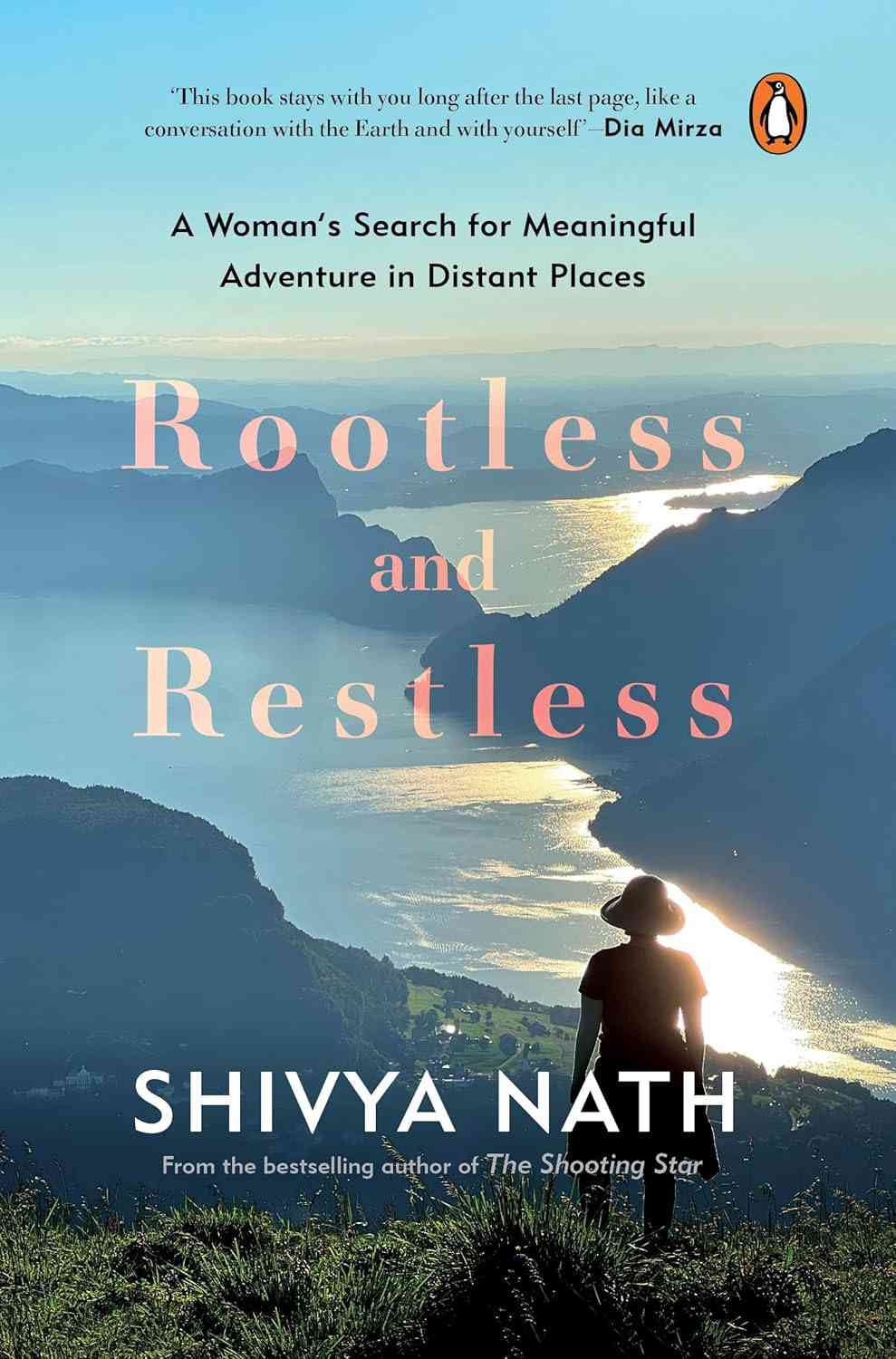
Excerpted with permission from Rootless and Restless: A Woman’s Search for Meaningful Adventure in Distant Places, Shivya Nath, Penguin Random House India.
