








Two six-month-old babies – one in London, the other in Delhi – are both fed Nestlé Cerelac. The same brand, the same cheerful yellow packaging, and the same promise of nutrition.
But the baby in Delhi gets nearly three grams of added sugar per serving, according to an investigation by the Swiss non-profit Public Eye, while the baby in London gets none.
The investigation, released in 2024, sparked global controversy. It found that baby food products sold by Nestlé in Asian and African markets had higher sugar levels compared to their European counterparts. Global health bodies have cautioned against added sugars for infants and children.
The multinational company denied the finding, claiming it had “a consistent approach to nutrition for all babies everywhere”. In India, Nestlé underscored the fact that it was “fully compliant” with Indian laws – a position the company reiterated in its response to Scroll’s questions in May.
Its spokesperson said that Cerelac “is in full and strict compliance with local regulations and standards” under both the Food Safety and Standards Authority, as well as the Bureau of Indian Standards, and that this extends to “the requirements of all nutrients including added sugars”. This was echoed by India’s health ministry in parliament: it said the product “was found to be in compliance with the provisions”.
But the 2024 controversy seems to have had an impact.
As the Nestlé statement to Scroll noted, that year, it introduced a variant “with no refined sugar, which now forms a majority of the Cerelac range in India”. It added, “Some variants with the original recipes continue to be available to offer a choice to consumers.”
This is not an isolated case.
Walk down any supermarket aisle in India and you will find Kellogg’s Corn Flakes, a popular breakfast cereal for children, on the shelves. In 2016, a global survey of 19 breakfast cereals across 29 countries found that the version of Kellog’s Corn Flakes sold in India had the highest salt content in the world. In Argentina and Brazil, the same product contained 46% less salt.
Five years later, Kellogg’s European arm pledged to make its children’s cereals healthier. “Without affecting taste, at least 20 per cent of salt will be removed from its cereals by the end of 2022,” the company announced in its Wellbeing Manifesto for European consumers. “Again, without affecting taste, sugar will decrease by 10 per cent across the same time frame in cereals aimed at children,” it added.
In India, it made no such pledge. Questions emailed to the company remain unanswered at the time of publication.
But an investigation by Scroll revealed that it is not only corporations who bear the responsibility for the poor nutritional standards of such products in India.
In 2017, the Modi government launched an ambitious plan to target foods high in fat, salt and sugar, commonly known as HFSS. Eight years later, key aspects of the plan remain on paper.
In official documents, the government frequently described foods as HFSS, or “high in fats, sugar and salt”. Despite this, “the government is yet to implement a legally binding definition” of the term, Dr Arun Gupta of Nutrition Advocacy for Public Interest pointed out. “The main problem with Indian food safety standards is that they are ineffective and vague,” he said.
Further, the government is yet to put in place regulations to curb the marketing and promotion of these foods, show internal and public records Scroll reviewed.
The latest Economic Survey made its apprehension over existing policies to tackle unhealthy foods clear. “Policies have so far focused on advocacy to reduce consumption of foods high in added fats, sugar, and sodium, many of which are UPFs (Ultra Processed Foods),” it noted. “However, improving diets cannot depend solely on consumer behaviour change; it will require coordinated policies across food systems that regulate UPF production, promote healthier and more sustainable diets and marketing.”
Gupta noted, “With no regulation, we are witnessing a meteoric rise in the consumption of HFSS and ultra processed foods. The rise in non-communicable diseases is linked directly to this.”
He added, “The government’s inability to regulate the promotion of these foods is leading to a public health crisis.”
Scroll emailed the Food Safety and Standards Authority, the health ministry, the information and broadcasting ministry, seeking responses to criticisms that the government has not done enough to regulate the marketing of unhealthy packaged foods. This story will be updated if they respond.
Unhealthy packaged food is fuelling an epidemic of lifestyle diseases in India. The government knows this. But its measures to regulate the industry are falling short. This series, based on previously unpublished internal documents, takes a hard look at this failure.
A health crisis
India is seeing a rapid rise in lifestyle diseases such as obesity, diabetes, hypertension, blood pressure and heart conditions, which fall under the broader umbrella of non-communicable diseases.
A government report said non-communicable diseases accounted for over 60% deaths in the country in 2015.
The last Economic Survey linked their rise to the “more than 150 per cent” growth of the ultraprocessed foods market in India between 2009 and 2023.
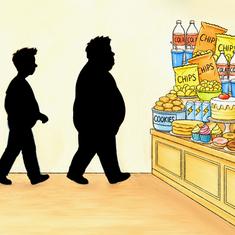
Ultraprocessed foods are factory-manufactured food products with few or no whole food ingredients. While they are often high in fat, salt and sugar, they also typically contain chemical additives and flavours. Children who consume sugary treats and salt-smothered crisps are especially vulnerable to developing lifestyle diseases.
It was these concerns that prompted the Modi government to put in place an inter-ministerial plan in 2017 as part of a wider roadmap it had devised to curb the surge of non-communicable diseases in India.
Called the National Multisectoral Action Plan, it included proposed measures to reduce air pollution and alcohol consumption, promote walking and rein in foods high in fat, salt and sugar.
The plan recommended a range of interventions, to be implemented by 2025, to check the rising consumption of these foods.
Ambitious targets
Under the plan, the health ministry established expert committees, taskforces, and technical advisory groups to tackle the problem of HFSS foods, along with the problems of tobacco, alcohol, and air pollution.
Among the measures the plan called for was the raising of taxes on HFSS food products and non-alcoholic sugar-sweetened beverages, under the goods and services tax regime, to reduce consumption – a so-called “sin tax” approach that mirrored the strategy used to curb the use of tobacco and alcohol.
This measure was not implemented in the years that followed. In January 2026, the Economic Survey noted, “the possibility of introducing the highest slab of GST and a surcharge on UPFs which exceed thresholds for sugar, salt, or fat could be explored”.
But in March 2026, nearly a decade after the action plan was launched, the government admitted in parliament, “There is no separate treatment for GST rates on ultra-processed foods and foods High in Fat, Sugar or Salt (HFSS).”
The action plan also called for the introduction of “interpretative front-of-pack-labelling” – that is, an easy-to-understand labelling system at the front face of the packaging that informs consumers of the product’s nutrition profile, and so can help them move away from HFSS foods.
Along these lines, in September 2022, the Food Safety and Standards Authority published draft regulations for labelling food products, in which it proposed a star-rating system. The system would rate “the overall nutritional profile for packaged food by assigning it a rating from ½ star (least healthy) to 5 stars (healthiest)”, the draft regulations noted.
But this proposal was challenged in the Supreme Court. Experts cautioned that under the proposed system, a company could add a few healthy ingredients, like nuts, to a product high in sugar or fat, to increase its health rating. Meanwhile, the fundamental problem, of curbing high sugar, fat and salt consumption, could remain unaddressed.
Public health organisations instead demanded mandatory warning labels that more specifically cautioned consumers when foods were high in saturated fats, salt and sugar.
The case is ongoing. In February 2026, the Supreme Court rapped the Food Safety and Standards Authority, noting that the issue was “important” and related to “the right to health of the citizens of this country”. It observed that “whatever exercise has been undertaken so far has not yielded any positive or good result”.
The 2022 draft notification also suggested a legally enforceable definition of an HFSS food. Specifically, it was to refer to a product that “does not satisfy the value of energy (kcal) from total sugar less than 10 percent of total energy, or from saturated fat 10 percent of total energy, and sodium less than 1 mg/1 kcal.”
Four years on, with no definition still in place, the Economic Survey noted, “UPF (ultra-processed foods) may be defined in addition to HFSS”.
Scroll emailed the health ministry, seeking its responses to claims that there had been inadequate progress on tackling the problem of HFSS foods. This story will be updated if it responds.
The marketing challenge
Another challenge flagged in the Economic Survey is related to how HFSS foods were promoted. “Adolescents exposed to unhealthy food and beverage advertising showed a high desire and intention to consume the advertised foods,” it observed.
The 2017 action plan had, in fact, proposed steps to regulate the advertising, marketing and promotion of unhealthy food to children, through amendments to the Cable Television Networks Rules and relevant trademark regulations.
The plan was candid about what it would take to meet its target of halting obesity by 2025: “high-level political commitment, sustained investment of resources and the concerted involvement of governments, communities and other stakeholders in society”.
While front-of-pack-labelling has garnered much-needed public attention, the issue of reforming Indian food advertising has taken a back seat. While the 2026 Economic Survey does note the importance of regulating marketing of HFSS foods, it omits a crucial detail – that the government took up the matter, but did not see it through.
At an interministerial meeting held in June 2018, chaired by a health ministry official, the ministry of information and broadcasting was given a slew of “action points” aimed at minimising the risk of HFSS foods. Scroll accessed a copy of the minutes of the meeting, obtained via a right-to-information request.
The action points included amending existing advertisement regulations “to include regulation of advertisement of High in Fats, Salt, Sugar” foods, so as to reduce their “exposure to children”. The minutes note that the information and broadcasting ministry stated that the idea “can be explored”.
The action points also included “advocacy with media and entertainment industry to allocate free airtime and space for health promotion”, with a particular focus on risks of non-communicable diseases. The ministry agreed to consider this, while noting that it could pose a challenge when it came to private media houses.
The proposals mirrored regulations in countries like the United Kingdom which, in 2022, imposed sweeping curbs on how HFSS products are advertised.
But in 2024, when researchers from Nutrition Advocacy for Public Interest filed right-to-information requests asking the information and broadcasting ministry about the proposed amendments, its response, which Scroll has reviewed, was telling.
The ministry only said it “ensures” that advertisements telecast on private satellite TV channels are “in adherence to the Advertising Code prescribed under Cable Television Networks (Regulation) Act, 1995”.
It added, “No advertisements shall be carried which endangers the safety of children or creates in them any interest in unhealthy practises.”
Gupta noted that there had been “no amendment of advertising regulations even though it was a part of the national multisectoral action plan”. He added, “This is a clear failure of the government’s duty. If they believe existing regulation is enough to curb non-communicable diseases then they should come clean on their logic and share data with the public.”
A progress report from later in 2018, also procured through right-to-information requests, on the action points pertaining to the regulation of HFSS foods suggested that the ministry had not moved forward with plans to put in place the legal framework that had been discussed. It was instead relying on the Advertising Standards Council of India, an industry-led body, to do this work, noting that its guidelines stated “that caution and care should be observed” in advertisements, particularly of HHSS foods.
Scroll emailed the ministry of information and broadcasting to ask whether it intended to follow through on plans to amend regulations pertaining to marketing and advertisements. This story will be updated if it replies.
Missing standards
Many experts argue that the government’s failure to curb the marketing of foods high in fat, salt and sugar begins with its failure to enforce threshold levels for these ingredients.
Faced with regulatory gaps, Indian nutrition and public health experts published an analysis of 43 products’ claims and their ingredients. These included confectionery, baked goods, beverages, savoury snacks and pasta and noodles. They found that based on a nutrient profile model established by the World Health Organisation, “all 43 products exceeded the cut-off limits of at least one nutrient of concern”. Specifically, the analysis by the Nutrition Advocacy for Public Interest found that “total sugars were high in 31 products, total fat was high in 29 products, and sodium was high in 19 products”.
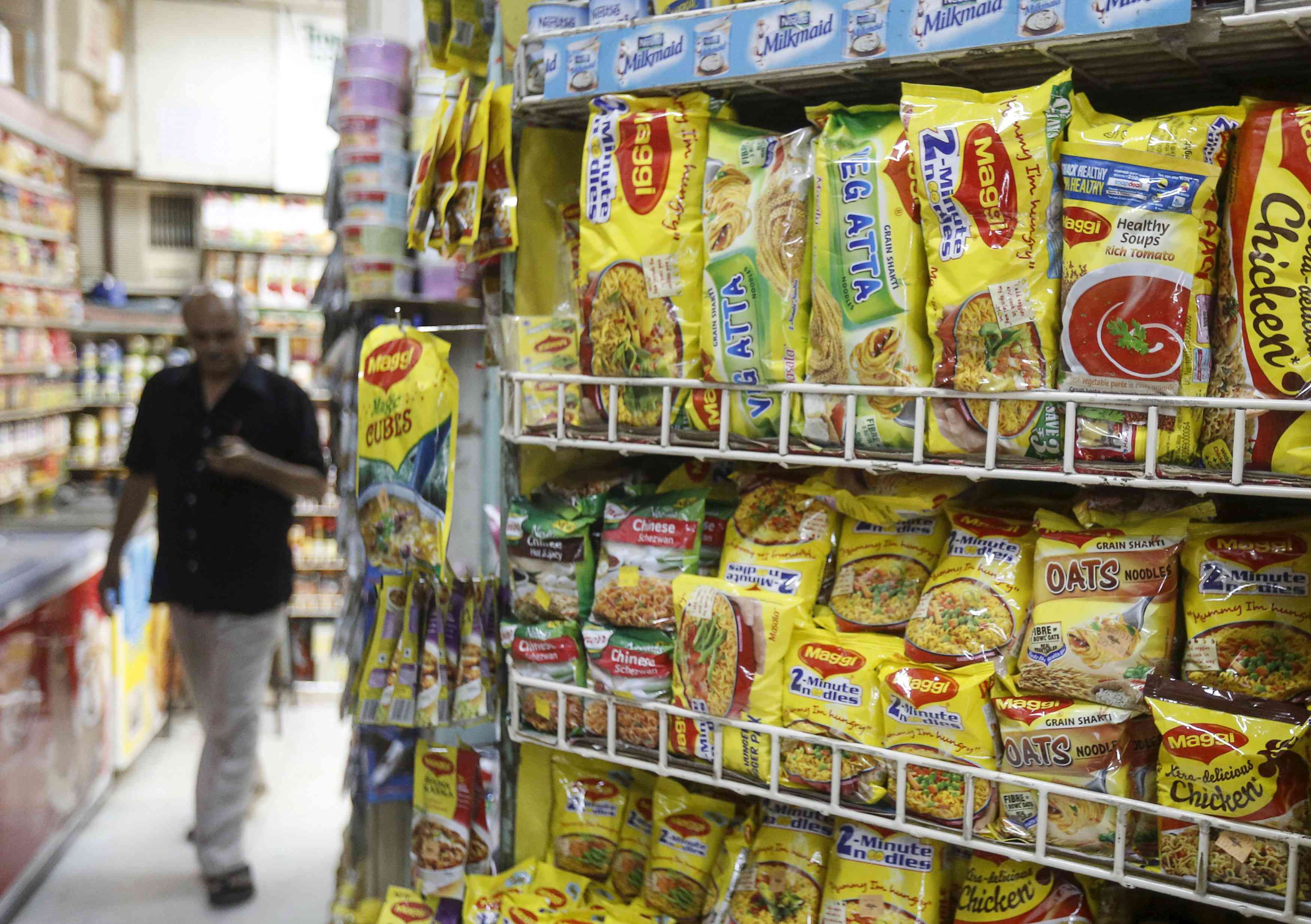
Consider Nestle’s instant noodle product, Maggi. According to the analysis by nutrition experts, the noodles have over 1,000 mg sodium per 100 g serving – almost half of the entire recommended daily intake for an average adult. Meanwhile, Maggi’s competitor, ITC’s Yipee noodles, contains more than 1,200 mg sodium per 100 g.
In an emailed response to queries from Scroll, a Nestle India spokesperson said that the “sodium content in one serving (70 g) of Maggi Masala noodles is 700 mg, meeting approximately 35% of the Recommended Dietary Allowance.” They added, “It’s important to note that Maggi Noodles are intended to be enjoyed as light (small) meals as part of a balanced, diversified diet, and the sodium contribution is similar to that of other common recipes consumed, such as paratha, pav bhaji etc.”
The report by the nutrition experts also detailed the ways in which the marketing and advertisements of products violated different regulations and guidelines, such as by concealing important information, and making claims without evidence.
Popular brands of chips, juices, cereals, and fizzy drinks all made it to the list of products that the Nutrition Advocacy for Public Interest flagged, all while being promoted by celebrities.
In the United Kingdom, such marketing would have been subject to stringent controls. The government uses a nutrient profiling model to calculate a score that balances harmful and beneficial nutrients. Products that exceed specified thresholds face restrictions on how they can be marketed – for instance, on their promotion in retail stores, and the time slots on television in which their ad campaigns are allowed to run.
In India, the fact that the government has entrusted the problem to the Advertising Standards Council of India means that the only recourse for a concerned parent would be to write to the industry-led body’s consumer complaints committee.
This committee includes executives from Kelloggs India, a company that has made headlines for high sodium in its India products. It also included executives from Dabur, which, we found, is under official scrutiny – India’s food safety regulator has flagged several Dabur products for making misleading claims. More on this in the next report in this series.
In the next report in this investigative series, we take a closer look at the problem of misleading claims made by food manufacturers. And we ask: has India’s food regulator, the FSSAI, has done enough to curb them?
