




The mythos of The Mother has always been strong, with the sacrificing, self-effacing mother serving as the global gold standard of patriarchy. She exists in religious iconography. She has inspired art. Michelangelo sculpted her, heralding the High Renaissance. The Pietà, created in the closing years of the 15th century, captured love and vulnerability, framing the idiom of suffering motherhood – the mother grieving her child, holding his splayed form. In the early years of the 21st century, Marjane Satrapi, in her graphic memoir, Persepolis, re-visited the image, painting her post-Iranian Revolution Madonna in a veil, holding the broken body of a martyred soldier. Mirza Waheed’s Maryam & Son speaks, palimpsestically, to this tradition of the Great Maternal.
Maryam Ali, named in close approximation to Mary, the bereaved mother, wakes up on a cold February morning in her nondescript London neighbourhood, to find her son, Dilawar, missing. The only sign of something unusual – his blanket, neatly folded at the edge of his bed, signifying a finality, a coded farewell only his mother can read. The story unfolds with Maryam’s endless wait, her interrogation of the past, her changing dynamic with her family and friends as she treads the line between anguished mother and woman afraid of losing her selfhood. Waheed tells a disturbing tale and tells it well, but, crucially, he defies the mythologization, rooting this Maryam firmly within her humanity, re-inscribing the image all over again.
Horror at the doorstep
An interesting pastiche of themes begins to emerge when one attempts to plot Waheed’s fiction. His debut novel, The Collaborator (2011), and his second, The Book of Golden Leaves (2014), are both set in Kashmir, engaging with the troubled subjects of insurgency, violence, and love. The Collaborator turned horror visible. The book is full of images of the macabre. There are broken, rotting bodies, a palpable sense of unease, and the ever-present spectre of violence. The Book of Golden Leaves juxtaposed the ethereal beauty of Kashmir’s landscape and culture with the chaos and trauma that the insurgency inflicted on the valley. With Tell Her Everything (2019), Waheed moved his setting to London and pulled his reader into an intimate space where grief, guilt, and filial love intersected. Maryam & Son seems to tug at all of these threads.
Horror lurks around the edges of the story. Violence lies at its periphery, reflected off-stage, played on the television in the form of clips far removed from the solidity of life in the suburbs of London. The world has become even more unstable, even more hostile, the narrative suggests. Dilawar does not need to “fall into bad company” to make the worst choice he possibly could. The choice comes to him, inside the doors of his bedroom, through his computer screen. The internet intrudes into domestic spaces, tearing away the illusion of safety. Maryam struggles with guilt, with anxiety, and a terror she anticipates but cannot explain. Waheed seems to increasingly be turning towards an interiority, a framing of narratives through memories, in photographs and reminiscences, and long, ruminative passages.
The novel’s title, in a robust subversion of the traditional patrilineal system of property devolution, sets up the dyad on which the story hinges. Dilawar had once suggested they start a catering business with the name “Maryam & Son”, as a step forward into financial stability. A month after his disappearance, a video emerges from Iraq, showing a group of ISIS operatives holding 12 Western hostages, and Dilawar is identified as the Swordsman in the video, a partially masked man of British origin, a radical, subsequently held responsible for running internet operations as well as recruiting people to the terrorist organisation.
This is the crossroads at which the narrative decides to eschew Dilawar’s present and reads him through his past. To the world, he is an item on the news. He is also the stereotype, the cliché, the young Muslim man who got radicalised. Instead of dwelling on why Dilawar does what he does, the narrative examines the fallout of his act. For the Joint Section officials investigating Dilawar’s case, he is no longer a person, but only “a matter to be dealt with” and Maryam, “The Mother”, is relevant only in her role as provider of information about her son’s parallel lives, as homebody, freelance technician, kind neighbour and ISIS operative.
“I have a name”, she protests. “Maryam Ali, Mrs Maryam, Maryam is fine too, but not Mary, because that’s not my name either. I have a name that I have answered to for 46 years! The Mother, for god’s sake, I’m not their mother!” As the label sticks, so does the taint. In making her the Swordsman’s mother, the media, the intelligence agencies, even her neighbours and former community, erase her relationship with her son – the books she read to him, the small celebrations, the big heartbreaks- an entire history of love and nurture. From the mother on the pedestal, Maryam becomes the “Jihadi Mum”, the mother who bears the burden of blame.
Family and community
Nestled within the stories of Maryam and her son are stories of family and community. Like Maryam, her sisters, Zarrine and Saffina, are second-generation immigrants, poised between two cultures, aware of their own vulnerability as Muslims in a country that seems to be growing more intolerant by the day. Her neighbour and oldest friend, Tony, learns to keep his distance, partly in deference to the walls Maryam erects around herself, but also in anticipation of the hit his small business would take if the neighbourhood turned against her. Identities in this world are complex. Ashfaq, Dilawar’s deceased father, remains on the fringes of the loud South Asian family Maryam belongs to, owing to his mixed Irish Indian heritage. Race, class, and religion all clash with each other, pushing outliers like Dilawar into isolation and hostility.
As Maryam rages against the inexplicability of her son’s choices and his abandonment of her, she also finds herself parched for connection, compassion, companionship, and perhaps even love. The family liaison officer assigned to Dilawar’s case, Julian Chapman- white, from an affluent background, surprisingly uncynical, and in possession of the kind of cultural capital neither Maryam nor her son could ever aspire to – stands right outside Maryam’s world, fascinated by her dignity and defiance, and attracted to her despite his professional role in her life. Waheed structures, through this cast, a fragile, almost dysmorphic world that is disturbingly mimetic of our own.
In a story bookended by the threat of violence, what of geopolitics? The narrative is quick to point to the self-declared wars of liberation America fights, assisted by Britain and other countries, where the collateral damage is always civilians far removed from the global North. As his Joint Section superior tells Julian, “we don’t live in an era of feelings and ethics”. The role of intelligence agencies is not to bring back and rehabilitate small operatives like Dilawar, but to take preventive action, to protect their own, often at the cost of innocent lives elsewhere.
It is as though Maryam & Son decided to hold space for the small lives, the feelings, the desperation, and all the grief that the larger waves of global politics disallow. Loss, that fine thread of absence and ache, nostalgia and anger, that so much of Waheed’s fiction is centred on, sits within this narrative, anchored by the figure of the grieving mother. It reminds the reader, “Grief is not a state of mind, it is not something you do or don’t, nor something that fades away with time, but it’s a living, breathing thing that resides within you, somewhere behind your eyelids. You close your eyes and you feel the shadow of the lost one flit across. It’s best to let it live there and make peace with it. Carry it with you.”
With Maryam Ali, Waheed dismantles the stereotype, writing a flawed mother, an angry, sometimes irrational mother, who lives in both hope and dread. In the broken world of Maryam and of her reader, it is only right that the iconography begins to shift.
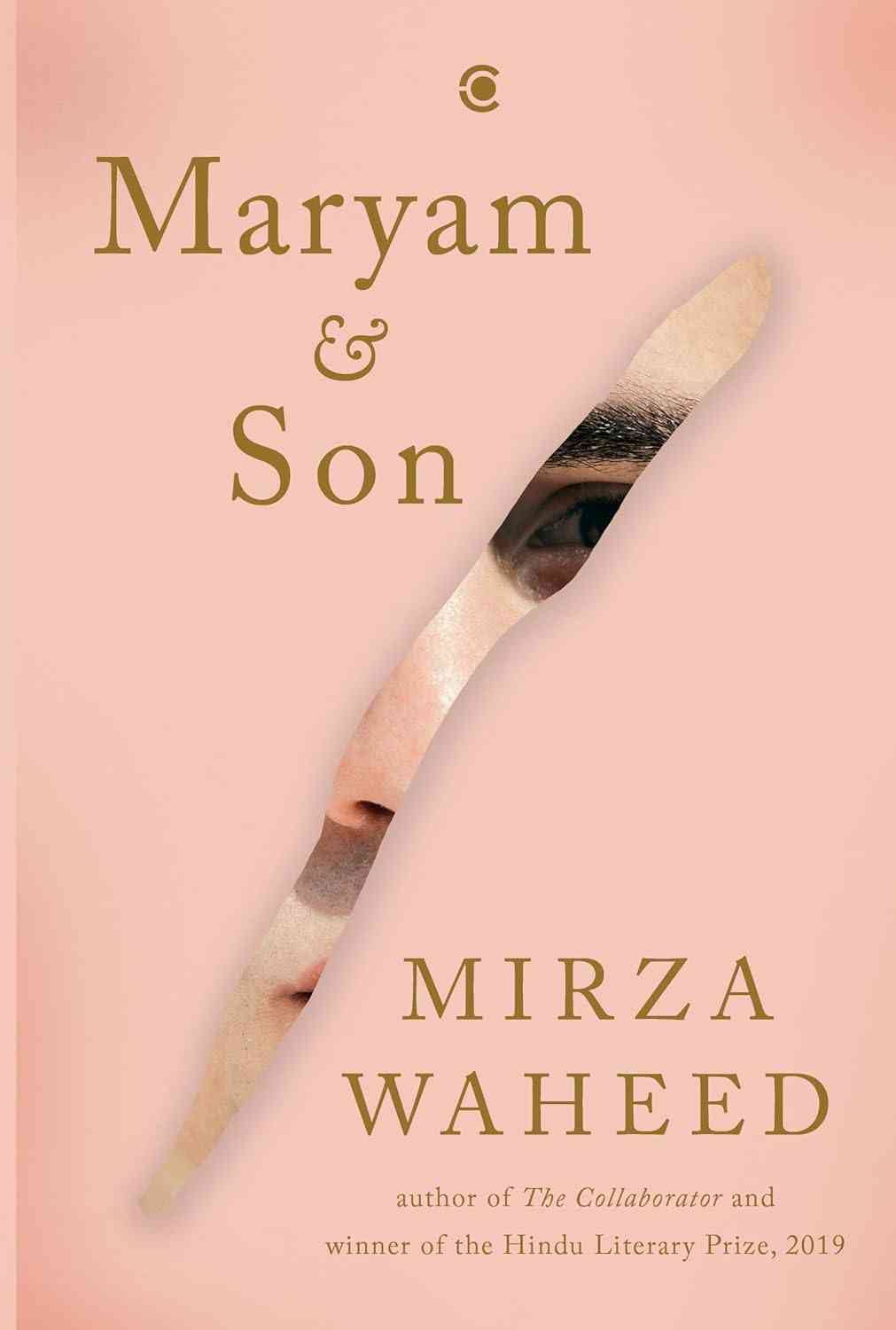
Maryam & Son, Mirza Waheed, Westland.
