








Every place is known by the culture of its people, ways of living life or community life and its rich historical past. But as traveller and mountaineer Yash Saxena writes in the introduction to his book Stories from a Kargili Kitchen, “For decades, Kargil has been overshadowed by its geopolitical narrative, often reduced to a symbol of conflict and tragedy. Yet for those of us who call this place home, Kargil is so much more – a land of unparalleled beauty, rich traditions and a vibrant history shaped by centuries of trans-Himalayan trade and cross-cultural connections. Nestled at the crossroads of the ancient Silk Route, it has been a melting pot of traditions, languages and flavours for centuries.”
Food as history
Saxena’s marvellous book offers a fresh and unique look at the Kargil region through a rigorously researched and fascinating account of its food and culinary practices, far away from conflict and violence. Blending history, travelogue and oral traditions, it presents well-documented and neatly crafted stories of the region’s cuisine. Can food or food practices describe a region? Yes, says Saxena. Because food is deeply embedded in a region’s history and culture, it depicts ways of living. The book is a brave and remarkable attempt to document lived experiences and to preserve centuries-old methods, ingredients and traditions associated with the food practices of the Kargil region.
The book has been created in collaboration with Roots Ladakh, a travel company based in Ladakh. Reflecting on this collaboration, Muzammil Hussain of Roots Ladakh writes in the preface, “This book, Stories from a Kargili Kitchen, is an extension of our vision to reveal Kargil’s true identity as a cultural crossroads. It is a journey into the heart of Kargil, where every dish tells the story of resilience, adaptation and community. It is a celebration of Kargil's rich foodways, shaped by the intermingling of cultures from Tibet, Central Asia, Gilgit-Baltistan, Kashmir, Ladakh and Zanskar.” This collaboration is set on the premise of presenting a vision, a vision to inspire pride in Kargil’s heritage, especially among the younger generation, and to present this region as a cultural treasure to the world.
The book is divided into 28 chapters. Each chapter deals with Kargil’s rich foodways through different recipes and ingredients. In chapter one, the author presents a brief but heartbreaking memory of the Kargil war of 1999, as remembered by resident Mohammad Illiyas – these memories still haunt him and bring up questions he has no answers for.
The chapter also acquaints us with Gur Gur Cha (salted butter tea). The author unveils a rich tradition of tea-making in the region. Kargil was standing on the confluence of a major trade route, the Silk Route, which some historians believe was the initial phase of globalisation, and people here believe that tea arrived first in Kargil, well before the Britishers popularised it in the subcontinent. He writes, “Traditionally, the people of Kargil would boil the cha pak with sapul (natural sodium bicarbonate from the brackish waters in Nubra and Changthang) for a couple of hours to get a deep maroon colour. This concentrated tea extract is added to boiling water, after which salt, mar (home-made butter) and milk are added and churned in a dongmo, a cylindrical wooden churner.”
In “Local Ration for a National Army”, the author documents the suffering of people living with rampant poverty and starvation brought about by the partition of the subcontinent. The arrival of the Indian army brought general prosperity to the region because it brought with it roads, infrastructure and employment. The locals, besides volunteering as porters, scouts and guides during the Kargil war, offered hearty, energy-dense foods to the soldiers. This chapter shows the inherent patriotism among the people of Kargil and a kinship with the army men.
Another chapter, “Finding Newer Ways to Go Back,” depicts how Kargil’s rich agricultural fields are ideal for farming various kinds of millets, which can be a boon for India’s millet revolution. The region usually experiences longer winters, with very few months of agricultural activity and very little production for consumption. However, the region has tremendous potential to produce millets in large quantities, if the government pushes policies such as subsidies and buyback systems.
Decaying culture needs preservation
In the Kashmir and Ladakh region, the kitchen is considered a sacred place and must be given complete privacy. However, the hospitality of its people has made them open their doors – and hearts – to tourists and guests. The author describes with grace how people in the Kargil region regale listeners with stories of the food that they have always eaten and are newly discovering. Through these stories we hear anecdotes about how generations of Kargilis have preserved the rich tradition and heritage of local foodways amidst the pressures of modernity and supermarkets where readymade and fast foods are easily available. These stories portray a full range of human emotions attached to food practices.
The book also contains recipes which give step-by-step instructions on how to recreate Kargili food at home, should a reader wish to. Each recipe is enriched with valuable information about its health and nutritional value for today’s health-conscious eaters.
Stories from a Kargili Kitchen is a compassionate attempt to prevent the erasure of a culture. The distinct identity and rich cultural heritage of Kargil should be preserved, and there is a particular emphasis in the book on why the central government must guarantee constitutional protections by implementing the Sixth Schedule of the Constitution in the Ladakh region, as demanded by the people after the revocation of the region’s special autonomous position.
A love of labour and research, Stories from a Kargili Kitchen is a remarkable work on culture, memory and identity of a region so often confined to headlines.
Bilal Gani is an academic and freelance writer based in Kashmir.
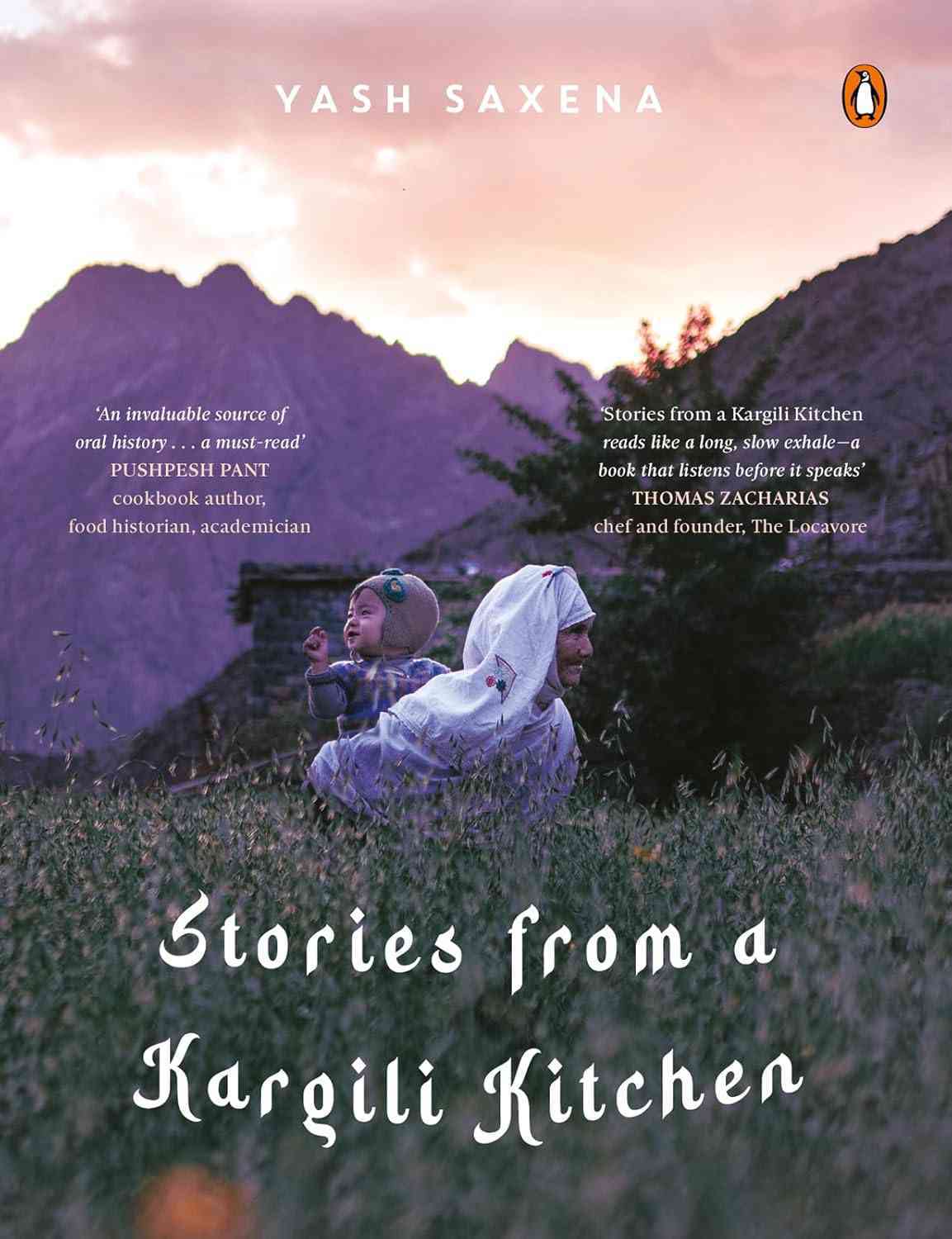
Stories from a Kargili Kitchen, Yash Saxena, in collaboration with Muzammil Hussain and Sneha Nair, Penguin India.
