


What does a translator bring to a text apart from their competence in the languages they translate from and into? How do their life experiences shape their literary contributions? To what extent can we separate their skill from their worldview? These questions are worth pondering over as publishers explore translation tools powered by Artificial Intelligence to cut costs and save time.
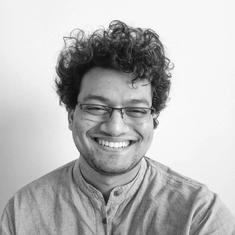
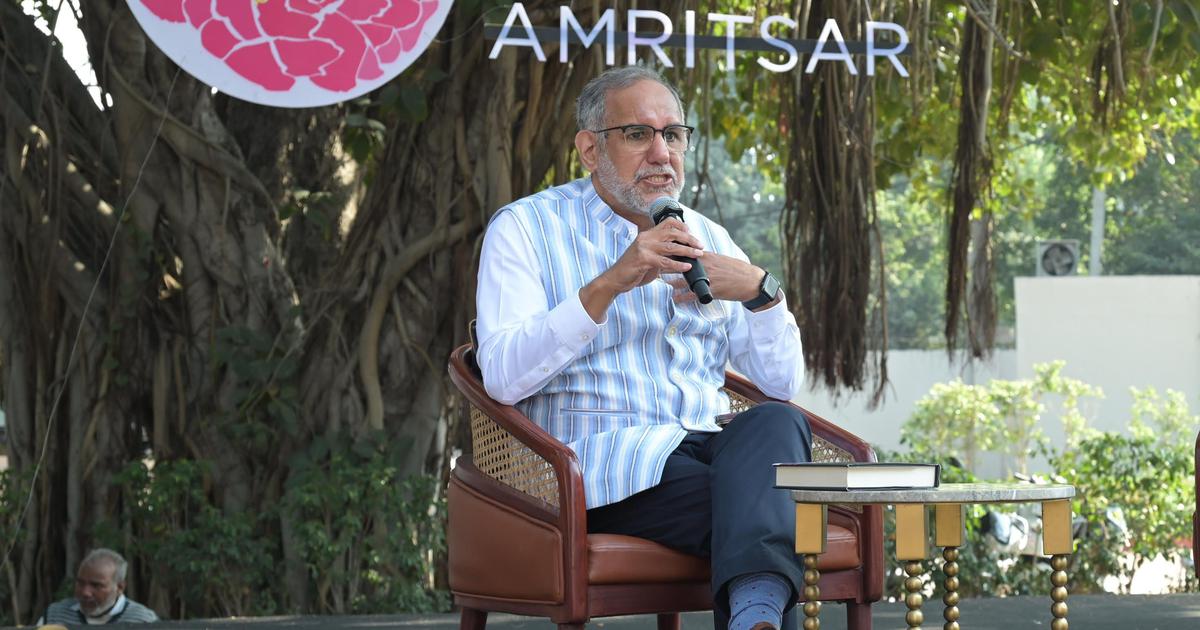
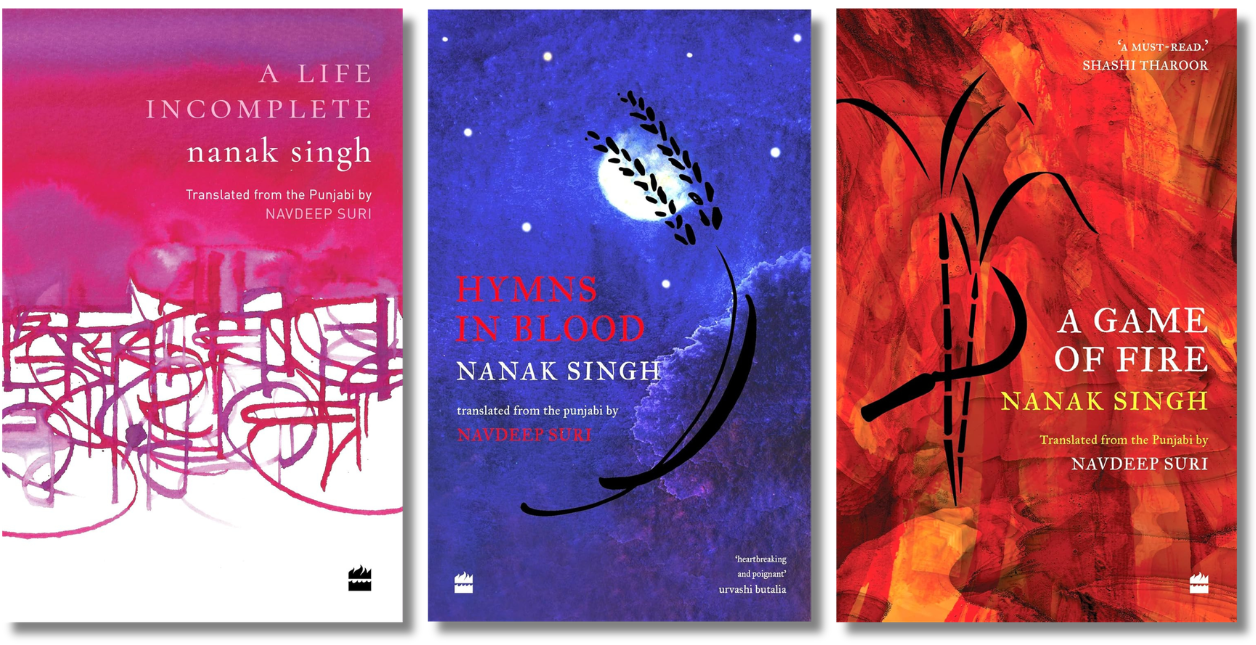
Navdeep Suri, whose English translation of Nanak Singh’s Punjabi novel Agg Di Khed (1948) as A Game of Fire (2024) received the Jury’s Special Commendation at the Muse India-GSP Rao Translation Awards 2025, spoke at length about his practice as a translator from a social and political lens in this conversation with Scroll at The Sacred Amritsar cultural festival.
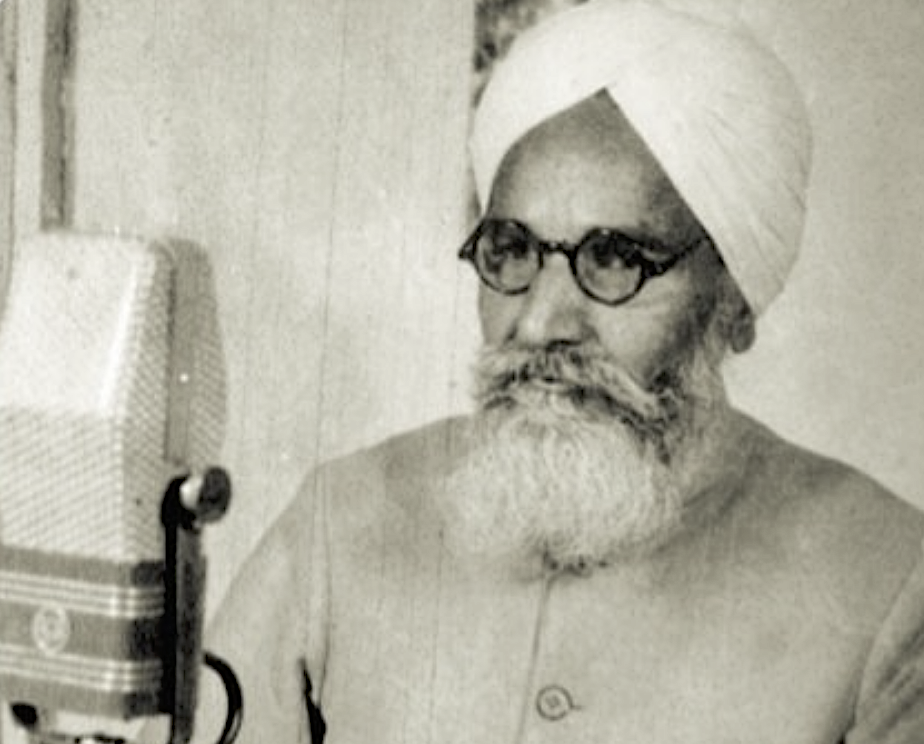
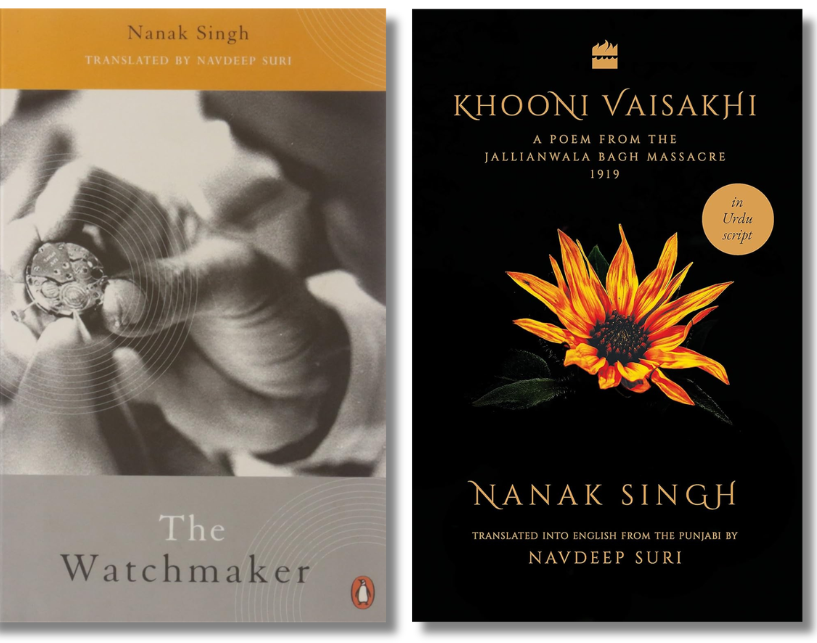
His other translated books include those written by his grandfather, Nanak Singh, such as Khooni Vaisakhi, Khoon De Sohile and Pavitra Paapi. He is also involved with the Nanak Singh Literary Foundation, which was established to preserve the writer’s literary legacy.
Suri also served in the Indian Foreign Service from 1983 to 2019. He was India’s Consul General in Johannesburg, Former Ambassador of India to the UAE and Egypt, and High Commissioner to Australia. He headed the West Africa and Public Diplomacy departments at the Ministry of External Affairs.
Do you consider translation to be a political act? To what extent does the current relevance of an older text guide you when you sit down and think about what to translate?
When I translated Khooni Vaisakhi, a 900-line poem written by my grandfather Nanak Singh after surviving the Jallianwala Bagh massacre, its publication coincided with the centenary of the massacre. The massacre took place in 1919, and my translation was published by HarperCollins in 2019. The timing was significant; it became a useful device to remind readers of the egregious nature of that massacre from the narrative viewpoint of a survivor. The massacre was certainly a turning point in India’s freedom struggle.
When I picked my grandfather’s Partition novels – Khoon De Sohile (Hymns in Blood) and Agg Di Khed (A Game of Fire) – to translate, those were conscious selections from within the vast repertoire of literature that he left us with. Those two novels ground you; they remind you of the price that was paid for India’s independence, in terms of the Partition of 1947 and what it led to.
In the foreword to Hymns in Blood, my grandfather asks some very pertinent questions. He says that we knew of the British policy of divide and rule for about 200 years. What did we do with that knowledge? What happened to us in 1947? What made us turn against each other?
He is not willing to take the convenient escape route of blaming the British alone. He asks us to look deep within and examine what really happened, why, and how. He points out that our own political leaders, religious leaders and media must take responsibility. This novel was published in 1948 but these points remain relevant even today. Whether you look at polarisation in India, the United States or Israel, the same elements are exacerbating divisions between people.
My grandfather wrote about how people were oppressed under British rule, and every pore of his being sought India’s independence. He went to jail for it. Yet, as the flagpoles were being erected to hoist the Indian flag on August 15, 1947, he wondered if losing our humanity was a price worth paying to gain our independence. When you translate texts written by a man who asked all these questions, yes, it is a political act. You are saying that his words need to be remembered.
The responsibility to bear witness seems like an inheritance that you have received from your grandfather. Earlier this year, you spoke out against the genocide in Gaza at the Jaipur Literature Festival and at Majha House in Amritsar. How does your grandfather’s writing help you empathise with people suffering elsewhere in the world?
Translating Khoon De Sohile and Agg Di Khed, both set during the Partition, brought home to me his message of humanity, and in a very powerful way. The pain and trauma that he felt when he saw neighbour turn against neighbour hit me in the gut. He wrote them towards the end of 1947, while witnessing those horrors sitting in Amritsar. They were published in 1948.
His writing forces us to confront the fact that many of us have heard only one side of the Partition story, which is the story of the violence inflicted by Muslims upon Hindu and Sikh communities in places like Rawalpindi, where the characters come from. We cannot afford to overlook the other side of the story, which is the story of the violence inflicted on the Muslims of Amritsar by Sikhs and Hindus. According to the 1941 census, 46% of Amritsar’s population was Muslim. Yet I grew up in an Amritsar where there were hardly any Muslims.
My grandfather’s willingness to confront the actions of his own community was a remarkable demonstration of intellectual and moral courage. In the process of translating his books, I was able to discover a bit of that courage in myself. I draw so much inspiration from him.
As a professional diplomat for 36 years, I had to walk the straight and narrow path. When you take up a job, you have to be disciplined. But since I retired from the Indian Foreign Service, I have had much greater latitude to express my own views on whatever subject we are discussing.
The issue of Israel and Palestine happens to be one that I have closely engaged with for several years. My first overseas assignment was in Egypt; that’s where I learnt Arabic. My second diplomatic assignment was in Damascus. Then I went back as an Indian ambassador to Cairo and Abu Dhabi. I have seen the evolution of the crisis in Palestine. I feel that the power of institutions like the American Israel Public Affairs Committee (AIPAC) and the control of media by sections of the Jewish community result in a suppression of the Palestinian message.
Forget the aspirations of the Palestinians; even their voices do not find expression. And that is why I admire people like Sanjoy K Roy and William Dalrymple for the platform that they have tried to provide for the Palestinian perspective. Because of this, when a session at the Jaipur Literature Festival was titled “The Gaza Genocide”, I had absolutely no problem while moderating it. Calling it a genocide is not simply a matter of public perception. The International Court of Justice calls it a genocide. Holocaust survivors are calling it a genocide.
When you go through the United Nations Genocide Convention of 1948, the core idea is “never again”. And that is why it is heartbreaking for me to see sections of a great community like the Jewish community, which has suffered and endured so much over centuries – not just under Hitler and the Nazis, but also under the Spanish Inquisition and pogroms in Russia and Ukraine – now inflict pain on other people. I think that we have an obligation to speak about it.
Among the foremost critics of the state of Israel are Jewish people who reject the idea that Zionism is synonymous with Judaism. While Israel has been conflating the two, these people and organisations like Jewish Voice for Peace have been opposing such attempts, exposing Zionism as a colonial ideology. What are your thoughts on this?
Because the current government led by Prime Minister Benjamin Netanyahu has been so extreme in its interpretation of Zionism, the lines have blurred over the last few years. One is the line separating Judaism from Zionism; the other is the line between anti-Semitism and legitimate criticism of the actions of the Israeli government. I have thought deeply about this because I have had the pleasure of meeting many Jewish people and making Jewish friends.
Any criticism of Prime Minister Netanyahu or his government by any foreigner attracts a knee-jerk reaction in the form of anti-Semitism allegations. When the critics are Arabs, they are justified in saying, “Hey, excuse me, we are Semites! How can we be anti-Semitic?”
The conflation that you mention constrains valid criticism. When you put your actions above any reproach, you may be able to suppress reactions, but my fear and my worry is that this kind of suppression makes Jewish communities less secure. It pains me that such intelligent, smart people don’t realise or recognise that the real long-term security will come through living in peace with neighbours, not through the antagonistic relationships they have established.
After reading Holocaust literature and Partition literature, have we still not learned how to be human? It makes me sad and makes me wonder, what then is the function of literature?
Teachers, parents and librarians often push young people to cultivate a reading habit, based on the claim that literature helps us become better human beings; it helps us understand the lives of those who are different from us, and empathise with them. As a translator, how do you feel when literature is perhaps not doing what it was supposed to?
I think the impact of good literature is post-facto. It may take years before people recognise the greatness of what becomes a classic. My grandfather’s Partition novels in Punjabi are considered classics now. They have gone through several print runs and are still being widely read. But I don’t think that they attracted much attention when they were written because everybody was busy with the rebuilding of their lives after the trauma of the Partition. Khooni Vaisakhi, on the other hand, was banned by the British Empire soon after it came out.
We live in an age where the most overpowering influence on people’s minds is coming from the information and disinformation being unleashed at them through news channels, social media, podcasts, and YouTube. How many people take a step back to reflect on the authenticity of what is being thrown at them, or even pause to think about where this is leading us? We keep talking about how social media traps us in echo chambers where we are only listening to people like us. But what are we doing to seek alternative views to combat the polarisation we are seeing?
As someone whose family lived through the Jallianwala Bagh Massacre and the Partition, what do you make of the scholarly discourse around intergenerational trauma? Though there is scholarship on intergenerational resilience as well, I don’t see it being discussed as widely. You, for instance, haven’t let your ancestors’ suffering make you hateful. You are eager, instead, to call out violence in other parts of the world because you do not want history to keep repeating itself. How do you process what I’m saying?
I think that the centenary of the Jallianwala Bagh Massacre and the 75th anniversary of the Partition gave many scholars, writers, and researchers an opportunity to discuss the long-term impact of these events. I would like to mention Aanchal Malhotra and Kavita Puri’s work in particular. Some of it does reflect what intergenerational trauma does to people, and the unwillingness to speak about the horrors that were witnessed. There seems to be this almost subconscious effort from survivors to bury those memories and not discuss them with children.
I was born in Amritsar and moved back three years ago. What I find remarkable is that, if you talk to the average person, there is remarkably little rancour against Pakistan or Muslims in India. And I say this very carefully because Amritsar witnessed not just the Partition but also the wars between India and Pakistan in 1965 and 1975, and Operation Sindoor most recently. Almost every house, every village in Punjab, has somebody in the army, almost as part of our tradition.
Lahore is only 50 kilometres from Amritsar, and the border is only 30 kilometres from here. If you are looking for a place with a peaceful constituency, look at Amritsar. This is intergenerational resilience, isn’t it? We must recognise that ties of language and culture can sometimes be stronger than a physical border or a political relationship. And there is an economic dimension that very few people reflect on these days. Amritsar was on the Silk Route. This was the wholesale market from where commodities were pushed into Afghanistan, Central Asia, and other places. Amritsar was where dry fruit from Afghanistan came in, and travelled elsewhere.
The absence of a dialogue with Pakistan and the kind of relationship we have is worth reflecting on. I am not exonerating Pakistan from its actions that have brought us to this situation today, including its continued support of terrorist groups. But at the popular level, the cost of a fraught political relationship is borne by people living in Amritsar and neighbouring villages. Their lands have to be sacrificed. When economic linkages get disrupted, it is the ordinary person who suffers. There should be a greater recognition of the local costs of larger political decisions.
With the profusion of literature and music festivals in both India and Pakistan, it is tragic that we do not have authors travelling frequently across the border to interact with their readers. Why don’t we have such cultural exchanges any longer?
I believe very strongly that, by breaking all links, we are feeding into the othering of the neighbour. We are deepening the polarisation that already exists. I know that there is a very significant constituency in Pakistan that seeks normal relations with India. There are many Pakistanis who look up to India for the progress that we have made as a country. There are many who look up to us as a democracy because they know that their country is in shambles right now.
We may not have Pakistani authors speaking at Indian literature festivals but many of them work with Indian publishing houses and Indian literary agencies. English language publishing in Pakistan is still quite nascent compared to India. What economic opportunities lie unexplored when we close off dialogue?
You are right. This is a discussion that we need to have. I remember the times when the Jaipur Literature Festival would have writers from Pakistan come and speak. My feeling is that saying no to dialogue until terrorism stops is not the best policy option for us. We have to find a way of de-linking the two because the need for dialogue is greater in a difficult relationship.
Isn’t this reluctance to engage in dialogue extending to sports as well?
Yes, that is one more channel closed. It is almost like we are systematically shutting off contact. And honestly, I find this a bit ridiculous because, when you go to Dubai or London or the United States, you always find Indians and Pakistanis living happily with each other.
When I was posted in Abu Dhabi as India’s Ambassador to the UAE, my Pakistani counterpart was a Punjabi from Lahore. We would meet every month for the Asian diplomats’ lunch, even when relations between India and Pakistan were going through a difficult phase. It used to be amusing for the other diplomats to see that we might be at each other's throats professionally, but that did stop us from sharing a joke in Punjabi over a meal. Civility in discourse is useful.
People-to-people contact creates safety valves. When we close off dialogue, we end up allowing the most extreme elements in both countries to hold the rest of us hostage to their agenda. The hateful continue to speak anyway. The ones being silenced, on both sides, are the peaceful ones.
How have the teachings of Guru Nanak inspired you to be an upstander rather than a bystander? After moving back to Amritsar, have you been thinking about this?
Let me say upfront, I am a very agnostic person when it comes to religion. But if there is one religious figure that I would look up to, it would be Guru Nanak because of his conscious effort to put humanity above religion. He forces you to question blind faith.
He insisted on stress-testing your beliefs. When he visited Mecca, he was scolded for sleeping with his feet pointing towards the Kaaba. He said, “Well, please turn my feet and point them in the direction where God is not.” He also went to Haridwar and contested the rituals of the pandits there. Guru Nanak put a lot of emphasis on rationality. I value that a lot.
The decline of a civilisation begins when you stop questioning dogma. Guru Nanak reminds me to maintain a healthy degree of scepticism when somebody claims to give the truth on a platter. Even the Quran urges Muslims to question in order to get rid of their own ignorance.
Last year, the Amritsar Pride March was cancelled by the organisers, fearing safety concerns, after objections were raised by the Shiromani Gurdwara Parbandhak Committee (SGPC) and other Sikh groups in the city. What are your thoughts on this?
The SGPC is only one of various conservative groups. You have the same reaction from conservative groups in Islam and Christianity. I have a lot of issues with the SGPC, and this is only one of them. I think we need institutions that are fit for the 21st century and follow a minimum degree of accountability. The LGBT+ community is an easy whipping boy for any conservative religious group, and this is highly regrettable. What if someone from the SGPC has a child who is from that community? It’s a facade that they maintain, though they are aware of the reality. This unwillingness to accept what we know to be true is seen across religious groups.
Sikhism places a lot of emphasis on seva. Have you ever wondered if bearing witness to injustice through one’s words is also a form of service to humanity?
If you can tell stories in a way that my grandfather did, I’d say yes. For him, storytelling was an instrument for social reform. He realised that a character well-crafted and a story well-told can perhaps leave a greater impact on a person than just a lesson being given out or a law being made. Human beings relate to stories. I don’t think I have the gift that my grandfather had, so the next best thing that I can do is to translate his stories and bring them to a wider audience. In the process, I hope I’m able to address prejudices, change mindsets, and also implicitly acknowledge that the issues he was combating are still around – economic oppression, caste-based discrimination, the wretchedness of those in power, and how they treat others. Many of these ailments are still prevalent in our society. We say this is Naya Bharat, but not much has changed.
Chintan Girish Modi is a writer with a background in peacebuilding. He has worked with Insaaniyat, the Kabir Project, the UNESCO Mahatma Gandhi Institute of Education for Peace and Sustainable Development, the Prajnya Trust, the HRI Institute for Southasian Research and Exchange, and Women in Security, Conflict Management, and Peace.
