






‘Constitutional overreach’: DMK moves SC against voter roll revision in Tamil Nadu
The exercise could lead to the large-scale disenfranchisement of voters, claimed the ruling party in the state.

Tamil Nadu’s ruling Dravida Munnetra Kazhagam moved the Supreme Court on Monday against the special intensive revision of the electoral rolls in the state, describing it as a “constitutional overreach”, Live Law reported.
The petition claimed that the exercise could lead to the large-scale disenfranchisement of voters.
This came a day before the Election Commission is scheduled to begin the enumeration phase of the revision of the electoral rolls in 12 states and Union Territories. The exercise had been announced by Chief Election Commissioner Gyanesh Kumar on October 27.
The states and Union Territories include Tamil Nadu, Kerala, West Bengal and Puducherry, which are due for Assembly elections in 2026.
The draft rolls will be published on December 9, and the final list on February 7, 2026.
On Sunday, 44 political parties in Tamil Nadu urged the poll panel to reconsider the revision of the electoral rolls in the state, saying that the exercise was “unacceptable” and could disenfranchise voters ahead of the Assembly elections.
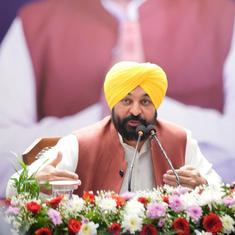
In a resolution adopted at an all-party meeting chaired by Chief Minister and Dravida Munnetra Kazhagam chief MK Stalin, the parties also said that they would move the Supreme Court against the exercise.
In its petition before the Supreme Court on Monday, the Dravida Munnetra Kazhagam noted that a Special Summary Revision had already been conducted in Tamil Nadu between October 2024 and January 6, 2025, Live Law reported.
During this exercise, the electoral roll was updated to reflect migration, deaths and deletion of ineligible voters, the petition said, adding that the revised list was published on January 6 and had been continuously updated since then.
However, the Election Commission on October 27 purportedly invoked its powers under Article 324 of the Constitution and Section 21 of the Representation of the People Act to direct a fresh special intensive revision of the electoral rolls in Tamil Nadu and several other states, it added.
Article 324 establishes the Election Commission and vests in it the power of superintendence, direction, and control over the preparation of electoral rolls and the conduct of all elections. Section 21 of the Act deals with the preparation and revision of electoral rolls.
The Dravida Munnetra Kazhagam said that the poll panel has also introduced new guidelines that impose citizenship verification requirements, especially for those whose names were not on the 2003 electoral rolls.
The decision amounts to a “constitutional overreach” as Article 324 operates only in areas unoccupied by legislation, and cannot supplant the existing statutory framework under the Representation of the People Act and the Registration of Electors Rules, the petition said.
The party added that the procedure directed by the Election Commission is not mentioned in the parent Act and rules, which makes the revision exercise ultra vires, or acting beyond one’s legal power or authority, Live Law reported.
The Dravida Munnetra Kazhagam alleged that exercise “appears to be acting beyond its statutory purpose, effectively functioning as a de facto National Register of Citizens” by imposing “citizenship-like” burdens of proof on electors, The Hindu reported.
The National Register of Citizens is a proposed exercise to create a list of Indian citizens and to identify undocumented immigrants. Concerns have been raised by Opposition leaders that the special revision of voter rolls was an attempt to implement the National Register of Citizens “through the backdoor”.
The register was updated in Assam in 2019, after a mammoth scrutiny of ancestral family documents to weed out “illegal immigrants”, and ended up excluding 19 lakh residents of the state. The updated list, however, has not been notified six years on.
In its petition, the Dravida Munnetra Kazhagam said that if the order on the revision exercise was not set aside, it could “arbitrarily and without due process, disenfranchise lakhs of voters from electing their representatives, thereby disrupting free and fair elections and democracy in the country, which are part of the basic structure of the Constitution”, The Hindu reported.
It also noted that commonly available documents such as ration cards, PAN Cards and Election Photo Identity Cards have been excluded as proof of identity in the special intensive revision.
Such “rigid and arbitrary” document requirements fail to accommodate the realities of disadvantaged communities that face chronic under-documentation, the petition said.
“They disproportionately burden the youth, migrants, women, economically weaker sections and marginalised communities, who are least likely to be able to furnish such records within the unreasonably truncated timeline prescribed,” The Hindu quoted it as saying.
The Dravida Munnetra Kazhagam also noted that the exercise was “bound to cause confusion, uncertainty, and disenfranchisement”, similar to what has already been witnessed in Bihar, Live Law reported.
The petition said that similar challenges against the revision exercise in Bihar were already pending in the Supreme Court.
The Dravida Munnetra Kazhagam urged the Supreme Court to quash the order on the revision and declare it as “unconstitutional, arbitrary, and without statutory authority”, according to Live Law.
In Bihar, where the revision was completed ahead of the Assembly elections in November, at least 47 lakh voters were excluded from the final electoral roll published on September 30.
Concerns had been raised after the announcement in Bihar that the exercise could remove eligible voters from the roll. Several petitioners also moved the Supreme Court against it.
On September 8, the court directed the Election Commission to accept Aadhaar as a valid identity proof for the exercise in Bihar.
Aadhaar had not been among the 11 documents the poll panel had allowed as proof of citizenship. Petitioners had called its exclusion “absurd”, noting that it was the most widely held form of identification.
The Election Commission has repeatedly defended the revision as a clean-up effort to remove names of the deceased, duplicate entries and undocumented migrants.
‘Will take SIR fight to Delhi if eligible voters removed’: TMC
In West Bengal, Trinamool Congress MP Abhishek Banerjee said that his party will take the “special intensive revision fight” to Delhi if even a single eligible voter is removed from the electoral rolls in the state, ANI reported on Tuesday.
The Diamond Harbour MP accused the ruling Bharatiya Janata Party at the Centre and the Election Commission of working in tandem to deprive the state of its identity.
“…those who act as puppets of the Central government to deprive Bengal of its identity and label us Bangladeshis for speaking Bangla will be challenged all the way to the capital,” said Banerjee.
