









Delhi-NCR: GRAP Stage 3 reimposed as air quality worsens to ‘severe’ level
The national capital’s average Air Quality Index at 12.05 pm was 409.
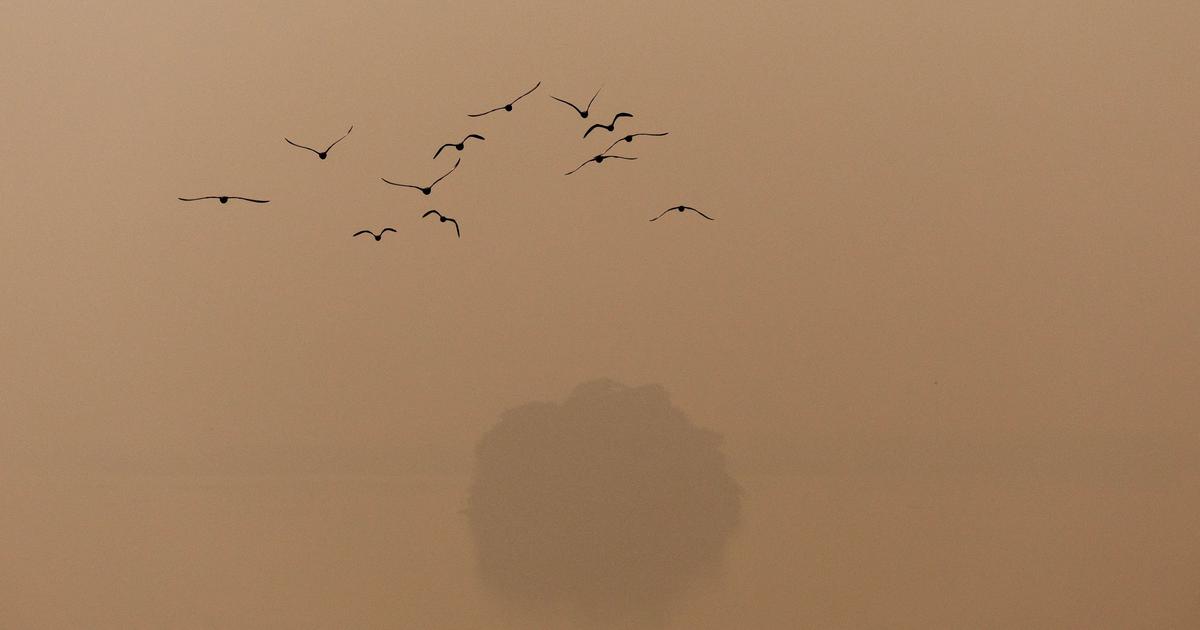
The Commission for Air Quality Management on Saturday reimposed Stage 3 restrictions under the Graded Response Action Plan to control pollution in the National Capital Region after the air quality worsened to the “severe” level, The Hindu reported.
GRAP is a set of incremental anti-pollution measures that are triggered to prevent further worsening of air quality once it reaches a certain threshold in the Delhi-NCR region.
Stage 3 measures include a ban on non-essential construction work and the closure of stone crushers and mining activities, in addition to the measures already imposed under Stage 1 and Stage 2.
They also include the shifting of primary school up to Class 5 to hybrid mode. Parents and students have the option to choose between offline and online classes wherever available.
Additionally, the use of BS-III petrol and BS-IV diesel cars is restricted in Delhi and the NCR.
BS norms, or Bharat Stage Emission Standards, are regulations set by the Indian government to control air pollutants from motor vehicles. The higher the BS norm, the stricter the standard and the lower the permissible emissions.
The measures on Saturday came amid 27 of the 40 monitoring stations in Delhi recording Air Quality Index readings of above 400, which is categorised as “severe”, as per data provided by the Central Pollution Control Board.
The national capital’s average AQI at 12.05 pm also stood at 409, the Sameer application, which provides hourly updates from the pollution board, showed.
A day earlier, the overall AQI had reached 349, rising from 307 on Thursday and 259 on Wednesday.
An index value between 0 and 50 indicates “good” air quality, between 51 and 100 indicates “satisfactory” air quality and between 101 and 200 indicates “moderate” air quality. As the index value increases further, air quality deteriorates. A value of 201 and 300 means “poor” air quality, while between 301 and 400 indicates “very poor” air.
Between 401 and 450 indicates “severe” air pollution, while anything above the 450 threshold is termed “severe plus”.
An AQI in the “severe” category signifies hazardous pollution levels that can pose serious risks even to healthy individuals.
A toxic haze shrouded the national capital on Saturday morning, prompting the Delhi airport to issue an advisory that “low visibility procedures” were in progress. “All flight operations are presently normal,” it said in a statement at 6.55 am, but urged passengers to contact the airline for updated flight information.
#WATCH | Delhi | Visuals around Ghazipur area this morning as a layer of toxic smog blankets the city.
— ANI (@ANI) December 13, 2025
AQI (Air Quality Index) around the area is 435, categorised as 'Severe', as claimed by CPCB (Central Pollution Control Board). pic.twitter.com/2x1IUbI8v3
Delhi has been recording air quality in the “poor” or worse categories since mid-October.
Air quality usually deteriorates sharply in the winter months in Delhi, which is often ranked the world’s most polluted capital.
Stubble burning in Punjab and Haryana, vehicular pollution, along with the lighting of firecrackers during Diwali, falling temperatures, decreased wind speeds and emissions from industries and coal-fired plants contribute to the problem.
Earlier, measures under Stage 1 and Stage 2 of the Graded Response Action Plan to bring pollution under control were in force in Delhi and the adjoining regions. Amid worsening levels, Stage 3 restrictions under the Graded Response Action Plan were imposed on November 11.
However, the Commission for Air Quality Management on November 26 withdrew the Stage 3 restrictions, citing improved air quality. These measures have been reimposed on Saturday.
The Union government on Thursday told Parliament that global standards for air quality, including those issued by the World Health Organization, were not binding and only serve as a “guidance document”.
On Tuesday, the Union government told Parliament that there was no conclusive data available in the country to establish direct correlation of death or disease exclusively because of air pollution.
Union Minister of State for Health Prataprao Jadhav had said that air pollution was one of the triggering factors for respiratory ailments and associated diseases.
However, a report by medical journal The Lancet said that more than 17 lakh persons died in India in 2022 because of exposure to atmospheric pollution, an increase of 38% since 2010.
The Lancet Countdown on Health and Climate Change 2025, released on October 29, was prepared by 128 experts from 71 academic institutions and United Nations agencies.
Also read: Why air quality numbers in Delhi vary widely
