








Top updates: Iran’s Supreme Leader Khamenei killed in US-Israel attacks, says state media
On Saturday, Washington and Tel Aviv launched a joint operation against Tehran, and Iran responded to the ‘hostile act’ with missile strikes across West Asia.
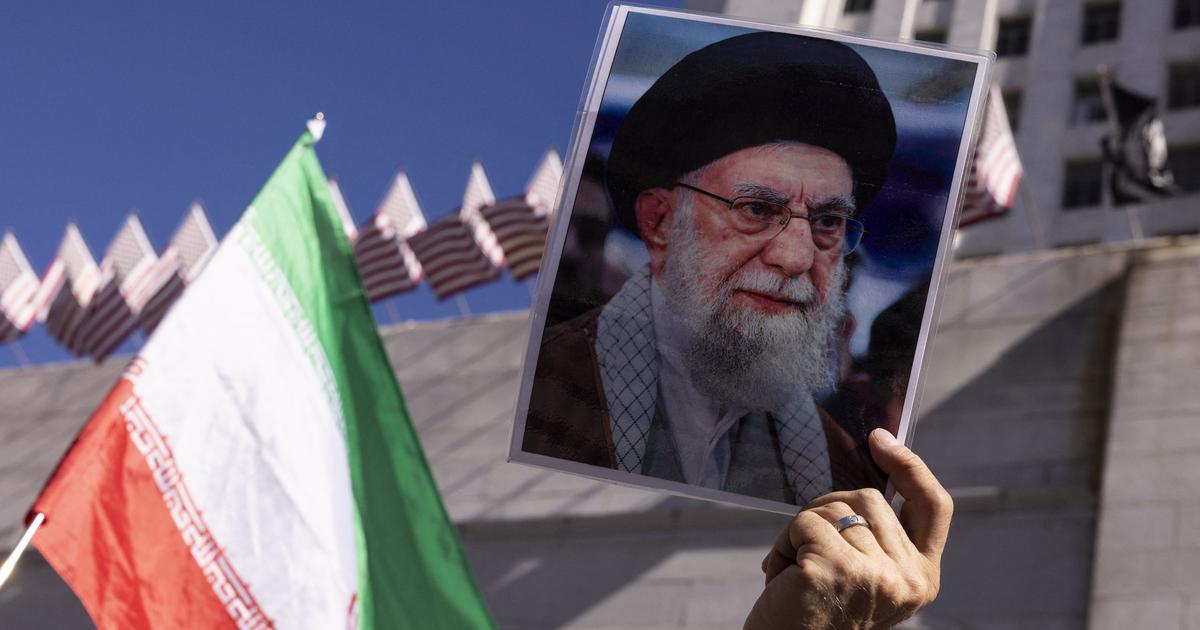
Iran’s Supreme Leader Ayatollah Ali Khamenei was killed in a joint United States-Israeli military operation on Sunday, the country’s state media reported.
His daughter, grandchild, daughter-in-law and son-in-law were also killed in the strike.
Hours earlier, US President Donald Trump had posted on social media stating: “Khamenei, one of the most evil people in history, is dead.”
Khamenei, 86, had served as Iran’s supreme leader since 1989. He controlled all branches of the government and the armed forces.
Here’s more on this and other top updates from the conflict in West Asia:
- Iranian President Masoud Pezeshkian and two other senior officials will lead the country through a transitional phase after Khamenei’s killing, AFP quoted state television as reporting on Sunday. Judiciary chief Gholamhossein Mohseni Ejei and another official from the country’s legal council will be part of the team overseeing the transition, the state television quoted Mohammad Mokhber, one of Khamenei’s advisors as having said.
- Iran’s official news agency IRNA reported that Khamenei’s security adviser Ali Shamkhani, the country’s army chief of staff, General Abdulrahim Mousavi, defence minister Brigadier General Aziz Nasirzadeh and Islamic Revolutionary Guard Corps Commander-in-Chief Mohammad Pakpour were also killed in the strikes.
- More than 200 residents were evacuated to three hotels in Israel’s Tel Aviv after at least 40 buildings were damaged in Iran’s retaliatory strikes on Saturday, Israeli news outlet Haaretz quoted the city municipality as saying.
- As overnight Iranian retaliatory attacks spread across the Gulf and wider West Asia, Dubai International Airport and its landmark Burj Al Arab hotel sustained damage, the administration in Dubai said on Sunday. Explosions were reported on Palm Jumeirah island, where drone debris sparked a fire in a building, while damage was also reported at Jebel Ali port, AFP quoted unidentified authorities as saying.
- The authorities in Dubai later confirmed an “incident” in the Palm Jumeirah area that resulted in a fire and four injuries. It also said four persons were injured at the airport.
- Later on Sunday, the administration in Dubai confirmed that two persons were injured after debris from intercepted drones fell into the courtyards of two homes. “The sounds heard across the emirate were the result of successful interception operations,” Dubai’s media office said on social media.
- At least one person died and seven others were injured in an “incident” triggered by the interception of a drone at Zayed International Airport in Abu Dhabi, the authorities said on Sunday. “The interception led to falling debris, which resulted in one fatality of an Asian national and seven injuries,” the airport said in a statement.
- On Sunday, the Israeli military said it was carrying out “another wave of strikes” against “Iranian ballistic missile array and air defence systems”, Al Jazeera reported.
- Iran’s ambassador to the United Nations Amir Saeid Iravani said that Tehran considers attacks on all US and Israeli bases and installations in the region part of its right to self-defence, Al Jazeera reported.
- Bahrain said that a missile attack targeted the US Navy’s 5th Fleet headquarters, damaging three buildings in the capital, Manama. The US Embassy in Bahrain on Sunday said all family members and non-essential personnel were authorised to leave the country, AP reported.
- India’s Ministry of External Affairs said that foreign nationals in the country who have had to change their travel plans due to the ongoing developments in West Asia can seek assistance to extend or regularise their visas. The ministry added that such individuals should contact the nearest Foreigners Regional Registration Office for help.
- Hundreds of people stormed the US Consulate in Pakistan’s Karachi protesting Khamenei’s death, on Sunday, AP reported. The police and paramilitary forces used batons and tear gas to disperse the crowd. At least eight persons were killed and 20 others were injured, Muhammad Amin, a spokesman for the Edhi Foundation rescue service, told AFP.
BREAKING:
— Globe Eye News (@GlobeEyeNews) March 1, 2026
US Consulate in Karachi, Pakistan, is now under attack by protesters. pic.twitter.com/rK6g5PZ3G0
- Protests also broke out in parts of the Kashmir Valley, including Srinagar after Khamenei’s death. A shutdown was also observed in several areas. Unidentified officials told The Hindu that senior police officers were monitoring the situation and that security had been put on alert amid growing street protests. Protests were also held in Lucknow by members of the Shia community, ANI reported.
#WATCH | Lucknow, Uttar Pradesh: Shia Muslims take to the streets in Lucknow to protest against the killing of Iran's Supreme Leader Ayatollah Ali Khamenei, who has been killed in Israeli and US strikes pic.twitter.com/lqDuVblCy8
— ANI (@ANI) March 1, 2026
- Jammu and Kashmir Chief Minister Omar Abdullah appealed to “all communities to remain calm, uphold peace and avoid actions that could lead to tension or unrest”. “We must also ensure that those who are mourning in Jammu and Kashmir are allowed to grieve peacefully,” the chief minister said. “The police and administration should exercise utmost restraint and refrain from using force or restrictive measures.”
I’m deeply concerned about the unfolding developments in Iran, including the killing of Iran’s Supreme Leader, Ayatollah Ali Khamenei. I appeal to all communities to remain calm, uphold peace, and avoid any actions that could lead to tension or unrest.
— Omar Abdullah (@OmarAbdullah) March 1, 2026
We must also ensure that…
- Air India on Sunday cancelled several international flights following the closure and restrictions of airspace in West Asia. The airline said it would continue to monitor the situation and issue updates based on ongoing risk assessments. It added: “We regret the inconvenience caused and are making every effort to assist affected passengers with rebooking and alternative travel arrangements.”
#TravelAdvisory
— Air India (@airindia) March 1, 2026
“Close monitoring and careful assessment of the evolving situation in the Middle East have necessitated further curtailment of our scheduled operations, with the safety and security of our customers and crew remaining our highest priority.
In addition to the…
- United Nations Secretary-General António Guterres on Saturday urged all sides to prevent a wider escalation of war in West Asia amid the fresh conflict. Addressing the UN Security Council, Guterres said that the military action that has embroiled countries in West Asia, carries the risk of “igniting a chain of events that no one can control in the most volatile region of the world”. The UN secretary general noted that the joint military operation by Israel and the US occurred following indirect talks between Washington and Tehran, “squandering” an opportunity for diplomacy.
On Saturday, Israel and the US launched a joint operation to degrade the capabilities of the Iranian government. Iran retaliated to the attacks and said that the US-Israeli operation had begun while the nuclear negotiations were on.
The attacks came amid tensions between the three countries over Tehran’s nuclear programme. Washington acts as a guarantor of Israel’s security. Israel has been claiming that Iran is “closer than ever” to obtaining a nuclear weapon, which could alter the regional security balance.
Iran has long maintained that its nuclear programme is for civilian purposes.
However, amid fears of a potential attack, with a heavy US military deployment off its coast in recent months, Tehran had been forced to reopen negotiations with Washington about its nuclear programme.
On Saturday, the Israeli military said that it had identified missiles launched from Iran toward Israel and that its defence systems were intercepting the threat. Iran had on Saturday also launched strikes on US military installations in Bahrain, Kuwait and Qatar, AP reported. Sites in Riyadh were also reportedly struck.
In Saturday’s strikes in southern Iran, more than 100 children were killed when an Israeli strike hit an elementary girls’ school in Minab in Hormozgan province, the BBC quoted Iravani as saying. “The number of innocent civilians continues to rise,” Iravani said. “This is not only an act of aggression, it is a war crime and a crime against humanity.”
Israel’s emergency service said on Saturday that a woman was killed in the Tel Aviv area after Iran’s missile attack, AFP reported.
BREAKING:
— Globe Eye News (@GlobeEyeNews) February 28, 2026
Dubai, right now. pic.twitter.com/QFRiiCaSX4
On Saturday, India said that it was “deeply concerned” about the recent developments in Iran and the Gulf. The Ministry of External Affairs urged all sides to exercise restraint, avoid escalation and prioritise the safety of civilians. “Dialogue and diplomacy should be pursued to de-escalate tensions,” it said in a statement.
The Indian diplomatic missions are in contact with Indian citizens, the statement said, adding that advisories had been issued asking them to be vigilant. The Indian embassies in Tehran and Tel Aviv had asked citizens to exercise caution and avoid unnecessary movements.
In view of the conflict, large swathes of its airspace became a no-go zone forcing global and Indian airlines to cancel flights to the region and reroute several others to avoid the affected corridors on Saturday.
The Directorate General of Civil Aviation too issued an urgent safety advisory valid until Monday for all airlines to avoid 11 countries in the region comprising Iran, Iraq, Israel, Jordan, Lebanon, Kuwait, Saudi Arabia, the United Arab Emirates, Bahrain, Qatar and Oman, The Hindu reported.
Our statement on the evolving situation in West Asia ⬇️
— Randhir Jaiswal (@MEAIndia) February 28, 2026
🔗 https://t.co/6aGR3mdDrb pic.twitter.com/qdKlTorVU4
The tensions
The US has repeatedly demanded that Iran give up its nuclear programme, threatening that Tehran must meet its terms or face consequences.
Khamenei had warned on February 1 that an attack by the US would spark a “regional war”.
Israel had been preparing for a possible conflict with Iran for several weeks.
In June, Tehran and Tel Aviv agreed to a ceasefire after 12 days of hostilities.
At the time, the Israeli military had struck what it claimed were nuclear targets, and other sites, in Iran with the aim of stalling Tehran’s nuclear programme. Iran retaliated with missile attacks on Israel.
Both countries had later accused each other of violating the ceasefire.
The two countries had been nudged by the US to accept the ceasefire after Washington on June 22 joined Israel’s war against Iran. The US military had carried out what Trump had described as a “very successful attack” on Iranian nuclear sites in Fordo, Natanz and Esfahan.
While Trump had claimed at the time that Iran’s nuclear facilities had been “completely obliterated” in the attacks, Washington’s preliminary intelligence assessment had said that the strikes only set it back by a few months, and did not destroy its nuclear programme.
Trump’s fresh focus on Iran came after the US’ military operation in Venezuela. On January 3, the US military abducted Venezuelan President Nicolás Maduro and his wife, Cilia Flores, for alleged drug trafficking.
Almost simultaneously, on December 28, protests erupted in Iran initially focused on discontent about rising inflation. However, they later expanded as demonstrations in more than 100 towns demanded an end to clerical rule.
More than 5,000 persons were killed in the crackdown on the protests, according to international rights groups.
Following this, Trump had announced that the US military was moving warships towards Iran “just in case” he wants to take action, saying that he was “watching them very closely”.
Also read: How the Israel-Iran conflict could impact India
