




India to engage with new Bangladeshi government constructively, strengthen ties: S Jaishankar
During a bilateral meeting on Wednesday, Dhaka reiterated its request for New Delhi to extradite former Prime Minister Sheikh Hasina.
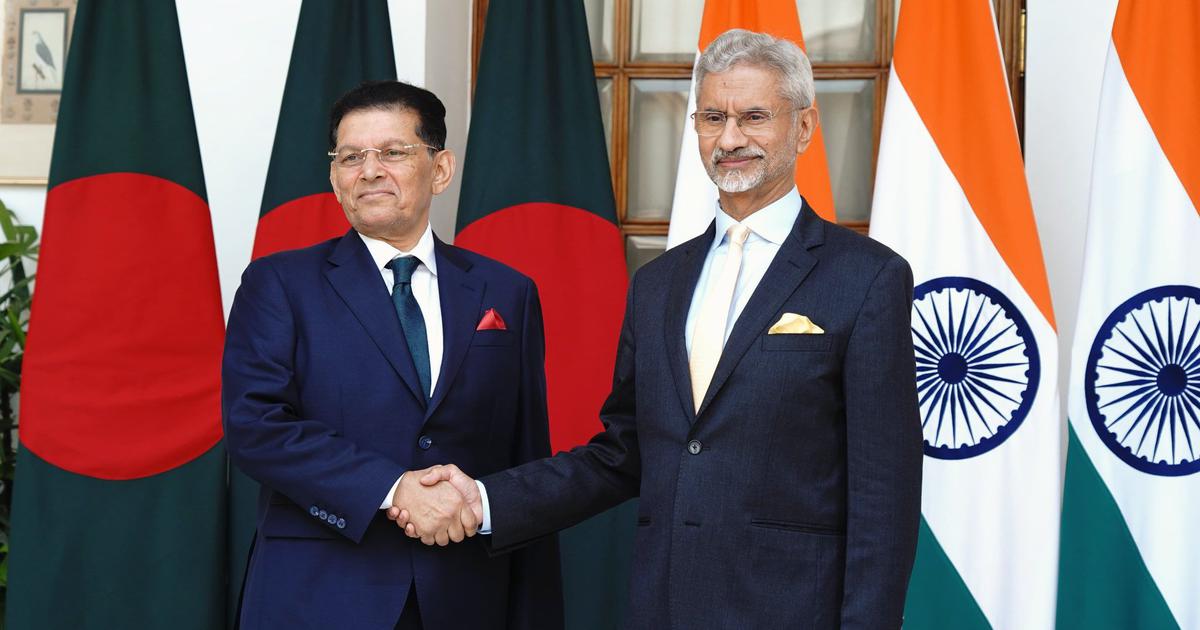
External Affairs Minister S Jaishankar on Wednesday reiterated to his Bangladeshi counterpart Khalilur Rahman that India will “engage constructively” with the new government in Dhaka and work to strengthen bilateral ties.
The comments were made during talks in New Delhi between Jaishankar and Khalilur Rahman. Humayun Kabir, the foreign affairs adviser to Bangladeshi Prime Minister Tarique Rahman, was also present in the meeting.
The two sides agreed to explore proposals to deepen the partnership through existing bilateral mechanisms and to hold follow-up meetings soon, India’s Ministry of External Affairs said in a statement.
Jaishankar said on social media that he discussed with Khalilur Rahman the strengthening bilateral relations in several areas, as well as regional and global developments and agreed to remain in close contact.
Pleased to host FM Khalilur Rahman of Bangladesh and his delegation this afternoon.
— Dr. S. Jaishankar (@DrSJaishankar) April 8, 2026
We discussed strengthening our bilateral relationship in its various facets. Also exchanged views on regional and global developments.
Agreed to remain in close touch.@BDMOFA
🇮🇳 🇧🇩 pic.twitter.com/qAf87w2cvr
Dhaka said that Khalilur Rahman reiterated a request for India to extradite former Prime Minister Sheikh Hasina, who has been residing in Delhi since her ouster in August 2024. He also conveyed Dhaka’s intention to pursue a “Bangladesh First” foreign policy.
However, unidentified Bangladeshi officials told The Hindu that broader ties would not be “held hostage” to Hasina’s presence in India, while seeking assurances that she would not use Indian territory for political activities.
During the discussions, the Bangladeshi side also addressed India’s security concerns, stating that its territory would not be used against Indian interests and that it would not pursue security arrangements with countries such as the United States, China or Pakistan, The Hindu reported.
Dhaka in its statement also acknowledged India’s role in apprehending suspects in the killing of Bangladeshi activist Sharif Osman Hadi in December and sought their extradition.
The visit by Khalilur Rahman marks the first high-level bilateral engagement hosted by India since the Hasina government was ousted.
Hasina fled to India in August 2024 after several weeks of widespread student-led protests against her Awami League government. She had been in power for 16 years.
An interim administration headed by Muhammad Yunus took charge following her ouster.
The ties between New Delhi and Dhaka had strained during this period until Tarique Rahman’s Bangladesh Nationalist Party government came to power in February.
