







X’s failure to remove Rana Ayyub’s decade-old posts could lead to loss of safe harbour: Centre
The government and Delhi Police told the High Court that the platform had ‘actual knowledge’ of the ‘inflammatory’ posts creating a legal obligation to act.
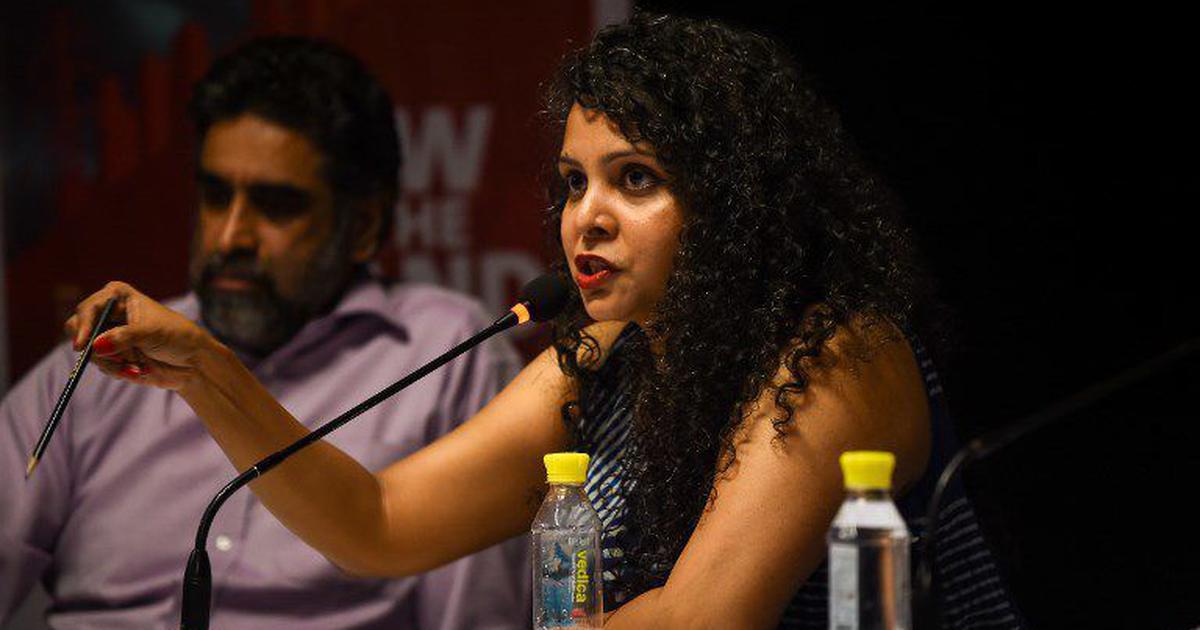
The Union government and the Delhi Police on Friday told the Delhi High Court that the failure of social media platform X to remove the allegedly inflammatory posts by journalist Rana Ayyub despite orders can lead to the withdrawal of its safe harbour protection in India, Bar and Bench reported.
Removal of safe harbour protection under Section 79 of the Information Technology Act would make the platform liable for the content in question.
The submissions were made in affidavits before Justice Purushaindra Kumar Kaurav in a petition filed by a lawyer named Amita Sachdeva seeking that six posts made by the journalist between 2013 and 2017, including about Hindu deities and Hindutva ideologue VD Savarkar, be taken down.
On Wednesday, the court asked the police and X to take action against Ayyub for the posts. It had added that the matter required urgent consideration and that X, the Delhi Police and the government would have to act in tandem.
It had also issued notice to Ayyub, X and the Delhi Police, seeking their responses to the petition by Thursday.
“The action is necessary in view of the highly derogatory, inflammatory and communal tweets posted by [Ayyub] pursuant to which an [first information report] has been registered on the orders of a competent court,” Kaurav had said on Wednesday.
Sachdeva had also approached a trial court in Delhi in January 2025 seeking an FIR against the journalist. The court had then ordered that a case be filed, following which the police registered the case the next day.
Ayyub had at the time told Scroll that her posts on X did not violate any legal provision. She had said that the complaint against her was “yet another attempt to intimidate and silence my voice”.
Sachdeva claimed in her petition before the High Court that Ayyub had insulted Hindu deities Sita and Ram, Savarkar, and Hindu nationalism, Bar and Bench reported. The lawyer claimed that the posts could disrupt communal harmony.
She added that she had approached X’s Grievance Appellate Committee, which declined to order the posts to be taken down, saying that the matter was sub judice, Live Law reported.
On Friday, the affidavits submitted in the High Court noted that the police had issued notices in September and December asking X to take down Ayyub’s posts, Bar and Bench reported. The government added that a trial court had also ordered the filing of a case against the journalist in January 2025.
The notices and the order constituted “actual knowledge” under the 2021 Information Technology Intermediary Guidelines and Digital Media Ethics Code Rules, it said, adding that this would place a statutory obligation on X to act expeditiously and remove such unlawful content.
“Actual knowledge” refers to the verified, explicit notification that makes an intermediary legally responsible for hosting prohibited content.
The government said that X’s safe harbour protection is liable to be withdrawn as it failed to act despite “actual knowledge”, the legal news portal reported.
It added that such “inaction amounts to non-compliance with the due diligence requirements provided for in the applicable rules and facilitates continues commission of unlawful acts by its user…Rana Ayyub”, Live Law reported.
A consequence of this is that “the protection of safe harbor available to the intermediary available under Section 79(1) is liable to be withdrawn”, the government added.
X, on the other hand, told the High Court that the petition was not maintainable against the platform and should instead be directed at Ayyub, who had uploaded the content, Bar and Bench reported.
The platform added that the Delhi Police should follow the blocking process under Section 69A of the Information Technology Act and the 2009 Blocking Rules, as Ayyub’s posts fell within the grounds specified under these provisions.
Section 69A empowers the government to block public access to any online information in the interest of national security, sovereignty, public order or foreign relations.
During Friday’s proceedings, Ayyub’s counsel also argued that the petition was not maintainable.
The court granted the journalist two weeks to file her reply, including on the issue of maintainability, Bar and Bench reported.
The matter has been listed for further hearing on May 19.
