









SC issues notice to EC, Centre on plea seeking biometric identification to prevent electoral fraud
The bench said that on a preliminary reading, the nature of the demands made in the petition could not be considered for the ongoing elections.
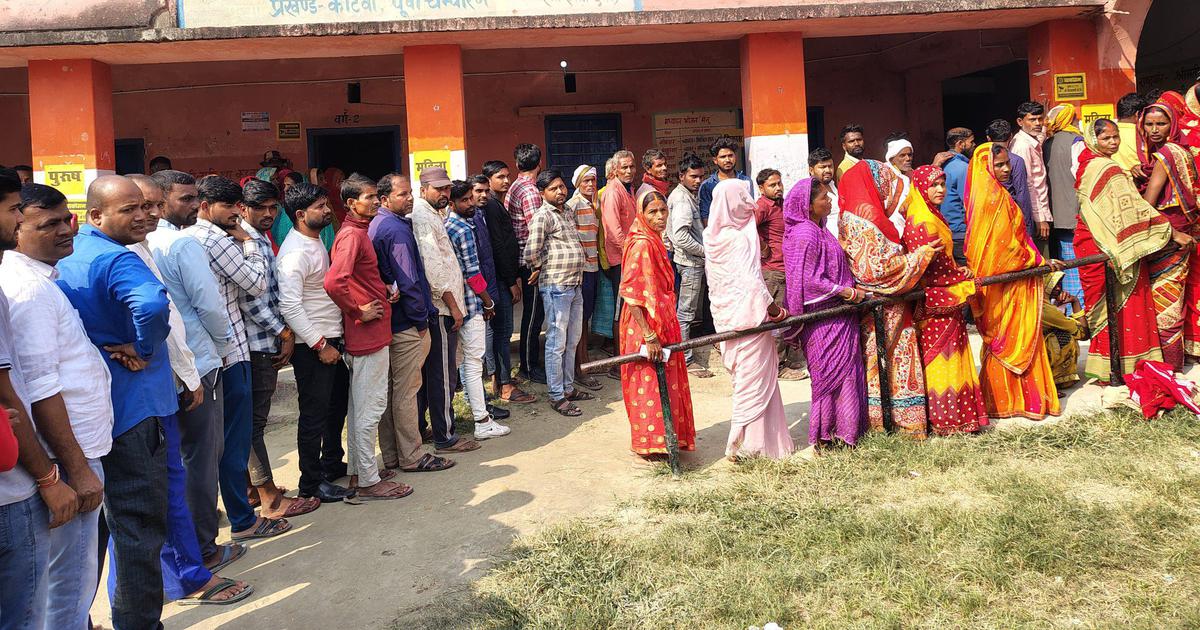
The Supreme Court on Monday issued notices seeking the responses of the Election Commission and the Union government on a public interest litigation petition seeking fingerprint and iris-based biometric identification at polling stations to prevent electoral malpractices, Live Law reported.
Lawyer and Bharatiya Janata Party member Ashwini Kumar Upadhyay filed the petition under Article 32 of the Constitution, which guarantees the right to move the Supreme Court for the enforcement of fundamental rights.
A bench of Chief Justice Surya Kant and Justice Joymalya Bagchi said that on a preliminary reading, the nature of the reliefs sought could not be considered for the ongoing elections, Live Law reported.
The bench, however, noted that “whether such a recourse deserves to be followed for the next parliamentary elections and/or elections of state legislatures needs to be examined”.
Assembly elections were held in Assam, Kerala and Puducherry in a single phase on April 9. Tamil Nadu will vote on April 23, while West Bengal will vote in two phases on April 23 and April 29. The results in all states will be announced on May 4.
During the hearing, Upadhyay claimed that the proposed system for biometric identification would serve as a preventive mechanism against electoral fraud, Live Law reported.
The BJP leader noted that implementing such measures during the current Assembly elections may not be feasible. However, he argued that the system could be introduced in future elections to curb practices like proxy voting and the inducement of voters.
In response, the bench said that the proposal would require the rules to be changed, Bar and Bench reported. It added that this would also involve a significant financial burden to the exchequer.
The petition
In his petition, Upadhyay sought the implementation of a finger and iris biometric identification system at polling stations during Assembly elections to prevent bribery, undue influence, personation, duplicate voting, ghost voting and other electoral malpractices, Live Law reported.
The petition said that the cause for action came up on March 20, when the petitioner realised that instances of bribery, undue influence, personation, duplicate voting and ghost voting continued to persist despite measures taken by the Election Commission.
Upadhyay contended that implementing biometric authentication at polling booths would uphold the constitutional mandate of free and fair elections and ensure that only genuine and duly registered electors are permitted to cast their votes.
The advocate also noted that he had sent a representation on March 28 to the Election Commission seeking the implementation of such systems at polling booths. However, no action was taken, he added, according to Live Law.
