







Monsoon updates: Delayed onset, rising temperatures and water scarcity
The weather department has forecast a heatwave in parts of Chhattisgarh, Maharashtra, Uttar Pradesh, Odisha and Telangana this week.
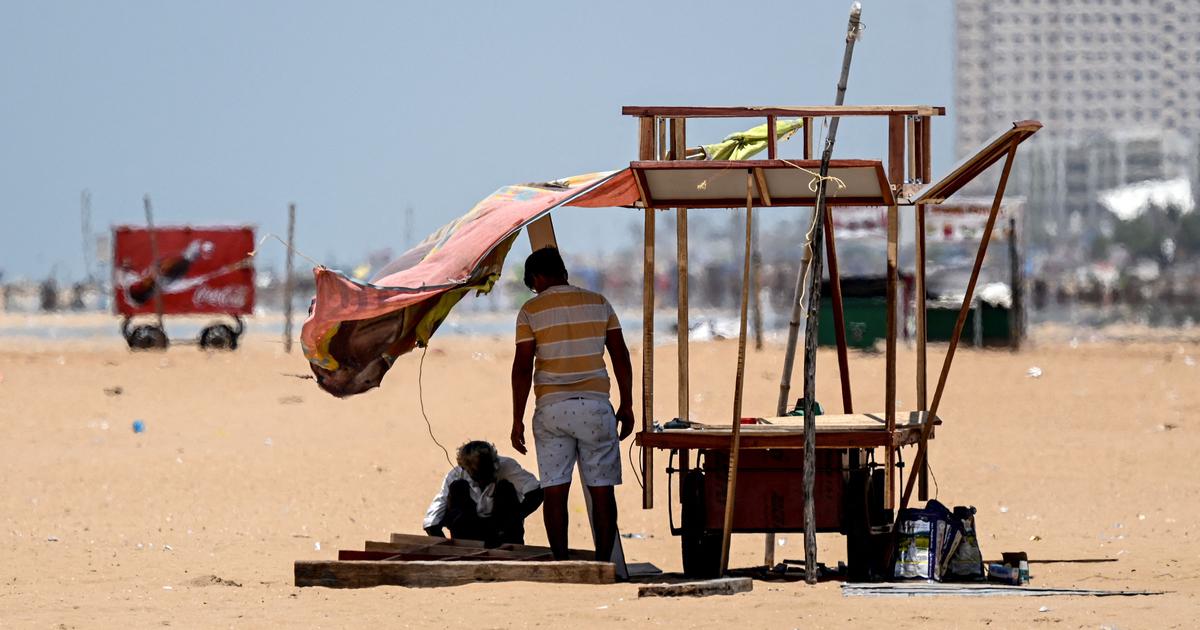
The delay in the onset of southwest monsoon in most parts of the country has led to concerns about shortage of rainfall, water scarcity and continued high temperatures.
The concerns have also been driven by the strengthening El Niño weather phenomenon, which involves the warming of ocean surface temperatures in the eastern and central Pacific. It typically occurs every few years and has been linked to reduced monsoon rainfall in India.
Data from the India Meteorological Department on Tuesday showed that the monsoon had reached southern Maharashtra in the west, parts of Odisha in the south-east and regions of West Bengal and Bihar in the east.
The advance line of the monsoon was at least four days behind the usual date of onset in Mumbai, southern Madhya Pradesh and Chhattisgarh, according to the data.
Also read: Interview: How will El Niño affect the monsoon in India?
Delayed monsoon
The country had received only 19.2 mm of rainfall between June 4 and June 15, against a normal of 53.7 mm, India Today reported. This is a rainfall deficit of 64.2%.
The conditions were favourable for further advance of the monsoon into more regions of Telangana, Odisha, Jharkhand and Bihar, and some parts of Chhattisgarh in the next four to five days, the weather department said on Tuesday.
While the monsoon is forecast to advance after June 20, not enough rainfall is expected till the last week of the month, India Today quoted weather agencies as saying.
Maharashtra water crisis
This month is projected to be the driest June in Mumbai in nearly 20 years, India Today reported. The weather observatory in Santacruz has recorded 13.1 mm of rainfall this month and 5 mm at Colaba.
The average rainfall in Mumbai during June is 526.3 mm.
The level of water in the reservoir in Maharashtra, including dams, had fallen to 25.5% as of June 10, News18 quoted the state’s water department as saying. At the same time in 2025, the storage was 30.5%.
Following the delay in the onset of monsoon and a low rainfall forecast, the department has informed the Pune Municipal Corporation that it needs to reduce its consumption of water to ensure that the storage lasts till the end of August, The Indian Express reported on Sunday.
The civic body has ordered swimming pools and vehicle washing shops to close, and prohibited the use of water provided by the municipal corporation to be used at construction sites, the newspaper reported.
Intense heat
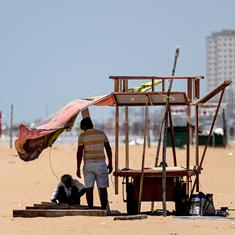
A heatwave is “very likely” in parts of Chhattisgarh on Tuesday and Wednesday, in central Maharashtra and Marathwada on Thursday and Friday, and western Uttar Pradesh on Friday and Saturday, the weather department said.
Parts of Odisha are expected to face a heatwave on Tuesday and Telangana between Tuesday and Thursday.
On Monday, temperatures of between 40 degrees Celsius to 43 degrees Celsius were recorded in coastal Andhra Pradesh, eastern Madhya Pradesh, eastern Uttar Pradesh, Gujarat, Jharkhand, central Maharashtra, Odisha, Telangana, western Rajasthan and western Uttar Pradesh, the India Meteorological Department said.
The highest maximum temperature of 43.4 degrees Celsius was recorded in Banda, Uttar Pradesh.
Twenty-one districts of Bihar, including Patna, recorded an increase in maximum temperatures on Monday. In Patna, the temperature rose to 40.0 degrees Celsius and 41.1 degrees Celsius in Sheikhpura, the Dainik Jagran reported.
The weather department had on June 4 announced that the southwest monsoon had set in over Kerala, marking the beginning of the four-month rainy season in the country. This year, the monsoon reached Kerala three days later than its usual onset date of June 1.
The southwest monsoon season generally begins in June and starts to retreat by September. The India Meteorological Department declares the onset of the season when it hits Kerala.
On May 29, the India Meteorological Department said that the country is expected to receive rainfall at 90% of the long-period average. The long-period average is the measure of the mean rainfall during the four-month monsoon season over the last 50 years.
This figure is lower than the 92% projection made in its first long-range forecast issued in April.
This marks the first time in 11 years that a shortfall in rainfall has been predicted for the June to September period.
Edited by Tanya Shrivastava.
