






India, Japan agree to work closely on AI, energy resilience and boosting supply chains
This came after Indian Prime Minister Narendra Modi met his Japanese counterpart Sanae Takaichi, who is on a three-day visit to New Delhi.
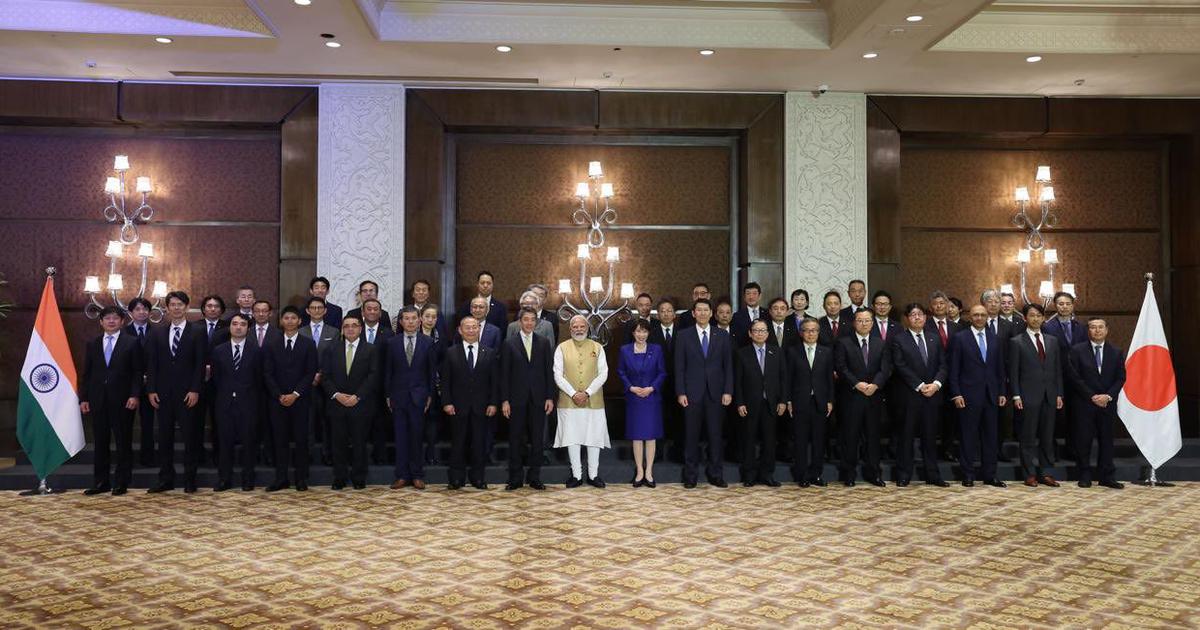
India and Japan on Thursday agreed to boost their partnership in the fields of artificial intelligence, energy resilience and economic security, reported Reuters.
The agreements were signed after Indian Prime Minister Narendra Modi met his Japanese counterpart Sanae Takaichi, who is on a three-day visit to New Delhi.
After the talks, Takaichi told reporters that building “such a mutually complementary cooperative relationship has become increasingly important” amid an increasingly turbulent international landscape.
Her visit follows Modi’s trip to Tokyo in 2025, during which Japan pledged to more than double its investment in India to more than $61 billion in the next decade, reported Reuters.
Citing figures from India, AFP reported that trade between New Delhi and Tokyo in the financial year 2025-’26 topped $27 billion.
India and Japan are part of the Quad, or the Quadrilateral Security Dialogue, which also comprises the United States and Australia.
On Thursday, Modi said that the countries had prepared a joint roadmap for economic security by strengthening supply chain resilience in areas such as semiconductors, according to PTI.
To ensure energy security, India and Japan will set up a thousand bio-gas and organic fertiliser plants in India, he added.
The two countries also agreed to work more closely on critical minerals to boost resilience in their supply chains, reported AFP.
In May, the Quad also announced initiatives to improve collaboration on critical minerals and emerging technology.
The Quad Critical Minerals Initiative Framework is designed to help the four countries coordinate investments to strengthen critical mineral supply chains.
Edited by Neerad Pandharipande.
