



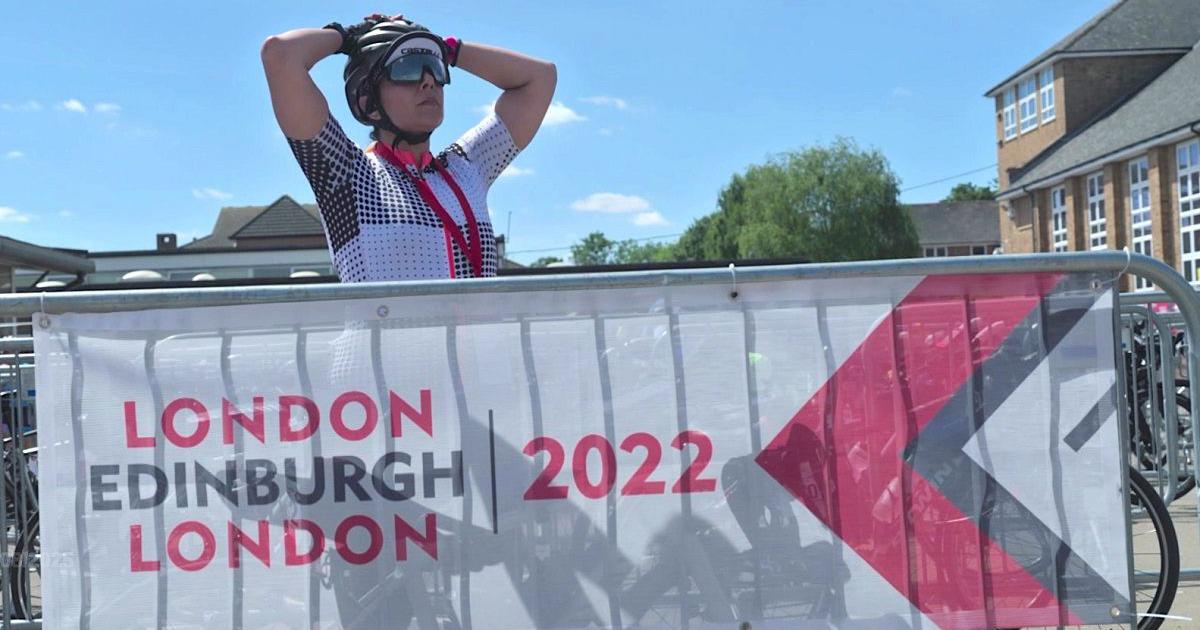
Ameya Gore’s documentary Going Solo is about two Indian women who participate in a gruelling long-distance endurance cycling event in the United Kingdom. Neither woman is young – one is a grandmother. Their bodies often don’t listen to them and there’s a gap between aspiration and ability.
Yet, Gareema Shankar and Renu Singhi pedal away, aiming to cover 1,540 kms in five days on the London-Edinburgh-London route. Going Solo is inspirational, but it’s a bit more than that. The film is about women yearning to be free, to be taken seriously, to achieve goals that they have set entirely for themselves.
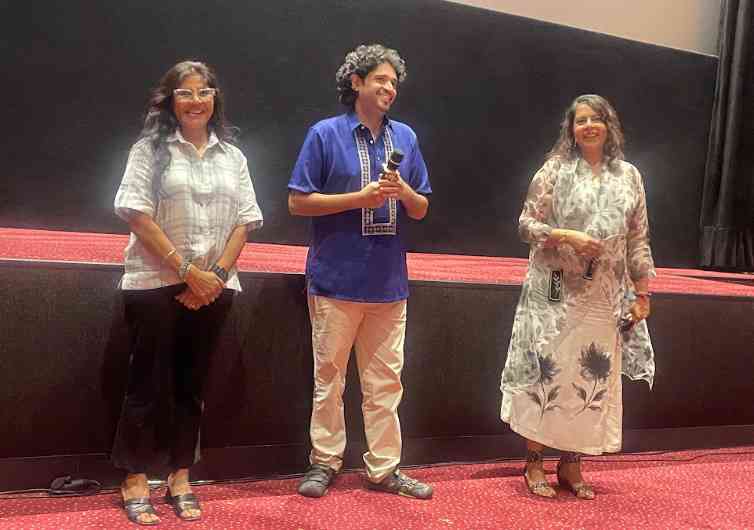
The documentary was screened on Tuesday at the ongoing Mumbai International Film Festival. The screening witnessed a full house and fulsome admiration for Shankar and Singhi, who were present along with Gore and the crew.
Singh said that she got interested in cycling while picking out bikes for her grandchildren. Shankar encouraged the crowd to “live for the day” and “keep doing adventure as much as you can”.
The audience possibly felt close to the women because Going Solo goes beyond cycling, providing a peek into their selves. Even as the film follows its subjects through strenuous workouts, Gore and cinematographer Vandita Jain pick up on the tensions and self-doubt that simmer beneath the surface, the balance between family duties and personal desires, the sacrifices and guilt unique to female achievers.
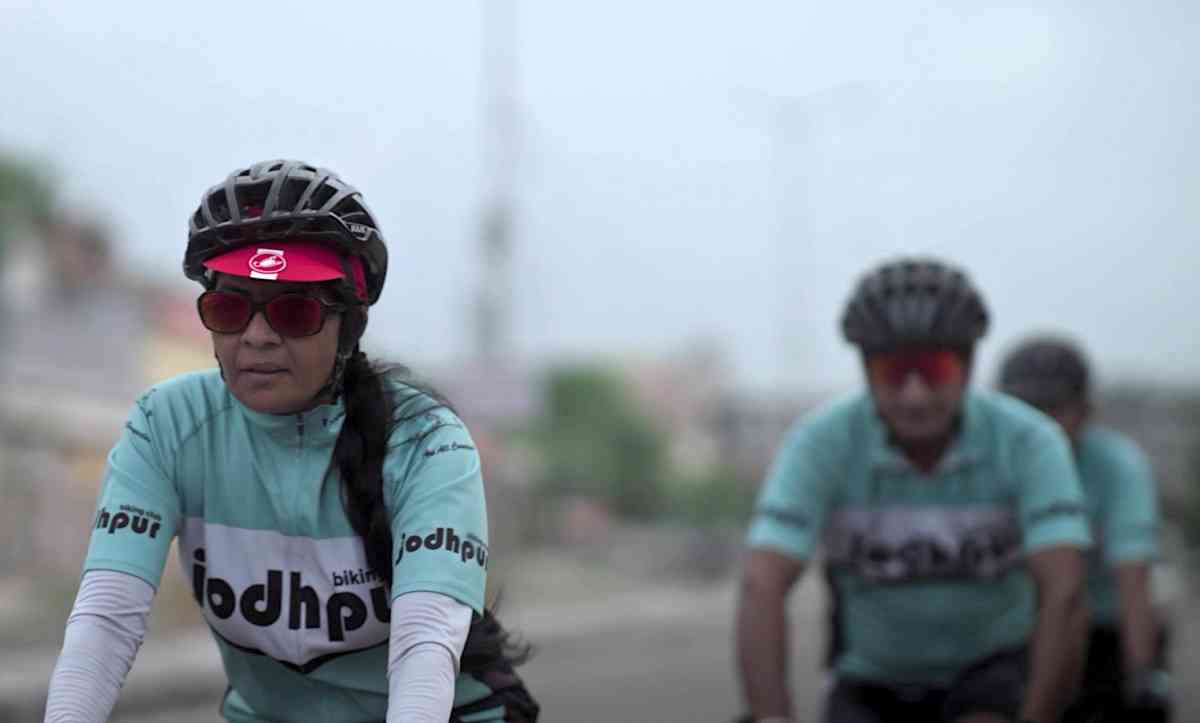
While both women are affluent and blessed with supporting families, they are aware of how unconventional their mission is; how difficult their dreams can get not just themselves but also their relatives. Delhi resident Gareema Shankar toggles between preparing for the LEL event and attending to the needs of her school-going son.
Renu Singhi is seen sailing through the streets of Jodhpur while also cooking meals and doing a laundry run. Singhi says in the documentary that when she’s perched on her cycle saddle, she forges her “daily life and everything else”.
Mainstream cinema has its fair share of “adrenaline-pumping sports films”, Gore told Scroll. “There was no point in doing another one of those. I was more interested in human relationships and stories. The London-Edinburgh-London challenge was just an excuse to make the documentary.”
An alumnus of the Film and Television Institute of India, Gore was recruited by producers Sharib Khan and Vikas Kumar to direct Going Solo. Khan and Kumar were acquainted with Gareema Shankar.
“I was fortunate that the producers weren’t just looking for someone who could technically execute the film, but also someone who had their own say,” Gore said. “We met Gareema and told her at the outset that we weren’t looking at just a sports film. Would she be willing to open up about her personal issues? She gladly agreed. That’s when I felt that there was a story here.”
While hunting for another Indian woman who had signed up for the LEL challenge, the team met Renu Singhi. “The way I look at now is that one woman was over-protected and another one had to labour her entire life,” Gore said. “Both of them found their own ways out of it.”
Going Solo is divided between preparations for the UK event and the experience of the riders when they get there. Singhi travels with her family, a coach whom she calls Guruji and a shadow rider. Shanker is accompanied by her father, who looks out for her every step of the way.
The 70-minute documentary was filmed with one camera. A GoPro camera attached to the front of Shankar’s bike yields a single shot.
“The first thing that comes to mind when you think of a sporting event is a drone, but Vandita and I rejected the drone shot in the very first meeting,” Gore said. “We did take some more GoPro shots and they were very nice, but apart from that single shot, nothing else fit in the edit.”
Gore was keen to avoid the big cliche associated with the sports documentary: graphics and maps detailing the athlete’s progress.
“We knew that the intensity of the cycling had to come out, but we were never looking for grandeur,” Gore observed. “It wasn’t necessary to cover the whole sporting journey. We had a small crew. We decided to focus on the intimate moments that the women go through.”
One of the most powerful sequences in Going Solo for Gore is Gareema Shankar’s heartfelt confession about her relationship with her father, and the moment when he holds her hand as she reaches the finale. “For me, those are the real moments in the film,” Gore said.
Going Solo was filmed in 2022 and 2023. The edit by Makarand Dambhare took a year-and-a half to fall into place. The documentary was double its current 70-minute duration.
The makers have planned more public and private screenings. Gore and his crew will also be travelling to Jaipur in the coming days, where Renu Singhi’s family has organising a screening.
Just like cycling has been transformative for Shankar and Singhi, Going Solo has shifted something within Gore, he revealed.
“I have never followed female characters so closely before,” the 40-year-old filmmaker said. “Through the process of making the film, I started noticing many more things. For instance, I realised how easily I ask my mother for a glass of water. That approach fed into the next schedule. We hear all this talk about patriarchy, but you notice it better when you’re behind a camera.”
Also read:
