











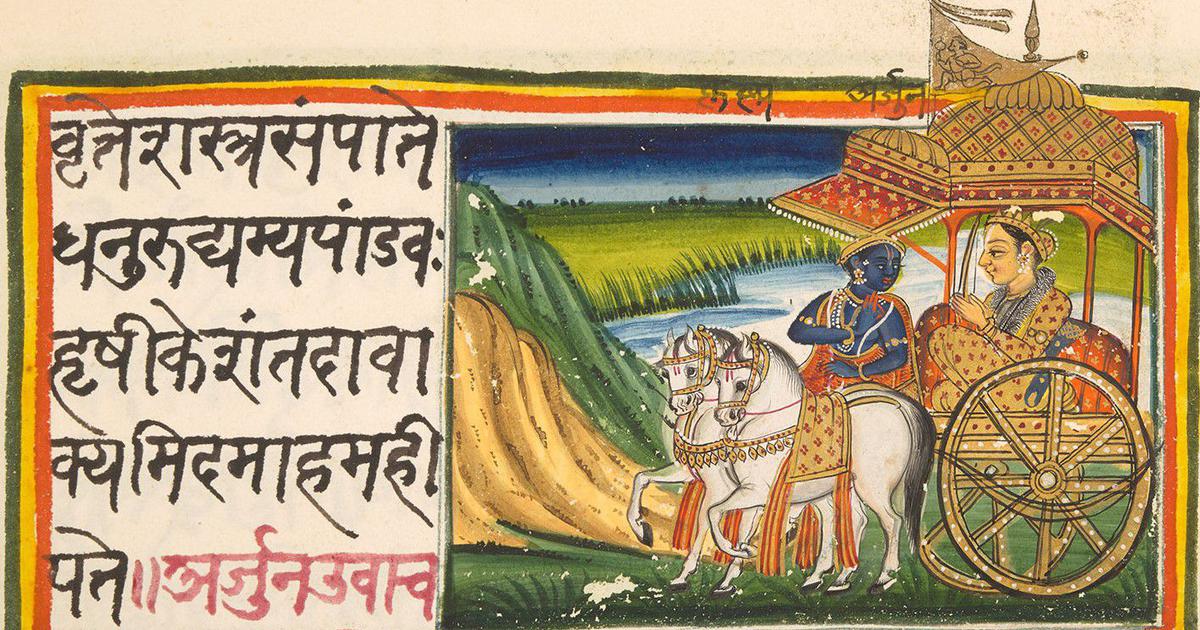
Krishna wants to teach us the most practical way to disentangle ourselves from the material world. Krishna refers to the Self being enmeshed within the gunas, the “modes of material nature”, goodness, passion, and ignorance. Now, he will explain what these modalities are, how they influence us, and how we can use those very modes to free ourselves from their influence. By understanding the rules of the game, we can learn how to win. Despite our best endeavours to enjoy life limitlessly, we find ourselves restricted – and we will find out why.
In the beginning, Brahman transforms into primordial material energy by the introduction of the three “modes of material nature”, which are essentially the very first level of categorisation of material qualities. This primordial energy is dormant potential – it behaves like nothingness. Within this energy, Krishna also places living beings to begin the process of cosmic evolution. To the untrained eye, it may appear that all the different species of life develop from matter; however, Krishna describes himself as the original “seedgiving father”.
The first evolution of this primordial energy takes place when Time is added to the mix. Time stimulates the interaction of the three dormant modes and the result is material nature, described in the previous chapter as prakriti. The three primordial qualities that pervade every aspect of material nature are now observable: sattva – goodness; rajas – passion; and tamas – ignorance. Krishna will explain the characteristics of each mode in turn.
The mode of goodness is illuminating and frees us from baseness. We can recognise goodness when we feel clarity and serenity. Yet it binds the Self by fostering attachment to happiness and knowledge.
The mode of passion is born of strong desire. It binds us with relentless desires and their pursuits. We sense passion when we notice uncontrollable desires or intense endeavours. This is us relentlessly chasing the dopamine hit and finding ever-reducing levels of satisfaction. It is volatile, and so is always susceptible to falling to ignorance.
The mode of ignorance is born of delusion. It binds us by negligence, sluggishness, and slumber. We recognise ignorance when we feel depressed, confused, and lacking any motivation to work. It is the opposite of goodness, and under its influence, we cannot understand things as they are.
Acting in ways associated with the mode of goodness brings long-lasting positive results. Acting in passion leads to instant gratification followed by misery. Acting in ignorance leads to mistakes and distress.
To the unfamiliar, it may appear simplistic to try to categorise the infinite range of qualitative experience into just three modes. However, these modes, always in flux, combine in infinite ways to produce unlimited varieties, just as the three primary colours combine to produce an infinite variety of colours. The power of the framework lies in its simplicity and universal applicability; it is unlike any other framework in its scope of application. And because it is based on universal archetypes, we can use it to predict, in broad terms, the outcomes of our choices.
We can use this framework like a traffic light system. Goodness is like green; when we detect it, we should feel free to proceed. Passion is like amber; we should ideally wait, but if we must proceed, do so only with great caution. Passion can be a powerful creative force, but it can also quickly become toxic, so “handle with caution”. Ignorance is like red; nothing good will come from proceeding in this state.
The modes are clearly hierarchical: passion is better than ignorance, and goodness is better than passion. The goal is to transcend them all ultimately – but this must be done stepwise, like climbing a ladder. Or, put another way, they are stepping stones to cross over the ocean of material existence. We will find it practically impossible to jump from ignorance to goodness without going through passion first. If you are a couch potato, you might need to get to the gym regularly before you can commit to regular meditation. Similarly, we will find reaching transcendence from ignorance or passion practically impossible without attaining goodness. Goodness is the gateway to transcendence. Understanding the influence of the modes helps us perceive that the Self only desires and that the modes of material nature then act to bring about our desired and deserved experiences. This perception loosens the grip of the modes on us as we begin to perceive ourselves as distinct from our body and mind, allowing the modes to recede gradually. This reprieve provides us with a window to experience the joy of spiritual life, even while embodied.
Arjuna asks Krishna to explain the symptoms, behaviour, and spiritual practices of one who has transcended even goodness. Krishna explains that such persons, aware of the workings of the modes of material nature, neither love nor hate – but simply observe and tolerate – the fluctuating symptoms of the modes (illumination, longing, or delusion). They remain aloof, not desiring to enjoy or relinquish the body. They are not affected by honour or dishonour and treat everyone equally. They are not drawn to ordinary activities but engage with unshakeable determination in spiritual activity.
Krishna replies that their spiritual practice helps them rise through the modes and increasingly engage in unalloyed loving service, bhakti-yoga. This path of bhakti-yoga is the means and the goal: it removes any remaining selfish desires and brings them to their original constitutional state of transcendence, Brahman, of which Krishna is the foundation, as the sun is the foundation of sunlight. Once thus reinstated, they can engage unfettered in unalloyed loving service to their beloved.
Excerpted with permission from The 5-minute Gita: Timeless Wisdom for Everyday Life, Nitesh Gor, Bloomsbury India.
