






I interviewed well-known journalists Ratna Bhushan, Kala Vijayraghavan, and Chitra Narayanan to offer perspective on how CEOs can navigate media better. All three are ace journalists and have a solid reputation in their sectors.
Ratna Bhushan, editor, FMCG, Economic Times
How can CEOs build more credibility among journalists?
Most importantly, by bringing transparency to the communication. If, for example, a journalist has a lead that the CEO does not want to be written about at that time but is denying the lead, it will backfire on his credibility. The CEO is totally within his or her rights to say that they know the answer but can’t comment because it’s a sensitive lead, etc. For a CEO, acknowledging that the journalist worked hard to get that lead is a great thing to do.
I’ve seen quite a few incidents when a CEO denied a big, breaking lead and announced it a few days later. I have never trusted that executive again.
Secondly, accepting that sometimes a strategy or a launch or a mistimed campaign went wrong. Taking ownership of a misstep shows the CEO as honest, humble and highly credible.
It’s absolutely great to take pride in one’s organisation, but a CEO exaggerating or [making] over-the-top claims to a journalist is a big red flag. The CEO needs to remember that we live in a socially connected world. Everyone has Google on their smartphones, and overstating facts can really backfire.
Sometimes, a story may not go the way the CEO wished it had when it appears in print. Accepting it goes a long way in building credibility. There are various factors at play – newsroom dynamics, the main editor’s point of view, the headline the desk gives – some of these are beyond the reporter’s control.
I must add here that you, Shiv, have been among the most credible CEOs I’ve known, never avoided queries and always treated all queries with respect.
What type of CEOs do you like interviewing? And why?
CEOs who are calm and address queries pleasantly.
CEOs who respect that the journalist is doing his or her job and hence will ask questions that may be investigative and not always sugar-coated. If, for example, the CEO’s company has invited journalists for interviews, then the company/CEO cannot decide which questions the journalist should ask and which he or she should avoid.
CEOs who address queries, even if negative, professionally and respectfully. That is really important.
On the other hand, CEOs who say ‘I’ll get back’ but never do come across as unprofessional and avoidant. Worse, they make it appear like they’re doing the journalist a favour.
When do you know that a CEO is well prepared for an interview?
When they’re well-informed about their own organisation, with facts about their company readily available.
When they have data handy about the industry they represent; for example, rate of growth of the past five years, the government’s stance on their industry, tax policies related to their categories, etc.
And third, CEOs who know about the organisation I represent. We don’t expect them to know all the details about my newspaper or channel, but basic facts like readership, who the main editor is, etc.
Finally, just as I read about a company before I go for an interview [with its chief], it would be nice if the CEO also read a bit of my work or at least two stories that I broke, before we meet. Charm is nice, but backing that with information works really well.
What tips would you have for CEOs to be well prepared for an interview?
Fact-checking is everything. After all, they’re the ones giving the interview. We know CEOs must be keeping a busy schedule, but so are journalists. So please have the facts and basic data handy.
Shiv, you, for example, always have facts and data before any interview or podcast, whether on your industry or otherwise – that’s very professional.
The equation between a CEO and journalist should be based on mutual understanding. The CEO can’t expect that I carry all their company press releases, and not address my queries when I’m asking genuine questions. It has to work both ways.
What differences do you find between MNC CEOs and Indian company CEOs in their press interactions?
There’s no one lens, and it depends on the individuals.
For example, MNC CEOs give global perspectives, which is really informative. But sometimes, they can be too guarded and not forthcoming at all.
On the other hand, Indian company CEOs sometimes are more informed about the ground realities of the country, the working of the government, etc.
Kala Vijayraghavan is a reputed journalist and national corporate editor with the Economic Times. Here are her views on CEO interviews and the role of a good communications department.
Kala mentions that access to CEOs is becoming more challenging; good CEOs recognise the benefit of engaging with media, and good communications departments act as a bridge between the media and CEOs and facilitate open engagement between the two.
How difficult or easy is it to interview a CEO?
In terms of accessibility, CEO interviews have become tougher than before. A lot depends on how progressive the organization is and the kind of a leader the CEO is.
Dynamic leaders as CEOs realize the importance of communicating well with journalists, offline or on record.
What are the things that a journalist likes about a CEO interview?
Honesty. CEOs who are open to addressing tough questions openly.
What are the signals in an interview that the CEO is not telling you about the whole picture? Repeating a rehearsed statement.
Talking a lot without conveying anything.
And the corporate communication team butting in to say this will not be answered.
Do you think CEOs play favourites with journalists? If yes, how do you deal with it?
I do not know if they do play favourites.
I think CEOs appreciate journalists who are factual, unbiased and do their homework.
What do good communications departments do when they interface between a CEO and you?
They allow open engagement between the CEO and the journalist, and become a bridge and help in the role of communication and understanding issues.
Chitra Narayanan is a widely acclaimed journalist. She has worked with many leading publications and has also written a few books. I do the “State of the Economy” podcast with her for the Hindu Business Line. Here are her insightful views on CEO interviews. You have interviewed a number of CEOs.
What makes for a memorable CEO interview, and, by contrast, what makes for a poor CEO interview?
The most memorable interviews are those where one starts itching to type [out] the story even before the interview is over. These are filled with quotable quotes (headline-worthy ones) and a really interesting and different story. It need not always be news (those make the editor and paper happy), but could be a wonderful case study or a meaningful initiative. For instance, with you, Shiv, during your Nokia days, I came to do a profile of yours for our “Table Talk” column, but took back a wonderful HR story on how thirty of the company’s leaders were shadowed by new recruits, and how the Made-in-India programme was adopted by other countries, including China.
From a journalist’s point of view, great CEO interviews are also where we can do what we call “drip irrigation”. A mere half-hour interview yields multiple stories: a news story to be put out immediately, a feature story a few days later and several insights that we can develop into stories by talking to more people.
One of the most memorable interviews in my career was the one I did with Amazon chief Jeff Bezos, along with my Businessworld editor, Rajeev Dubey, when he visited India. The focus was his leadership style, and we even posed questions on his intimidating style that was said to induce fear among employees. Bezos took on every question calmly, candidly; answered with conviction; and the interview was so good, with each line such a gem, that we made the decision to run it fully with no edits as a cover story in Q&A format; something that was rarely done.
Poor CEO interviews are those where the CEO gives you clichéd stuff that is already in the public domain, repeats the same quotes and story you have seen splashed everywhere, obfuscates and does not give direct replies.
Journalists always want hard numbers and CEOs do not want to give numbers for fear of it being construed as guidance. How have you resolved this in your interviews?
This is mostly true of MNCs. Indian firms, even the unlisted ones, are far more agreeable to sharing numbers. With listed entities, there is no problem. MNCs will give only global numbers and say they cannot break down country-specific numbers. We end up settling for category numbers, market share, percentage growth numbers and so on, asking for anecdotal stuff.
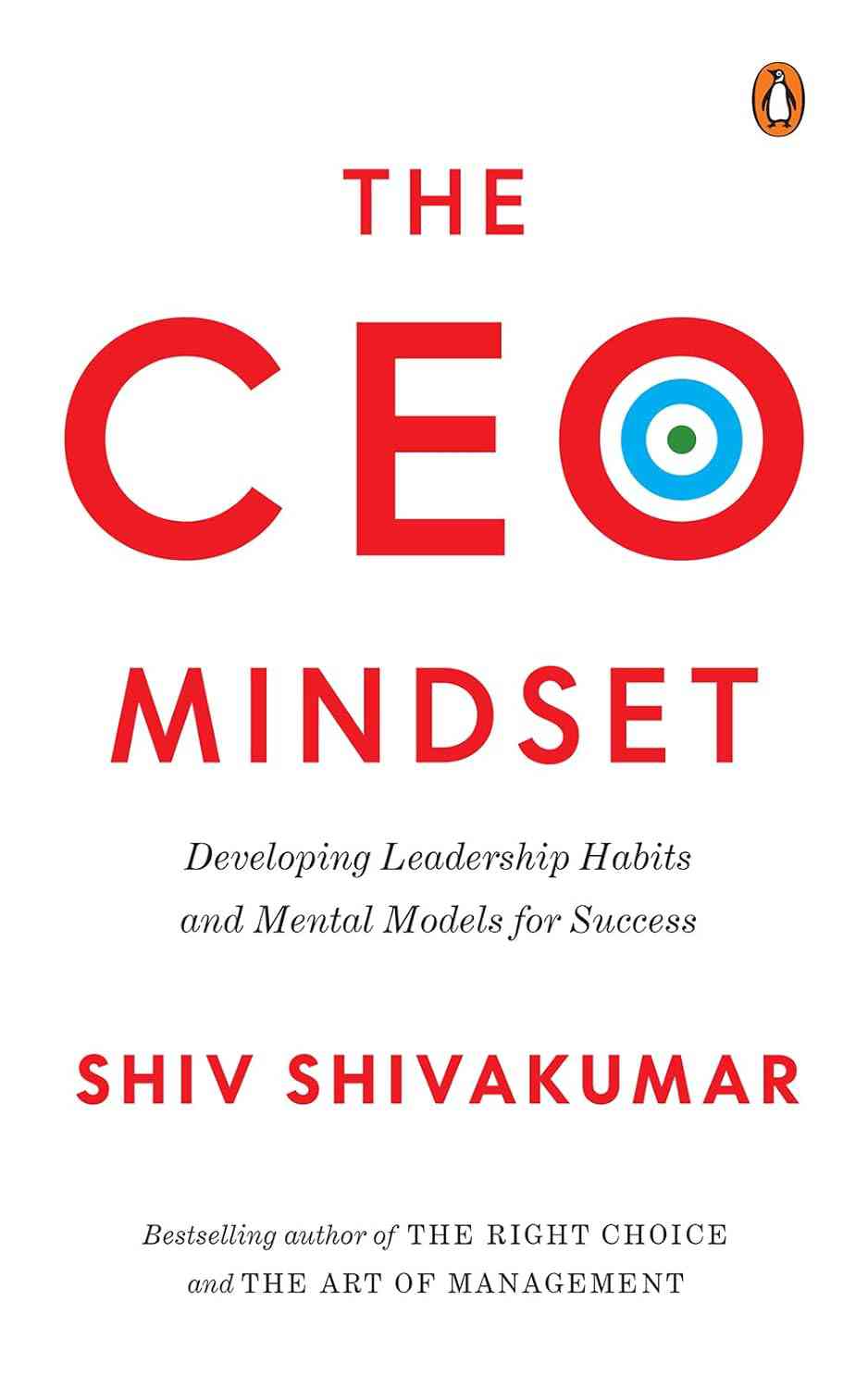
Excerpted with permission from The CEO Mindset: Developing Leadership Habits and Mental Models for Success, Shiv Shivakumar, Penguin India.
