








As he began to tell Asma about the ways of an aashiq, Abu Bakar noticed red spouting from a sudden rent in the green aachal of the young woman before him, and he, himself wanting to smear his whole body in that color; wanting to dunk and glide and swim, like the seeds of a ripe chilli, in the juice of Asma’s tongue, before wringing a duck’s neck and resting blissfully on her tender flesh. But Abu Bakar’s bliss did not last. Asma whimpered, “But he won’t even look at me. I give him so many signs, I beckon to him, but he does not respond. What kind of man is he!”
Abu Bakar asked, “Are you doing everything I told you?”
“Why wouldn’t I? Take a look.” Pulling the sari below her waist, Asma showed him a copper amulet tied with a seven-ply thread, and said, “For three days, I did not eat any shaak, anything sour, or rice unless freshly cooked. Only after that, I have tied the amulet. But it did not work.”
“Was there anything different about him, the day you tied it?”
“That night, he came home late from Ostagar’s porch. I served him dinner. He went to bed immediately afterwards. O baba, within two minutes, he was out cold.”
“That means the amulet worked!”
“O baba, he did not speak a word. He did not even spare me a glance. How can you say the amulet worked?”
“There you are!”
“What do you mean?”
“Look at it this way. Your man had dinner and went to sleep. You lay beside him. He was asleep. You put your hand on his body, but he did not respond. Okay, but did he push your hand away?”
Asma’s eyes brightened, “No, no, that he certainly didn’t.”
“Because you must have been on his mind at the time. But you failed to realise that. It is you who are to blame, not the amulet.”
“E baba, what have I done!”
“What’s the point of going ‘e baba’ now? Never mind, it is not a big deal. People have desires. Do others get to know of them? No, they do not. It is this ignorance that creates an enigma. Once you solve this enigma, your man will become yours just the way you want.”
“How will I ever get to know his desires?” Abu Bakar smilingly said, “What a naive woman! Let me tell you a story.”
Asma complained, “O baba, now you are going to tell me a story?” Abu Bakar pointed at her waist. Asma grimaced in embarrassment and quickly pulled up her sari to cover the amulet, “Ei jaah! I forgot.”
Abu Bakar said, “One day Hazrat Shal Jalal dreamed that a Pir Sahib gave him a fistful of soil and said, ‘It would not be fair to confine you within this mosque. Go fly the Flag of Islam. Dispel the darkness of polytheism and faithlessness. Bring people out into the light of Deen and Iman, holiness and conviction. Settle down when you find a land where the colour of the soil matches that in your fist.’
“Hazrat Shah Jalal did not tarry. Following Peer Sahib’s instructions, he started for Hindustan accompanied by twelve disciples. But every man, before travelling to a distant land, looks back. Shah Jalal yearned to visit his birthplace, the city of Yemen, before he left. It had an imperious ruler. When he heard of the arrival of Shah Jalal, he said to his friends, ‘For the longest time, I have wanted to make a Ba’yat to a real Dervish. But not every Dervish is genuine. I shall have to test Hazrat Jalal first.’
“The king then sent a poisoned drink to welcome Hazrat Shah Jalal. The servant who carried the drink was equally wily. He greeted him with an earnest salaam and said, ‘I am here to serve you this cup of sherbet that my lord has sent you. It will assuage your tiredness and soothe you after your travels.’ “Hazrat Shah was able to see through the king’s cunning.
He answered, ‘For the residents of the king’s house, this cup holds nothing but poison. But I am a musafir. For me, this is a drink sweeter than honey.’ He took the drink from the servant’s hand and gulped it down. The poison had no effect on him.
Finishing the story, Abu Bakar asked Asma, “Do you understand?”
“Oh yes, we should not look back when we are traveling far.”
“That’s not what I meant.”
“Then?”
“Think about it.”
“Holy men are musafirs even in their place of birth. They are immune to poison.”
“Not at all.”
“O baba, what then?”
Abu Bakar scratched his beard and grinned, “If Allah wants to shame someone, he plants in him a desire to ridicule a pious man. Allah wished to humiliate the king. So, he made him send out the poisoned drink.”
Asma is astounded. “O baba. Why, yes, that makes sense. But what has that got to do with me?”
Abu Bakar waggled his eyebrows and said, “That is the point. To understand what a man desires, you must first understand his surroundings. But that does not come easily to people. And thus, you have come to me.”
Asma brightened. “What now?”
Abu Bakar asked, “Does your husband have hair on his chest?”
Embarrassed, Asma dropped her eyes and replied, “His chest is bristling with hair.”
Abu Bakar pondered for a while. Then he smiled and said, “There is a way.”
Asma said, “So he will come to me?”
Abu Bakar explained, “Men with chest hair love fragrance.”
“Fragrance?”
“Hmm.”
Abu Bakar brought her a bottle of attar and said, “It will be a full moon three nights later. Put a dab of attar on your body and wait for him at your window. When he knocks on the door, do not rush to open it. Make him wait; open the door only after he knocks a few times. And do not always keep smiling at your man. Ration your smiles.”
Asma took the bottle of attar and prepared to leave. She turned to Abu Bakar and narrowed her eyes. Abu Bakar noticed all kinds of red flowers painted into the folds of the green aanchal of Asma’s sari.
He said, “Leave.”
Asma still would not smile.
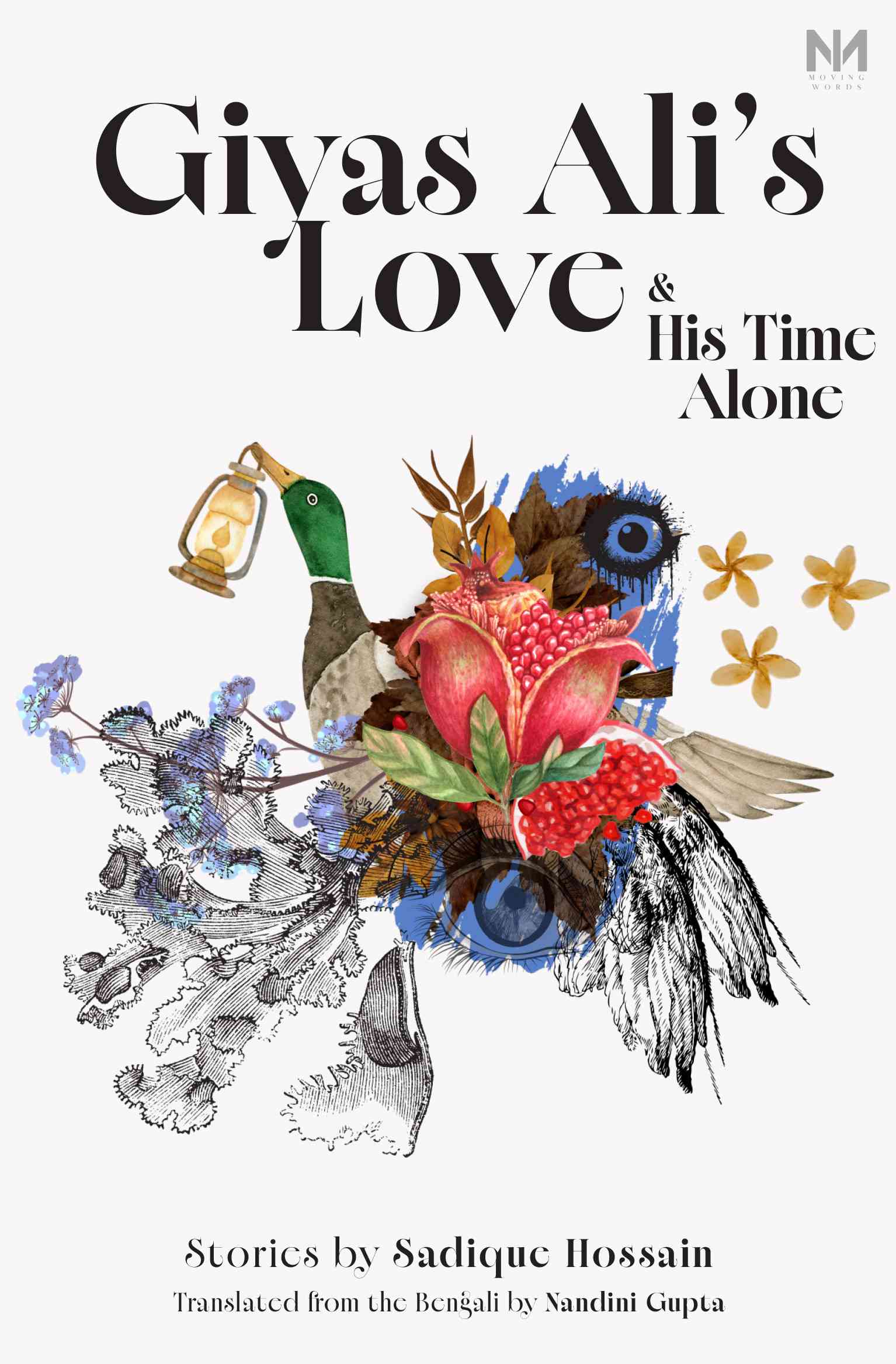
Excerpted with permission from ‘Abu Bakar’s Surroundings’ in Giyas Ali’s Love and His Time Alone, Sadique Hossain, translated from the Bengali by Nandini Gupta, Antonym Collections.
