










At what age did you get to know your family’s income, expenses and reserves? What was your reaction?
Neel’s father did not have a very high-paying job. Even then, he insisted that Neel go to the best school in town. It was his father’s way of making sure that Neel got what he’d missed.
Neel had always wondered why his family never went on summer holidays like some of his classmates. His school bag, plain and a little worn at the edges, stood out among the brightly coloured ones in class. He never said anything about it, even though he was conscious of it.
Once Neel turned 15 and entered senior school, his father sat him down and explained the family’s financial condition. He told Neel about how much he earned, what their key household expenses were and how much they had in the bank and other investments. All that information rattled Neel a bit. He was aware that they were not rich, but he wasn’t aware of their near hand-to-mouth state of existence. From his mother’s expression, Neel could make out that she wasn’t very pleased about his father having such a frank conversation with him. At one point, she couldn’t hold herself back anymore and said, “Why are you burdening the boy with such information? This has nothing to do with him!”
“So?” his father said, sensing the tension in the room. “He should know we are not rich, at least not as rich as most of his classmates. However, I don’t want him to feel inferior to anyone. We pay the same fees to the school as his friends do, and don’t owe anyone any money. We could’ve sent him to another school that isn’t as expensive, and that would have helped us live better. But we chose not to. Like most middle-class parents, we may not leave him with a large estate or even a fat bank balance. But we’ll make sure he has had the best education, so he can achieve everything we couldn’t – and more – by himself. We want his life to begin from where ours left off, or maybe even go higher. As long as he keeps that goal in mind, we don’t need to worry about anything else. That’s all we should hope for, and I want him to know that.”
That conversation with his father eliminated whatever feelings of inadequacy Neel had, and he started inviting his classmates over to his home without guilt or shame, something he’d hesitate to do before that day.
Do you remember the first time you took a stand that was based on your understanding of the situation and was contradictory to your behaviour in the past, hence startling you as well as those around you? What was it about and how did it make you feel?
As a toddler, Neel was a fussy eater. Long before Neel could read, his mother would read him a story to divert his attention while she fed him. Completely engrossed in the tale, Neel’s mouth would be wide open, and his mother could feed him whatever she wanted. As he grew older, the stories evolved from fables about birds and animals to tales of kings, queens, noblemen and the occasional villain.
Once Neel learnt to read, his mother subscribed to a couple of children’s magazines. Neel started slowly, but at an age when most kids would bawl often, break toys and write on walls, he’d finish a fortnightly magazine in only five days. His mother added more subscriptions, and Neel’s appetite for reading kept pace with the growing stack of available magazines.
Encouraged by his mother, Neel could memorise and narrate each story. Sometimes, she would ask him to tell the tale he’d just read, but give it a different ending. He would do this easily.
Magazines soon gave way to storybooks, which were followed by novels as he moved up the grades. Neel was always the first in his class to read any new title, and his friends would check with him before starting a book themselves.
By the time Neel reached senior school, he spent most of his time after school with a friend who lived nearby and was a keen debater. Neel accompanied him to a couple of debating competitions and was impressed by how effortlessly his friend would understand the problem statement, analyse the facts and articulate his opinion crisply in a few powerful words. What surprised Neel the most was the fact that he could do this with equal conviction for either side of the motion.
Given how much he read, Neel felt that he was well aware of the world around him and could do all of that – perhaps even better than his friend. He started practising on his own, selecting random topics from newspaper headlines. His friends were surprised when Neel entered his name for the school debate. They’d never heard him speak much.
When a friend asked Neel if he was sure he wanted to participate in a debate – especially since he had never even taken up the mic at the school assembly – Neel said, “So? There can always be a first time. And if it doesn’t work, I won’t enter again.”
This was the first time any of his friends had seen Neel take a stand.
Were there activities other than the subjects you studied at school that you accidentally started and became better at than most others? Did these experiences make you rethink your career choice?
Neel emerged as the runner-up in the debate. Before long, he was heading the school’s debating team, and his school began sweeping awards at every competition they entered.
Around this time, Neel’s aunt visited from overseas, and she carried a jigsaw puzzle for him. Neel opened the box and emptied all the pieces onto the dining table. In no time, he had assembled all the 500 pieces of the jigsaw to recreate a beautiful picture of a London bus. His aunt, who was fond of Neel, was so amazed at the speed with which the young boy had methodically solved a complex maze that she decided to send him more such puzzles every time she or someone else was travelling to India. Soon, Neel was solving jigsaws with 10,000 pieces, and a part of the family dining table was always reserved for the puzzle Neel was working on.
The familiar “What do you want to be when you grow up?” act was played in front of Neel’s aunt, too, during one of her visits. But unlike others, her response was not very encouraging. She believed that Neel was too young to decide his career and needed more exposure to figure out what he liked doing and where his strengths lay. She summed up her perspective succinctly: “Where I come from, children enter college for a course in economics and graduate as a flautist. Neel is still years away from college.” She suggested structured aptitude tests that could help Neel make the decision. But Neel’s father, who was her elder brother, brushed her off, saying, “You Westerners are too rich and too structured. All you do is waste precious thought, time and money to complicate simple decisions in life.”
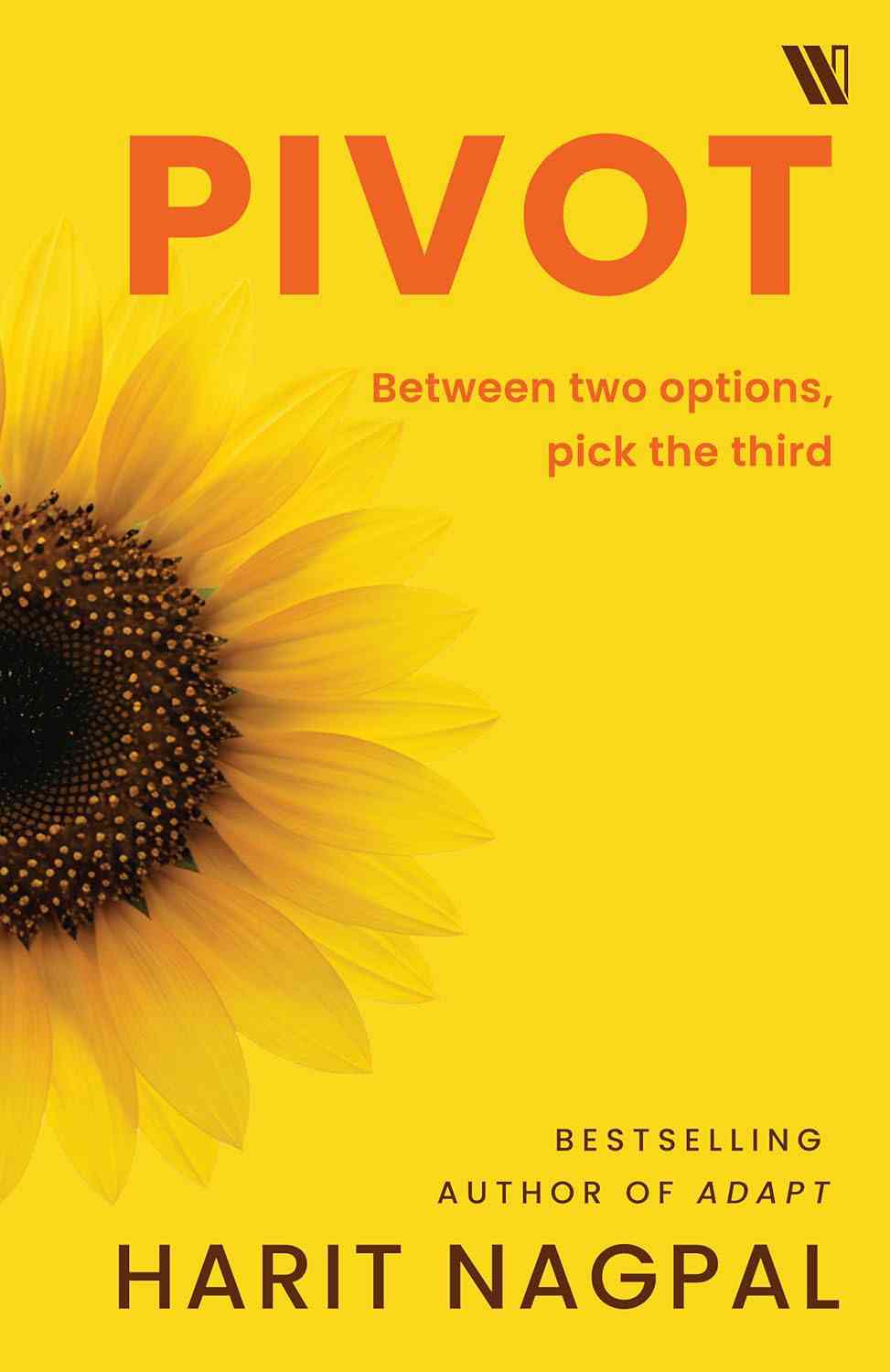
Excerpted with permission from Pivot: Between Two Options, Pick the Third, Harit Nagpal, Westland.
