






Munni had dragged herself inside the morgue, trailing behind the constable, her heart hammering in her chest and her breath coming in thin rags. The stench of the dead surrounded her, lurking beneath the surface, hanging by the threads of her skin. The musty, pungent smell grabbed her and hauled her back into the cold, clammy mortuary. Yet again, she was staring at the corpses stretched out and covered with soiled white sheets.
The constable had scarcely looked at her, ushering her towards a metal table. Gesturing towards the carcass, he pulled back the sheet to allow her to see what lay beneath.
“Recognise him? Is this someone you know?” He had said with no trace of emotion in his voice. Her body had staggered backwards, her stomach clenching and unclenching into lumps.
There was no corpse – it was nothing more than chunks of flesh piled up together. The stench knotted around Munni, closing in on her. The flashes of dead animals run over by delivery vans and left to rot outside her window slid before her. She’d seen dead, decaying dogs cluttering the ditches, strewing the streets, moulding under wind and water, left at the mercy of pigs, crows, and other strays. People just stepped over and went about their business.
Had death reduced Jagat into one of those? She bit the inside of her cheek hard to hold her tears from spilling forth. The body was disfigured, decomposing, and dead for days. But Munni couldn’t turn away once she started running her eyes over it.
There were unmistakable signs.
“This is Jagat, my son,” she had said, nodding in affirmation. Someone had brought Jagat’s clothes. “He was wearing these jeans and that jacket when he went missing.” She had heard herself say, her voice unwavering and steady.
The doors opened and closed, and Munni had glided through them like moving in and out of consciousness. It was as if her soul had been ripped open, its fragile shreds threatening to break away. Munni clenched her hand in a fist as if to rein it all in.
Munni had responded to the officers’ questions with quiet monosyllables, her blue thumbprint sealing the official papers while her mind drifted elsewhere. Was she simply too numb to process what was happening? Too frightened to hesitate, as if pausing would force her to face the horror?
Even without a head, there was no doubt the body was Jagat’s.
When Jagat was born, he had ashen-blue birthmarks – one on his shoulder blade, another on the back of his knee. Munni’s mother had been overjoyed at the sight. “Mark my words,” she had said, “those marks will bring him fame one day. His name will be in the papers.” Munni nibbled her lower lip at the bitter irony. Fame. Recognition. Indeed, the marks had been one of the only things that could identify the dismembered remains. And her mother had been right – in hushed tones, a lady constable had told her the body was already drawing media interest. It wouldn’t be long before Jagat appeared in the newspapers after all.
Munni’s eyes had lingered on the tattoo on Jagat’s forearm – a flock of three birds in flight. She recalled the tattoo had appeared a few months back, right after that horrendous episode that had sent irreparable cracks in their lives.
“It is to remind everyone that I am free! That I can live my life as I want and not be bound by useless rules and restrictions,” Jagat had lashed out at her. Clumped into the back seat of the police van, Jagat’s words rammed into Munni with the same intensity as the sound of her heartbeat slamming into her ears.
The incessant honking from the motorcycle stuck behind a car wrangled her back to the present. As she looked out of the window of the moving police car, her eyes caught a pair of grey kittens lying under the hedge, with no mother in sight. One kitten was whining as if calling out to its mother.
Another wave of memory spilled out on her.
She was eight years old when she stumbled upon a cat with its litter of kittens under the stairs of a building where her mother worked. Every morning, she took food and water to them and observed the newborns from a distance. A lethargic, weak kitten that cried constantly had reeled her in, and she had grown protective of it. One morning, when she had checked on the kittens, she was horrified to find that the sick kitten was missing.
“The mother cat has probably eaten it. Don’t cry; it happens,” her mother had consoled her, wiping her tears. “The mother wants the living area clean and the other kittens free from infection. Every so often, for a mother, the hardest thing and the right thing are two sides of the same coin.”
Now, staring back at the pitiable kittens by the side of the road, her mother’s words hit her like an anvil. She had never understood them better; it was now that she recognised what the mother cat would have felt.
Munni coughed several times, but the sensation of a thick glob of gunk stuck at the end of her throat refused to go away. A wave of nausea engulfed her. Unable to stop herself, she retched, clutching the edge of her red shawl across her mouth. All she wished to do was fling herself out of the police van and throw herself in the middle of the road. She pictured herself crawling to the nearest dump and lunging herself face down on it, expelling bitter morsels stuck at the end of her belly into its darkened depths. But of course, she just sat there.
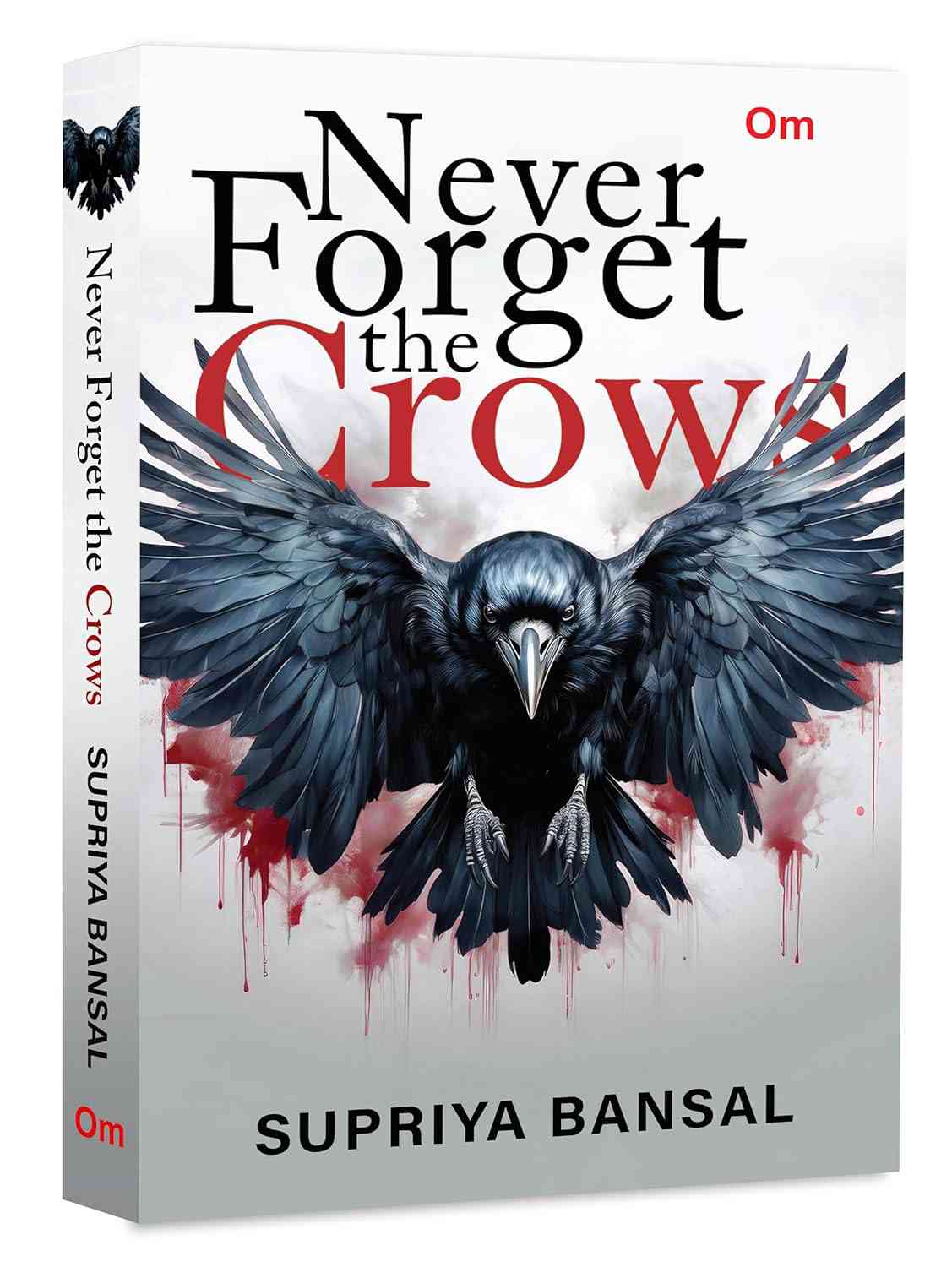
Excerpted with permission from Never Forget the Crows, Supriya Bansal, Om Books International.
