







The trees of Madhuban were terrified of Paban Das. When Paban made his way through the forest with an enormous axe balanced on his shoulder, terror ran through the bodies of the trees. They turned stiff, like wood. Their leaves shivered feverishly. “Here comes the messenger of our deaths,” they whispered to each other. “Which of our lives will his axe claim today?”
Between the branches of these trees, birds had built their nests. Some had laid eggs. Some eggs had even hatched. The mother birds took one look at Paban and fluttered over their homes, frantically trying to calm their babies. Covering the helpless hatchlings with their wings, the mother birds said in small voices, “Hush now, little ones. Make no noise. Who knows what’s written in our stars today?”
Meanwhile, Paban made rounds of the forest. He did not flinch as he trampled over young shoots, vines, and crushed to death small creepers that covered the forest floor. He did not care for them. He came to the forest with a single goal: to find tall trees with wide trunks. A seasoned hunter, he knew how to select his prey: the fattest of trees that would yield a good deal of hardwood, which he would exchange for hard cash. Paban scanned the forest with his bloodshot eyes. Soon, the search was over. He had found his catch: a large and ancient mahua tree.
First, he took care of the vines and the creepers that grew at the base of the tree’s trunk. He lopped some of those off with his axe, chopping them into tiny bits of green. The rest he wrenched from the soil with his bare hands. The vines writhed in pain, the creepers cried out. Paban did not care for such small sufferings. Having cleared the base, he was ready to strike the first blow. As the axe hit the trunk of the mahua, the tree screamed in pain. But Paban’s ears were deaf to such sounds. He was busy striking blow after blow after blow. His axe struck the body of the tree nonstop. The birds that had nests in the mahua screeched out in horror. Their babies, most of whom had not yet opened their eyes, were trapped within the branches. Nearby, the other trees of the forest could only watch, helpless and horrified. They hurled curses at the ruthless woodcutter but could not do anything else.
After hacking at the trunk for a while, Paban decided to take a break. He sat in the cool shade of the very mahua tree he was butchering and ate a small meal. The tree, although deeply wounded, fanned Paban with her remaining branches and leaves. After eating, Paban felt drowsy. He made a pillow out of the vines and creepers he had killed and took a little nap. When he woke up, he felt refreshed. He picked up his axe and resumed hacking away at the trunk.
Then there came a time when the large and ancient tree yielded to Paban’s axe. First, she leaned over to one side and then, with a great deal of noise, collapsed into the earth. The branches came crashing down, breaking into numerous pieces that scattered leaves and twigs everywhere. The nests, too, were smashed along with the branches. Down came baby, cradle and all. The bodies of some baby birds burst open as they hit the ground, while some withered in pain before dying. The eggs shattered instantly on hitting the ground.
None of it made a difference to Paban. He was still busy, cutting and sorting wood: he piled up the leaner branches and tied them into bundles, and he sliced the dense trunk into fat disks.
After sundown, a large truck drove into the forest. It arrived, huffing and puffing, like a blue monster with a pair of gleaming yellow eyes. Then, when the monster came to a halt and the eyes stopped glowing, five brawny men stepped out from it. Together with Paban, under the cover of the night, they heaved the bundles and the wooden disks off the ground and carried them in their arms. The trees of the forest held their breaths and watched as the ruthless humans flung the skeleton of their old friend into the belly of the monster. Once it had had its fill, the monster woke up again, its yellow eyes gleaming once more. Then, snarling and growling, it rolled away from Madhuban and made its way towards the city, leaving a trail of black smoke behind.
By then, the night was almost over. The stars stared sleepily at the world. The moon, too, was making her exit from the sky. Except for a few sleepy trees, such as the tamarind and the amla, the trees of Madhuban were wide awake. Their minds were engulfed with grief. Each stroke of Paban’s axe still resounded within their hearts. Their leaves were full of tears for their felled friend. At daybreak, these tears dropped down on the earth as dew.
With each passing day, the trees of Madhuban lost more of their friends. A void seemed to be taking over the forest. They realized that it would soon be their turn. Paban’s axe would not spare anyone. Perhaps a few saplings would remain. But when they grew up to become sturdy trees, they too would be murdered by human hands.
The trees of Madhuban heaved sigh after sigh. “Ah,” they said, “our end is near. And with it, the end of Madhuban too.”
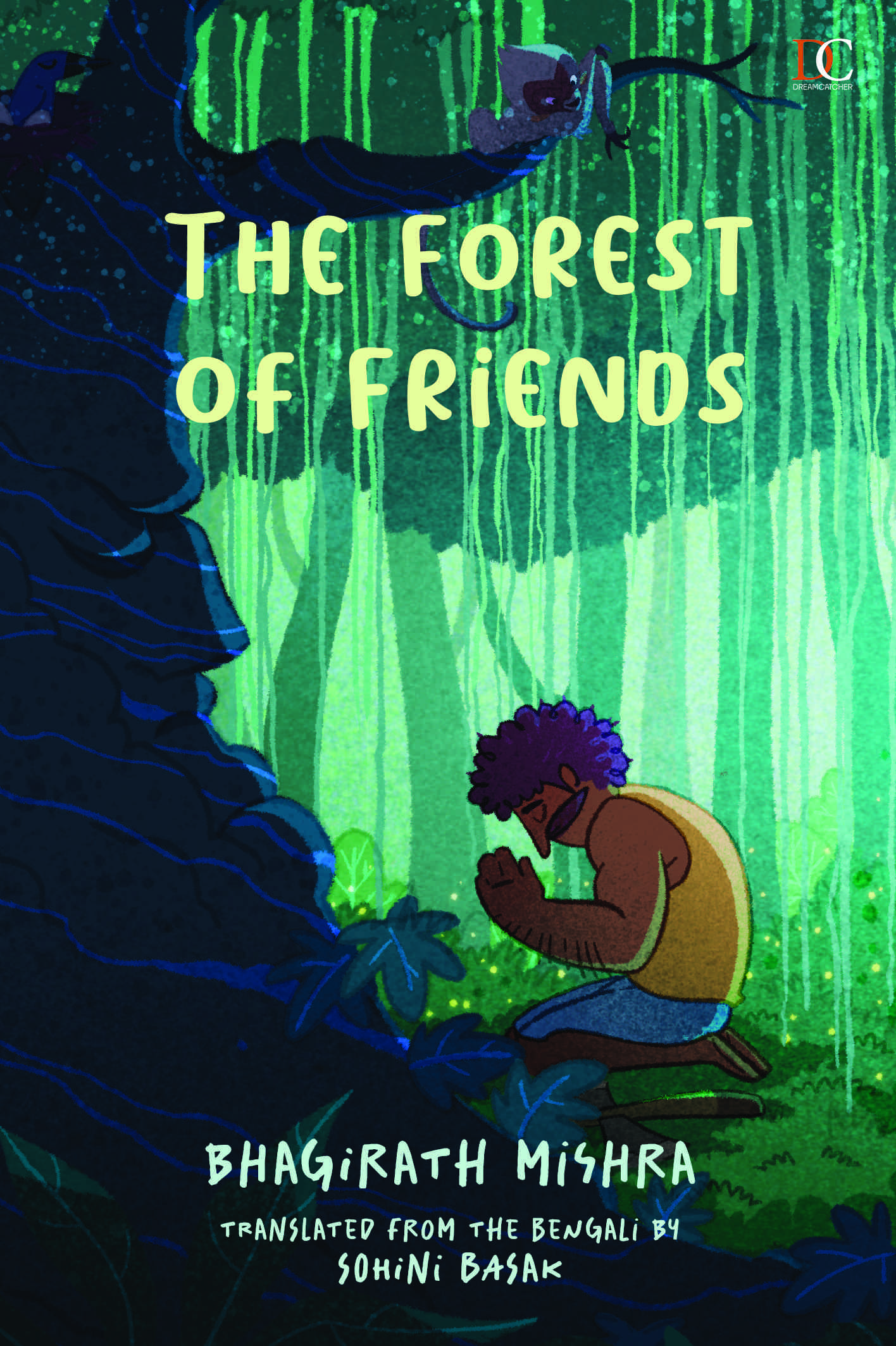
Excerpted with permission from The Forest of Friends, Bhagirath Mishra, translated from the Bengali by Sohini Basak, Dreamcatcher/Antonym Collections.
