










Who is a herpetologist?
Herpetologists are people who study reptiles and amphibians. Many of them specialise in snakes. To figure out which species a snake belongs to, a herpetologist looks at colour, size, shape of the head and whether it has fangs or not. But to really confirm the species, he/she has to count how many scales it has around the body and how many ventral scales there are under the body, since each species has its own specific number.
There are many famous herpetologists of India: Malcolm Smith, Patrick Russell and Frank Wall from the British period and dozens from post-Independence!
Herpetologists who have written important books on Indian snakes include JC Daniel, who wrote The Book of Indian Reptiles, and Rom Whitaker and Ashok Captain who authored Snakes of India.
How do herpetologists track snakes?
This is done by implanting a tiny radio transmitter in the body of snakes – a tracking device that helps herpetologists follow snakes using a receiver. This method of studying animals is called radio telemetry.
We have used this method to study king cobras in Agumbe in the Western Ghats. Two researchers are assigned to each tagged snake, setting off at dawn with food and water for the day. Using the receiver, they locate the snake, observe and make notes about its movements until dark. Thanks to the tracker they know its sleeping place, which makes it easy to find it the next morning. This study has resulted in many interesting discoveries about king cobra behaviour.
Thanks to telemetry, we were able to watch combats between male king cobras. During combat, king cobra males entwine each other and “stand” vertically, trying to push down the other. The loser slithers away, leaving the winner exhausted but in charge. Some people believe this vertical entwining is a mating dance – but it’s actually combat between males for the right to mate with the female.
Who are the Irular?
The Irular, an Adivasi community in Tamil Nadu, are superstar snake catchers and know more about finding snakes than anyone else!
They have the most important role to play in the making of antivenom by supplying venom to the antivenom labs. With a license from the government – because snakes are protected animals – they catch snakes of the Big Four group: cobras, kraits, Russell’s vipers and saw-scaled vipers. These are sold to a business run by them, called the Irular Snake Catchers’ Cooperative.
At the Cooperative, venom is extracted from each snake three times, at intervals of one week, and then the snake is released back into the wild.
How is antivenom made?
First, venom is extracted, which is a skilled and dangerous task. The snake is held behind the head and made to bite into a rubber cloth stretched over a glass container. The liquid venom is freeze dried into a powder and sent to labs that produce antivenom.
At these labs, a mixture of the venoms from the four snakes is injected into horses. Their blood produces antigens to fight the venoms. These little antigen “warriors” are used to make antivenom.
When someone is bitten and antivenom is injected into their body, these antigens fight the venom and make the person well again.
Are snake charmers still around?
Snake charmers keep snakes (mostly cobras, with their fangs removed) in a basket or box, and make them “dance” to the music of a flute to earn money.
Is the snake really dancing? Snakes have very limited hearing, though they are sensitive to ground vibrations. The charmer is charming the audience, not the snake, which is actually moving, in fear, to the movement of the flute, not its sound.
We feel sorry for the thin, frightened snakes that travel around with snake charmers – their fangs are removed, mouths sometimes stitched closed, so eating or drinking water is impossible. Most of these cobras don’t live long. This is just one of many cruel acts inflicted on reptiles in our country.
There are very few snake charmers today because snakes are protected under the Wildlife (Protection) Act of 1972 and catching and keeping snakes in captivity is against the law.
Are there people who help snakes?
A breed quite different from snake charmers, there are snake catchers or rescuers who care for wildlife. A snake rescuer is a person you should call if a snake comes into your home or garden and needs to be caught and taken away. These men and women are trained to handle snakes gently, without getting bitten or harming the snake.
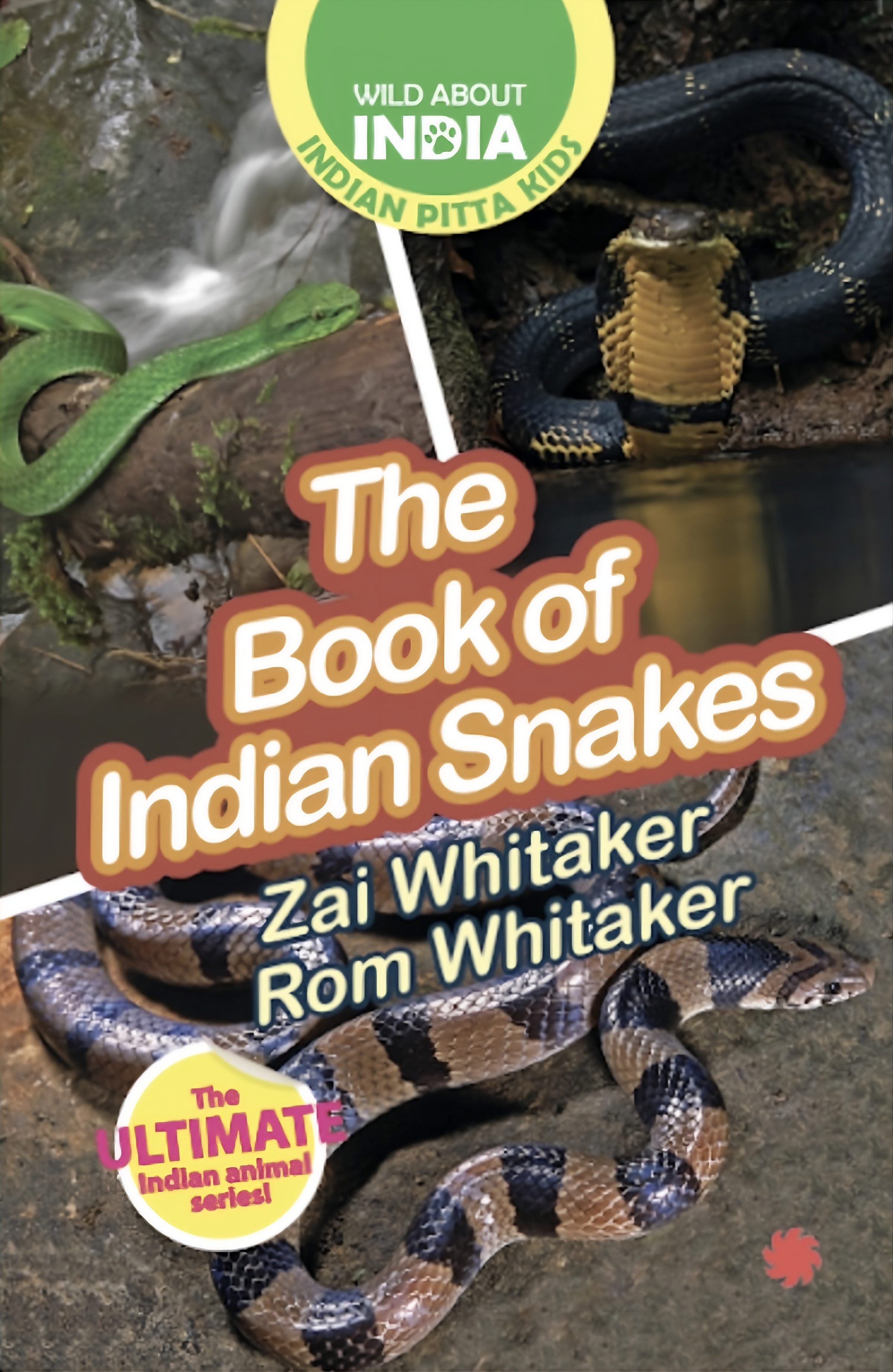
Excerpted with permission from The Book of Indian Snakes, Zai Whitaker and Romul Whitaker, Juggernaut.
