





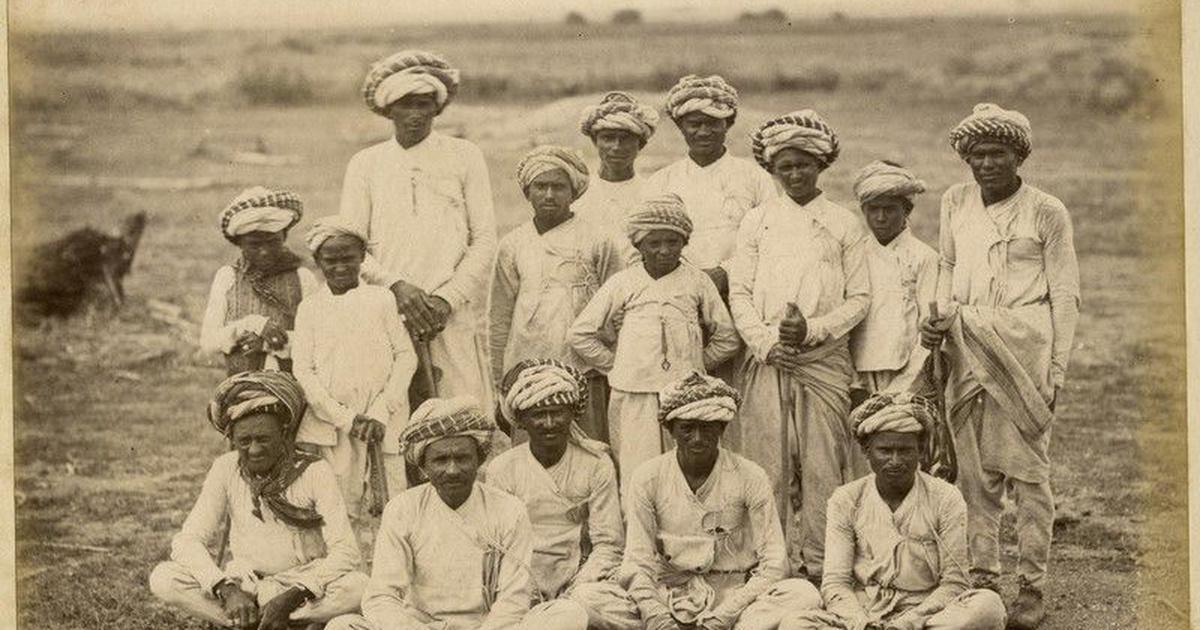
The study of the Bhil revolts in Khandesh, Barwani and Alirajpur in separate chapters has been a challenging proposition. All these areas were adjacent to and also dependent administratively upon one another. Barwani and Alirajpur shared borders with Khandesh and Gujarat and were ruled by Rajput thakurs who were, in turn, controlled by the British. Internally, these states remained autonomous until India’s independence. After the British had established a foothold in Khandesh, the army-supervised process of Bhil settlement gathered momentum in Barwani from 1833 onwards. The Bhil chiefs were agitated at the time and the British soon realised that they would not be pacified until the Barwani state restored their rights. The situation demanded a balance between oppression and the establishment of a security system. When, by the end of the 1830s, the Bhils had not received their due rights (an agreed upon share in fixed revenue), they perforce took to vandalism. At the beginning of the 1840s, colonial policy concentrated on using arms against rebellious Bhils. In the middle of the decade, British officials inspected the forests of Barwani and investigated the claims of Bhil chiefs. However, as the Rajput king remained indifferent, their raids continued. As a result, the second half of the 19th century saw two major insurrections in the Nimar region – one in Barwani and the other in Alirajpur.
The Bhil revolt raged in Barwani from 1833 onwards following the arrest of one Hatania. The rebellious activity of Kaji Singh Nayak, a rakhwaldar of the British Government, too, had posed a challenge to the British. Both Kaji Singh and his relative Bhima Nayak turned rebel following a dispute about wages. They were active in the villages of the Dasana hills, Dahi, Bhikalda and Kukshi from where the road turned unsafe. Capt Hutenison, BA, then suggested to the AGGCI that Lt GS Dysart be entrusted with the responsibility of controlling the Bhils in the Bhikalda and Dasana regions.
The state of Barwani had a total of 134 villages, 26 of which were earmarked for other members of the royal family or for religious purposes. The remaining 108 villages provided a revenue of Rs 25,000 per annum. In the whole area, which was mountainous and forested, the Bhil population was about 700–800 and Bhil chiefs received monthly wages in accordance with their traditional rights. They were in a superior position as compared to the Bhils of such neighbouring areas as Dhar, Alirajpur and Holkar. As Khandesh was British territory, British officers launched a campaign against Kaji Singh, variously referred to as Khaji, Kajar and Khajya Singh.
Masefield, collector of Khandesh, had pardoned Kaji Singh on many occasions. As a member of the Bhil Corps from 1831 to 1851, Kaji Singh was known to be loyal and his conduct irreproachable. His task was to guard the 40- mile stretch of the Sendhwa–Shirpur road, and he was put in charge of the local police force. In other words, he was the rakhwaldar (guard) of Sendhwa Ghat. Not a single robbery or murder was perpetrated on this stretch in his 20-year tenure. It was because of his loyalty and courage that the collector had pardoned some of his minor misdemeanours. Kaji Singh had served faithfully under Maj Graham, Maj Morris, Capt Rose and Maj Kier.
In 1851, Kaji Singh was tried and sentenced to 10 years RI when a Bhil offender succumbed to a severe beating administered by him. However, in 1855, following strong recommendations from Capt. Rose and certain other officers, he was released. In June 1857, he was entrusted with the security of the northern pass but by then he was so thoroughly disenchanted with the British that he turned rebel, although the possibility of there being other contributing causes cannot be ruled out. It is possible that with the coming of the Great Uprising of 1857, he had sensed widespread anti-British discontent. His associates, Bhima Nayak and Mawasia Nayak, had also turned rebel. However, no evidence is available to support the contention of certain writers that Kaji and Bhima had directly joined the 1857 Uprising, although some evidence of a minor involvement of Bhima’s uncle exists. Kaji’s and Bhima’s sons had also turned rebel on the grounds that their rights were not being honoured.
Kaji Singh and Bhima Nayak were related through marriage; Bhima, married to Kaji’s sister, was a powerful Bhil chief of Barwani. The king of Barwani had been using him in the interests of his own rule. When Brahmangaon on the banks of Narmada, which the king of Barwani regarded as his own territory, was usurped by the Holkar state, he instigated Bhima to plunder the village. According to the kamadsar (caretaker) of Brahmangaon, Bhima arrived at the village of Datwara on 18 August 1857 with 500 to 700 of his men and plundered the village from 10 am to 11 pm. Holkar territory, Khandesh, Barwani and the Bombay Highway suffered the same fate – he now was the hero of a large territory between the Vindhya and Satpura hills.
On September 27, 1857, Bhima wrote a letter to the wahiwatdar (patron, used here for the British Res.) of Baroda: “I didn’t plunder village Datwara of my own sweet will, as you suspect. I was told to do so by Maharaja Yashwant Singh of Barwani, Bhudhagir Baba and Daulat Singh Mama. They told me to plunder any place but Barwani.” He added that he was told to plunder Datwara as it belonged to Barwani. “They gave me 50 rupees and a robe of honour, but the king didn’t help me after his goal was achieved. And now that the king is complaining to you about me, I’ve decided to loot my area too and to keep aloof from the raja…Act not on any complaint against me as I have been a man of the king and whatever I did, I did on his bidding of ordering me to provide compensation, you get it from the king. If you wish that I should not plunder your areas, kindly arrange for the payment of my salary.”
In September 1857, Bhima Nayak attacked Lt. Kennedy as a warning to the police officers of Khandesh. He had, at the time, described himself as a representative of the (then-tottering) Mughal ruler of Delhi. The British made all efforts to apprehend him for his insolence and when they failed in this endeavour, they announced a reward of Rs 1,000 for his arrest
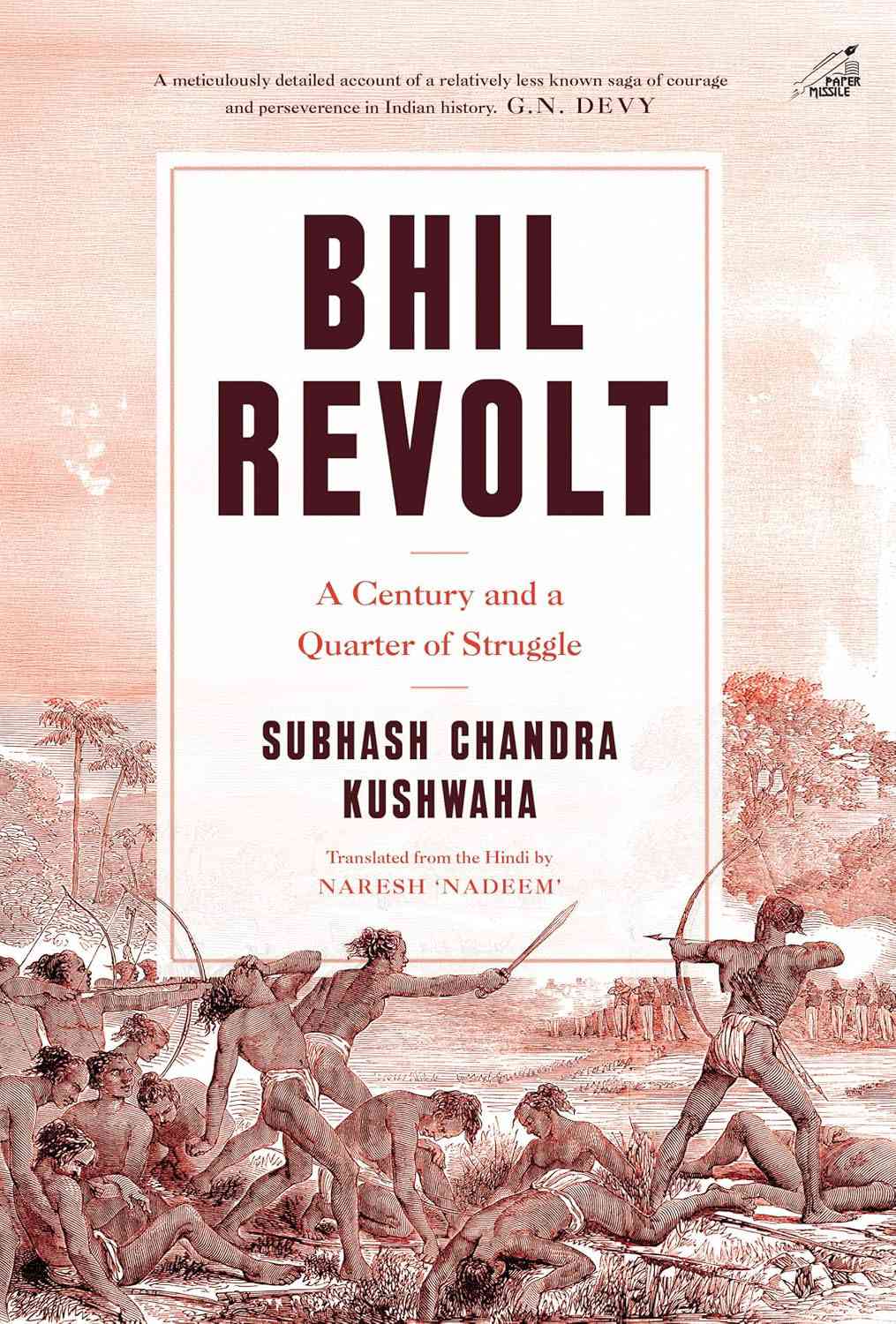
Excerpted with permission from Bhil Revolt: A Century and a Quarter of Struggle, Subhash Chandra Kushwaha, translated from the Hindi by Naresh Nadeem, Niyogi Books.
