

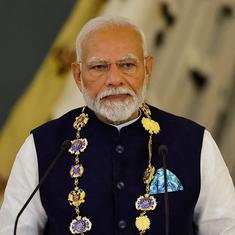









Influenced by Ambedkar in his life and work, D Ravikumar’s prose claims the political through personal narrative stylistics. Apart from being a Dalit activist who writes conscientiously about the Dalits, he is also a Member of the Parliament. In the ten stories collected in An Ocean in a Well: Stories and translated by V Ramakrishnan, one finds his aesthetics blend with the social and the cultural.
The stories reflect an uncanny realisation of what it takes to live life on the fringes. Most of the characters remain unnamed, a deliberate erasure to highlight how societal injustice is frequently nameless. The storytelling is mostly linear, with the actions happening in real time. The protagonists, whether because of their positionality or their social capital, are unable to take charge of the events around them. Often, they end with the same sense of loss that they begin with and Ravikumar underscores that it so happens because of the socio-political setup around them.
A broken social system
In the very first story, titled “Thambi”, which translates to “younger brother,” two eccentric strangers come together to highlight the misery of helplessness. The unnamed “thambi” moves from one place to another in search of food and shelter and when a kind merchant helps him, his benevolence is repaid with deceit. The irony of fate becomes instrumental, given the socio-economic layering in understanding how it can be used as an allegory for a person’s failure.
A broken social system is a recurrent theme in almost all his stories. In “Fact Finding”, an investigation of a riot and its disastrous consequences reveals the reality of volatile lives where authorial and judicial procedures are mere chimaeras. As victims of an apathetic society, the populace remains perpetually at the mercy of caste superiors and their appointed minions. When someone chooses to fight, as shown in “A Death and Some More”, their peaceful efforts are met with more violence and injurious manipulation.
In a society where Dalit workers risk their lives by demanding fair treatment from employers, it is not surprising to see that their protests and therefore their fights are slighted with the harshest reprimand. Violence becomes especially gendered in “Kulfi”, where one of the male characters impregnates his adopted daughter without remorse or consequence. In the beginning, when it appears that he is kind enough to marry a widow already with a child, the latter turn of events is both jarring and terrifying. While the end seems inconclusive and dissatisfactory, it reiterates real life, where crime goes unnoticed and most often, unpunished.
Ravikumar also employs speculative elements in his storytelling. These surreal images blend with the real and create a sense of wonder, even when the narratives deal with miserable realities. In stories like “Un-Timely” and “An Ocean in a Well”, the characters’ desires are churned mercilessly by forces beyond their control. Death becomes a recurring motif in both stories. While “Un-Timely” forces the reader to participate in the characters’ pain and sympathise with the pair of lovers who are destined to a fate of doom, “An Ocean in a Well” presents a disillusioned young man who is tragically suicidal. In these stories, as in most others, all sense of hope, fulfilment and meaning are rendered pointless. As life itself is unpredictable, such impediments are only minor reminders.
Use and retention of language
Ravikumar is also an ardent admirer of language. His stories “Zha, the Unique Letter”, “The Word”, “A Theory Concerning Theft” and “The Moon Pond” are all homages to the use and retention of language. If “Zha, the Unique Letter” is a dystopian visualisation of a world which has banned the use of a certain letter in the Tamil alphabet, “The Word” weaves a story about an imaginary etymology of language. It is the longest story in the collection simply because Ravikumar has a lot to say about the word’s origins. Another aspect concerning language is found in “A Theory Concerning Theft”, where he makes the character Thanju quote Marx’s theory of profit to justify his habit of stealing books. The satiric justification becomes ironic when Thanju’s library, made entirely of stolen books, is left at the safekeeping of his friend Mani, who later refuses Thanju access to it. That language can win and destroy hearts is perhaps best exemplified in “The Moon Pond”, where a lover reminisces about the time she spent with her beloved exchanging poems as he lies dying in her arms. With pitiful language, she prays to keep him safe.
While the stories are remarkable for their originality, it is worth noting that Ravikumar extensively mentions European authors and their influence in his narratives is quite palpable. He mentions Umberto Eco, Llosha, Jean Ganet and even Foucault. The references blend seamlessly into the plots. V Ramakrishnan’s translation and selection of these stories is an organic formulation. In its entirety, the collection is short but enriching and layered. For the reader, they are windows into a world of unfathomable cruelty and decisive moments of humanity. As his community’s storyteller, Ravikumar’s storytelling captivates and leaves the reader feeling shaken and concerned for a world that might not be their own.
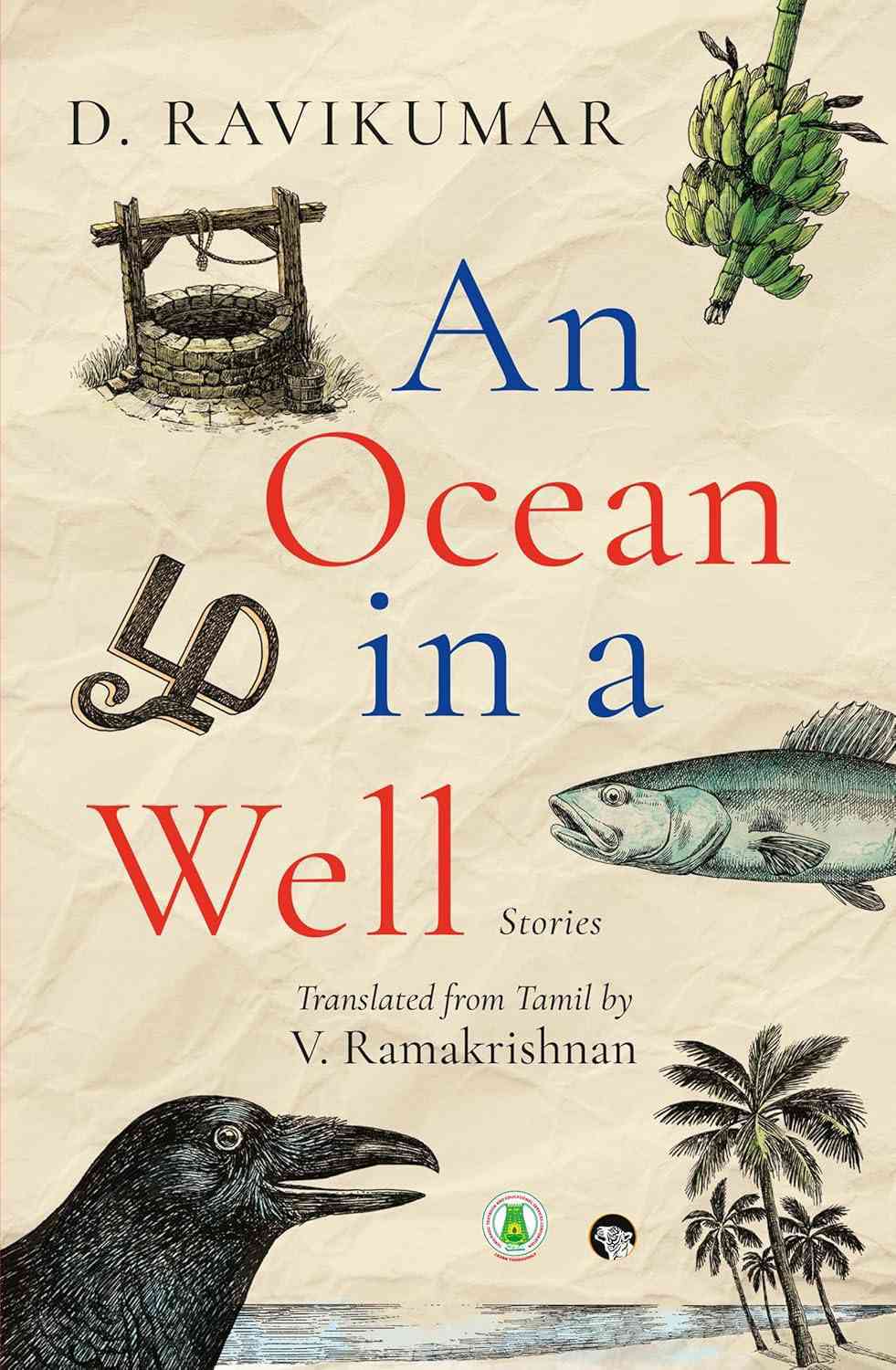
An Ocean in a Well: Stories, D Ravikumar, translated from the Tamil by V Ramakrishnan, Speaking Tiger Books.
