



What is modern life but an endless chase of the ever-receding star of desire? Poetic as it may sound, this is an undeniable and unavoidable reality that fashions the contours of modern life. Unavoidable because chasing desire is no longer a matter of wish; it is a carefully designed mode of market capitalism where anyone and anything can be sold, where human life is always the surplus. We are not unaware of this leash that drives us along, but we are unable to act against it; such is its control on our being, such is our being a mere nothing before this giant. We are the modern Frankenstein, slaves of the darkness we have fed.
A new life
Lindsay Pereira’s Super takes us into the vortex of the storm that swirls the lives of young Punjabis as they prepare to cross over to foreign lands in order to flesh out their skeletal dream of a good life. Mapping through the slow morning rituals of Sukhpreet’s life in Brampton, we learn in snippets about the complicated lives of those like him who migrate from Jalandhar to Brampton or Toronto looking for a life that is richer than what they leave behind. Such stories, however, are tucked in every corner of the developing world, which still believes the West to be the geography of hope and prosperity, a theme reiterated in many films like Dunki (2023), or in fiction like Biju’s life in The Inheritance of Loss (2006).
What makes Pereira’s exercise different is the way he weaves diasporic everydayness, diasporic existentialism within the literary imagination of diaspora which shatters the utopia and makes the novel stand out is its profound hopelessness that resounds with a rhetorical “why’, especially when Sukhpreet, while mopping the stairs of the building he is a “Super” of (short form of superintendent), gets stabbed by a hooded stranger who mutters, you should die.
The rest of the novel builds up to reach this moment of death. Hence, the “why” lingers on as the reader realises that all the effort – the forged documents, low IELTS scores, the aspiration for dollars, the mortgage, the mother’s endless wait, the small town left behind, and the new love – is futile. Of course, the pall of nothingness hangs all over the novel as the readers become privy to the uncertainty, the exploitative work ambience, unreal work schedules, and poor savings that youths like Deepanshu, Sukhpreet’s cousin, encounter in Canada, although Deepanshu does not allow the illusion to ward off, either for Sukhpreet or for himself. Rap songs and Instagram posts allow the chimera to grow, eventually luring people to the annihilation of who they are or could be. Deepanshu does not warn Sukhpreet, not because he wants his cousin to suffer, but because, despite it all, he is driven by the hope that the two together will be able to reach the finish line in this foreign land, a hope that meets a hard death.
The man who kills is Maynard Wilson, a lone, 49-year-old Canadian working minimum wage at Timmy’s, and living in a condominium of the building Sukhpreet works at, with his dog, Woody. Unlike those looking for a new life, Maynard yearns for the days gone by when Canada was not so crowded, and there was more happiness everywhere, or so he feels. Stratifying the society on racial terms, he launches tirades across Reddit platforms against immigrants who are taking up all the blue-collar jobs, making it difficult for those like Maynard to make a living. This usurpation of jobs that used to be theirs, this occupation of space that used to be theirs, infuriates Maynard, who feels compelled to avenge this helplessness that has become of his life because of the likes of Sukhpreet. When he is evicted from the building, he decides he must strike. Sukhpreet becomes his message for the system that has failed him, that has unnecessarily created this competition he could never prepare himself for.
Elusive happiness
It is only Harpreet, Pereira’s female protagonist, who questions every step that advances towards this illusion, although she too is moving with the crowd. Her goals seemed to have been fixed on the day she was born – study, marry, settle abroad. All she seemed to have been doing was turning the pages. But she also expressed her doubts at all that seemed prefixed – especially this need to settle abroad. This expectation that she should go away, never settle in the place she knew by heart, unnerved her. She questioned the sagacity of such dreams, which were to be reaped in far-off lands, even on the day Sukhpreet was leaving. She had noticed how her neighbourhood was full of the old parents who had been left behind, or how her cousin, who had followed the scheme of things and married abroad, seemed to fake her happiness. She felt listless about paving the way to her dreams as she was being tutored. But then again, she had a good IELTS score and was applying for colleges abroad, especially in Toronto, where she knew Sukhpreet was waiting for her, with these dreams of a happy life.
It is ironic how sukh or happiness seemed to elude Sukhpreet the most, the man who carried the love of happiness in his name. He chased it across the seas, beyond the borders of his country, and the limits of his means. All this only to realise, in the end, as he lay in the pool of his own blood, that the colour of happiness embedded in his memory had always been green, the green of his ancestral fields in Chukhiara. Was all of this for nothing then? Is that what Pereira tries to conclude? Actually, he doesn’t conclude at all because this enigmatic equation of desire, this longing for happiness, is unresolvable; it can never be balanced on both sides. Everyone will continue to push their limits despite knowing that the horizon will keep receding as one keeps moving towards it, until we arrive at a place where the bottom will drop off to reveal that we have been proceeding towards nothing at all, all this while. I wonder if this was Pereira’s intention all along – to tell a tale where nothing happens – the absurd drama of life driven by the shapelessness and meaninglessness of desire, a tale whose ending is always known, yet we weave an entire story to meet that inevitable end, a structure that Pereira follows as well to tell his story.
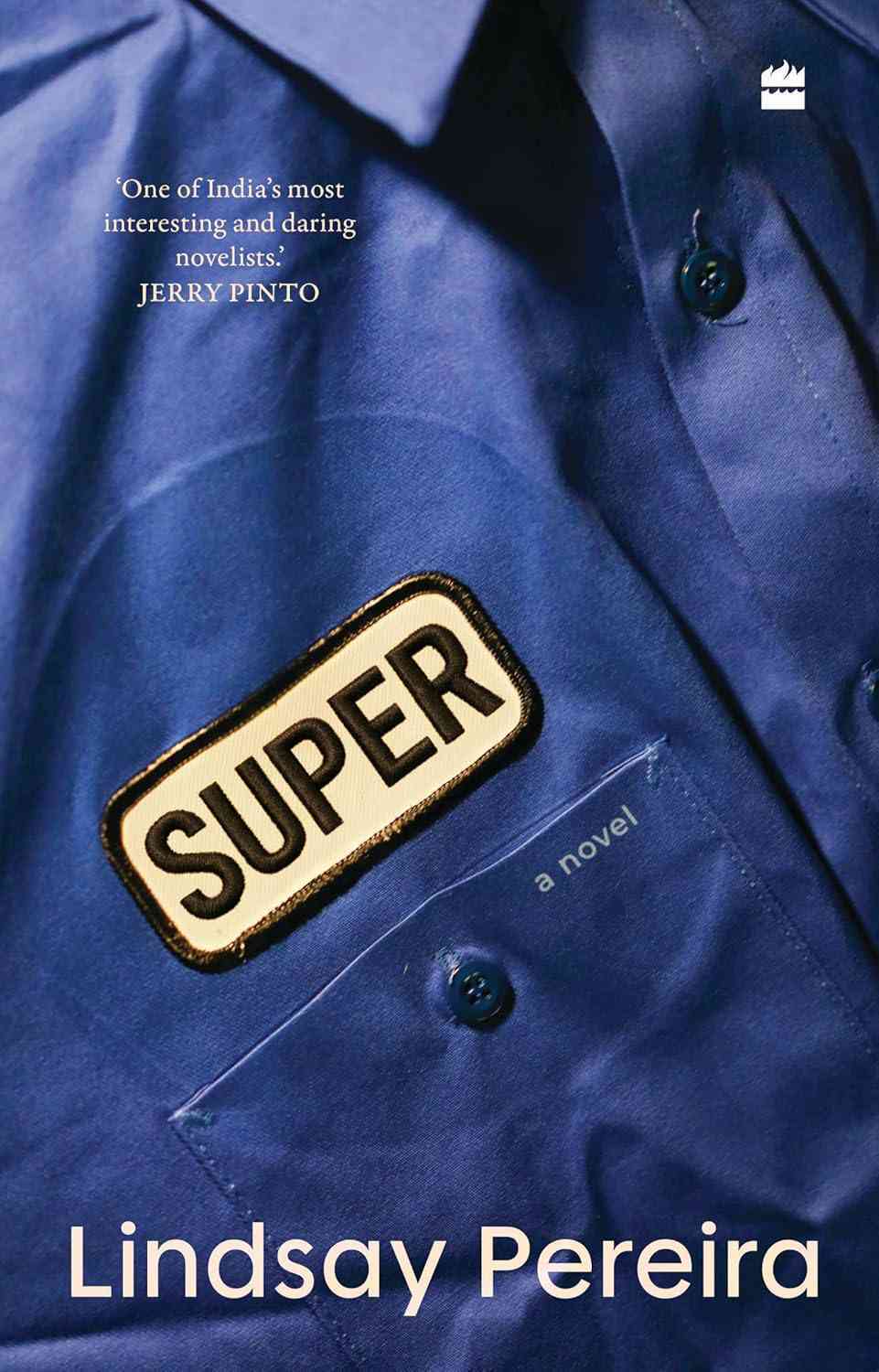
Super: A Novel, Lindsay Pereira, HarperCollins India.
