

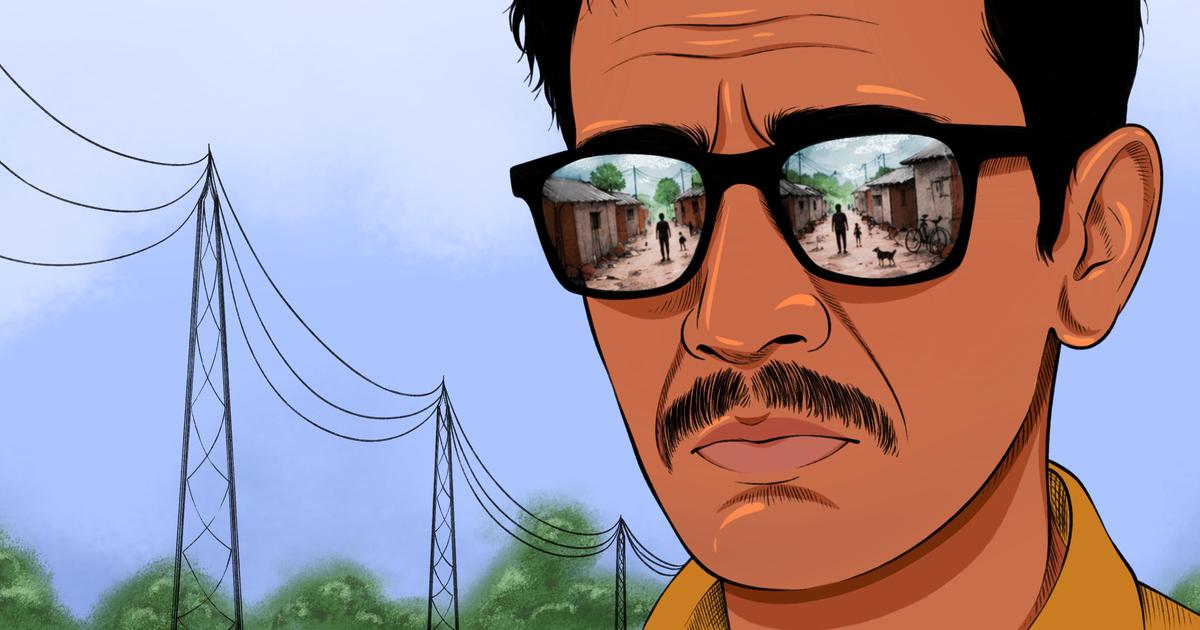
Every morning as the clock strikes five, Baleshwar Kujur, a blind Adivasi man from the Kurukh community, sets out from his home and walks more than thirty minutes to reach St Mary’s Cathedral, Ranchi’s central Roman Catholic church.
Upon reaching, he enters a side street and takes out a foldable plastic stool, sits down and places a steel bowl near his feet. He spends the next eight hours there, seeking alms from passersby.
In the mornings, Kujur noted, the roads are empty so he walks quickly, without any fear. “Early mornings are the best. There is hardly anyone around, and I feel like I could run in the middle of the streets,” he said with a laugh.
The return journey in the afternoons alone is a different matter.
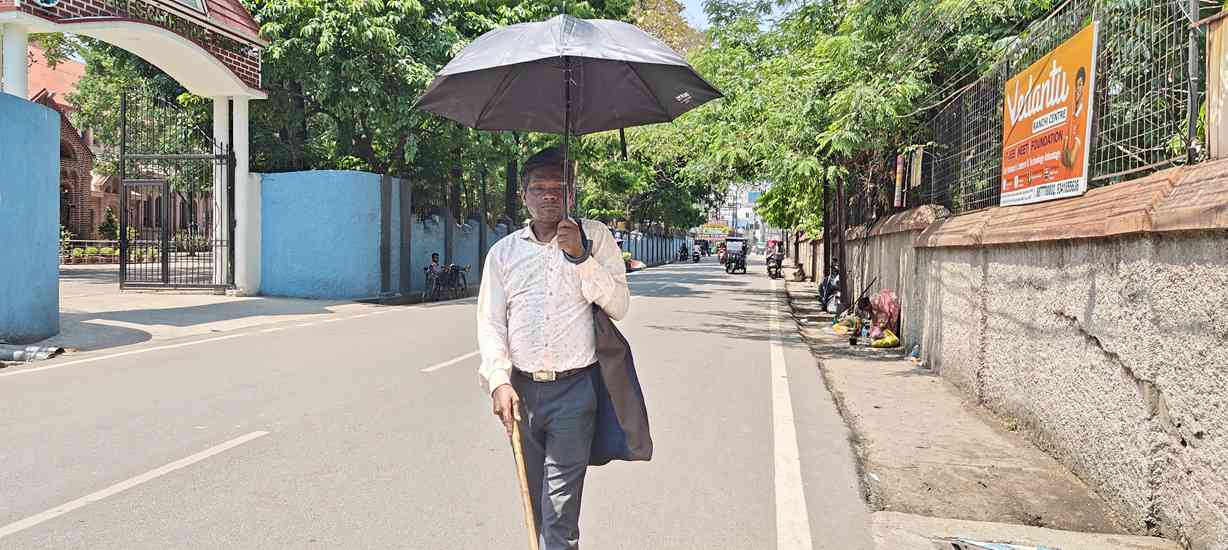
On April 29, I met Kujur at his regular spot near the cathedral. As the sun blazed at 36 degrees, Kujur sat with an umbrella, adjusting his stool and walking cane to not take up too much space as the crowds from nearby schools and colleges passed by. It was only after the crowd and traffic had dissipated that Kujur got up and began his long walk home.
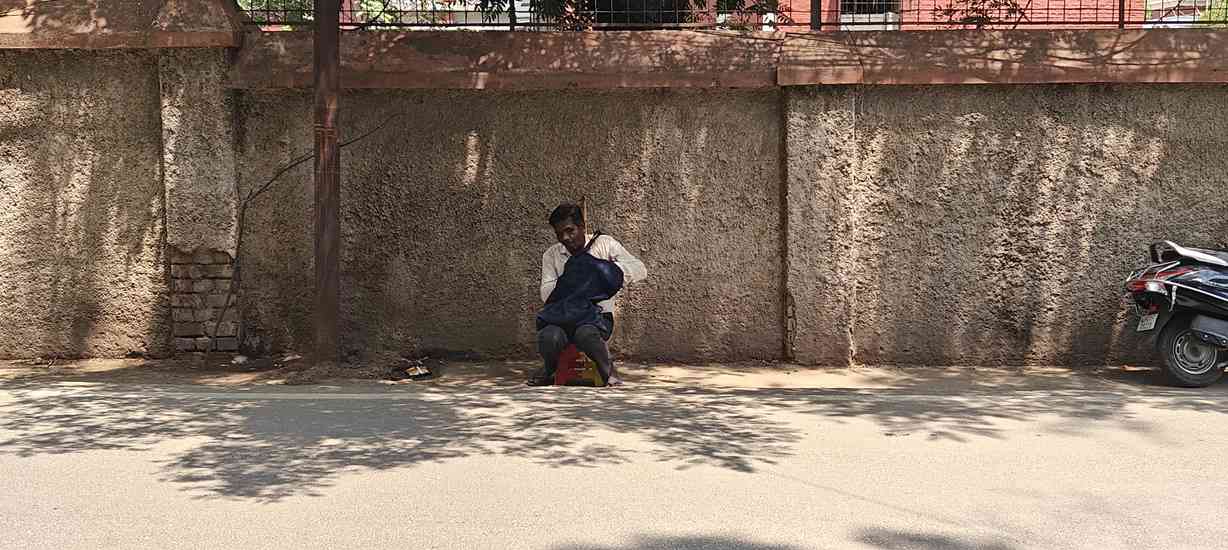
While the shorter route from the cathedral to the bus stand would have been through the main streets, Kujur avoided those in favour of less crowded inner roads. Yet here too he met with several obstacles – he constantly bumped into autos and scooters passing by. Most drivers did not pause for Kujur to pass, but instead honked their horns impatiently, despite the fact that Kujur is very evidently blind. “It’s very common for me to bump into vehicles,” he said. “And most people just drive by, they don’t even apologise.”
While Kujur used his support cane to sense the inside roads, as we approached a busy intersection on the main road, he raised the cane by a few feet to ward off vehicles. He said he did not like asking people for help. But as we approached a rickshaw stand, a rickshaw driver came up to him, held his elbow and directed him through the traffic, leaving him in a quieter lane. “That man is my friend. If he’s around at this time of the day he usually helps me out,” Kujur said. “There are few people who help you out sometimes, but most don’t.”
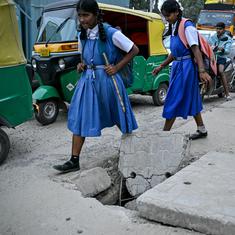
Besides vehicles, Kujur, who stuck to the side of the streets as much as possible, often bumped into electric poles and veered dangerously close to open gutters. “In Ranchi, the open gutters make it dangerous to walk around for blind people,” he said. “I’ve only found proper footpaths near the chief minister’s house, nowhere else.” While he has never fallen into an open gutter, he has sometimes had one foot slip into them.
At the end of his harrowing walk, Kujur turned into a parking lot for buses, and entered a narrow pathway. Around fifty metres down the pathway, he reached a small yard with garbage scattered around it. Feeling the area with his cane, he carefully stepped on top of a narrow set of arranged bricks to cross over to a courtyard, around which were 10 or so houses – one of them was his home.
The group of houses looks like many other small low-income settlements in the city, but there is something that sets it apart – it is a self-formed community set up by a group of blind people almost 30 years ago. The community, which came to be called andra basti, or blind settlement in the local Sadri language, offers its residents some refuge from the harsh challenges that they face in the city outside, and allows them to serve as a support system for each other.
Stepping into the courtyard after facing harrowing traffic, Kujur relaxed his shoulders. “This basti is small, but at least things here are familiar,” he said. “In the middle of the city, we have found ourselves a space where blind persons can live freely without fear of sighted people taking advantage of us.”
This story is part of Common Ground, our in-depth and investigative reporting project. Sign up here to get the stories in your inbox soon after they are published.
Kujur moved into the basti in 2018. He was in his mid-thirties then, and was beginning to feel frustrated with his circumstances.
He had grown up in Ranchi with his parents, who worked as labourers in the city – but they had died several years earlier, after which he moved to live with relatives in his ancestral village in Lohardaga district.
Kujur had strived for years to ensure that his disability did not get in the way of his education and employment. But after he moved to the village, he came to depend on his relatives for the basics: food, clothing, shelter.
After a point, that became difficult. “My uncles were aging,” he said. “How much longer could I depend on my relatives to take care of me?”
That’s when Kujur decided to contact Birsa Dhan, a friend and blind elder who lived in Ranchi. Both had studied at the city’s St Michael’s School for the Blind, decades apart from each other. They had come into contact through mutual friends over the phone, and remained in touch with each other.
In 1999, Dhan, along with around 10 other classmates from St Michael's School set up home for themselves in what was then vacant land in the city, next to the main Khadgarha bus stand, in the locality of Kumhartoli.
“Some people came from families who were able to look after them, but some of us came from families who had no money,” Dhan said. “We used to struggle to feed and clothe ourselves, so we decided to live together and start our own blind community where we could look out for each other.”
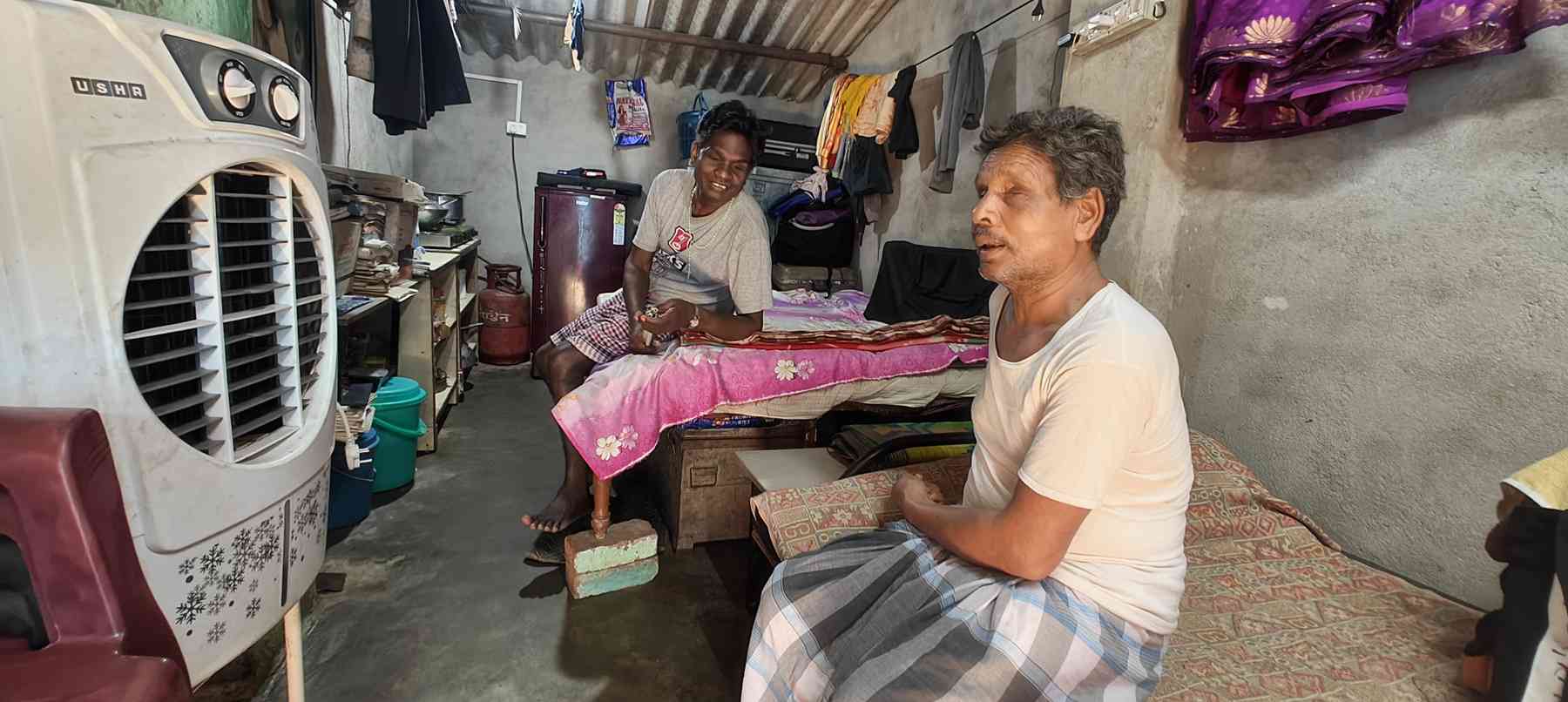
Dhan recounted that before he and the others set up the community, they encountered considerable governmental apathy. “We met many politicians and officials in those days, who promised to construct homes for us and did nothing,” he said.
That was when they decided to take matters into their own hands, and identified a plot of vacant land on which they decided to settle – Dhan noted that at the time, they received a verbal endorsement of their plan from the district commissioner.
With the help of friends, the group began constructing their initial homes using tarpaulin and mud. “We constructed our homes by ourselves, and with our friends’ support,” said Dhan. “We scraped money together so that we would have a place to call our own.” Over time, the families managed to save money to buy bricks and cement and construct pucca homes in the settlement. Soon, five other blind friends and their families moved in, and the basti began to be called andra basti.
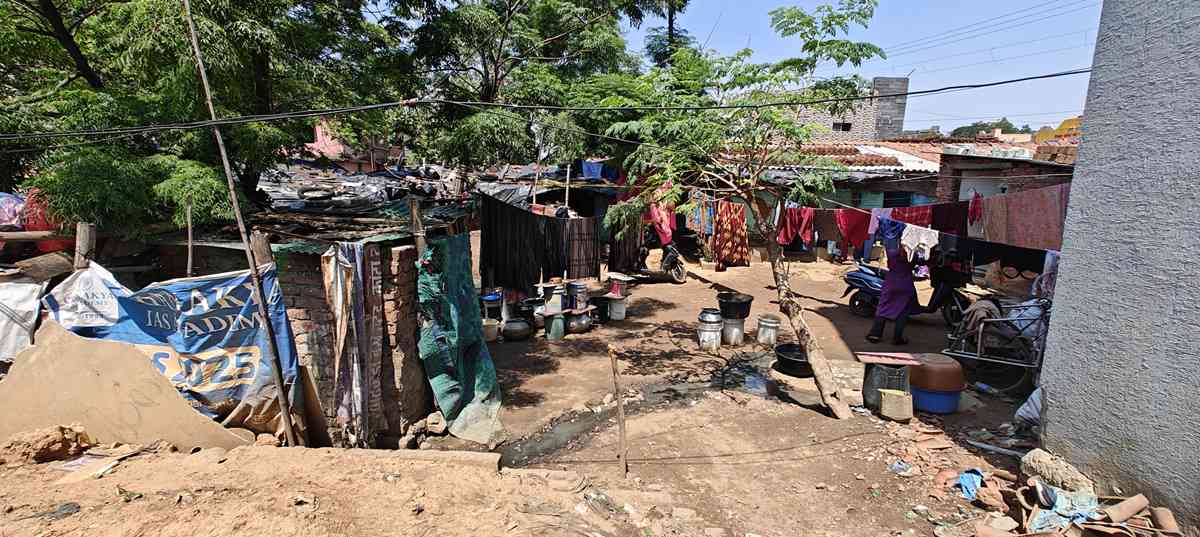
For several years, the residents depended on two nearby wells for water, but around 2010, the administration installed two water pumps and a public tap in the basti. All the houses in the basti also have electricity connections, some of them metered.
In all, over the past three decades, more than 20 blind persons and their families, from within Jharkhand and neighbouring states like Chhattisgarh and Odisha have lived at the basti. The community grew more mixed over the years as some original blind inhabitants died or moved away. The number of sighted people in the basti grew, both new residents who moved in and children of earlier residents – eventually, the number of sighted persons overtook the number of blind people. Today, it comprises six households with 10 blind persons, and around 15 other households with several sighted members.
Dhan had encouraged Kujur and other blind persons to move into the basti in an effort to ensure that it retained its identity as a refuge for the community. Now, however, he and others said they cannot accommodate more people, though they would have liked to. “Blind persons keep hearing of us and they come to meet us to see if there is space for them to stay,” Dhan said. “They have nowhere else to go and they are homeless. We feel sad to turn them away, but the space here is finite.”
All the blind men and a few women in the basti seek alms for a living – its central location is an advantage in this regard. “We are right next to the bus stand. The railway station is also not too far from here,” Dhan said. “Most hotspots in the city are accessible from here. It is easy to go to busy places to earn money.”
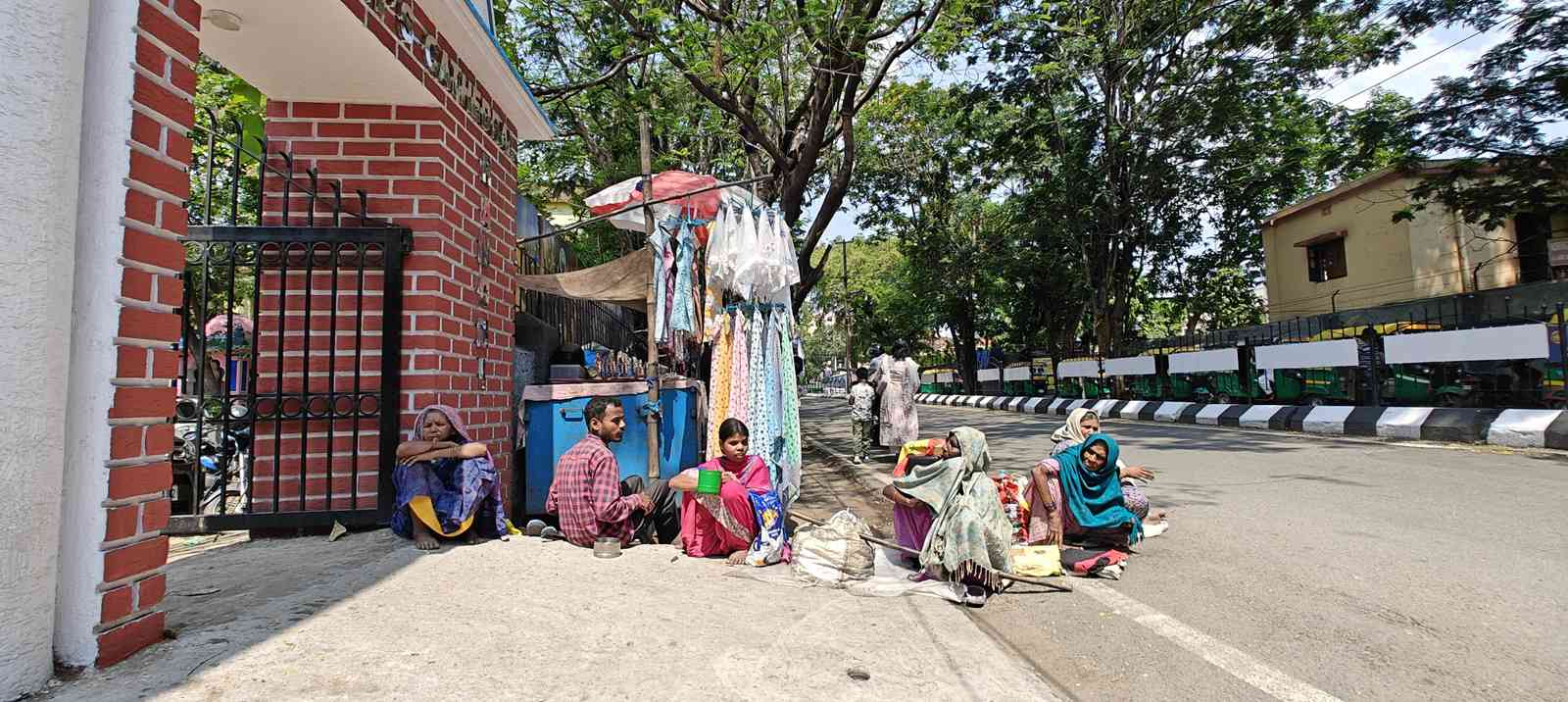
He added, “If we lived in the outskirts or in a village, we would not be able to earn money like we can near here.”
Many blind persons at the basti explained that they did not choose this livelihood, but were forced to take it up because they had no other options. They call the work kamai, or simply earning, and not bheek mangna, or begging. “We have tried a lot to look for work to be able to earn a dignified livelihood, but people refuse to give us jobs,” said Alka Kerketta, a Kharia Adivasi woman from Simdega district.
Dhan also noted that staying together helped protect those in the basti from others who might seek to take advantage of their disability. “There are more chances of blind people getting cheated by others when they live alone,” he said. “But here we look out for each other. From illnesses to celebrations and funerals, the community is there for each other in times of need.”
Kujur is glad that he made the move to the basti. “Moving to the basti led me to stand on my own two feet and live life on my own terms,” he said. He explained that blind people often struggled when they lived only among sighted people. “When blind people live with sighted people, they are not valued most of the time,” he said. “We often tend to get ignored or neglected. But living near each other, blind people value and support each other.”
The spirit of cooperation in the basti also drew in Punai Oraon, who has a locomotor disability, and used to visit his friend Santosh’s blind parents at the basti when he was growing up. “They treated me like a son, I will always remember their kindness,” he said.
After Punai’s family arranged his marriage with Tara Oraon, a young blind Kurukh Adivasi woman from Gumla district, the couple married and moved into the basti. “I prefer living here with other blind people around me,” Tara said. “We feel safe here together.”
Punai added, “As people with disabilities, we all have our vulnerabilities, but living together we are able to look out for each other.”
But despite the advantages of the basti, life for its residents is far from easy. The houses are packed tightly next to each other and besides a space of around 40 square feet that serves as a public courtyard, there is little room to move around.
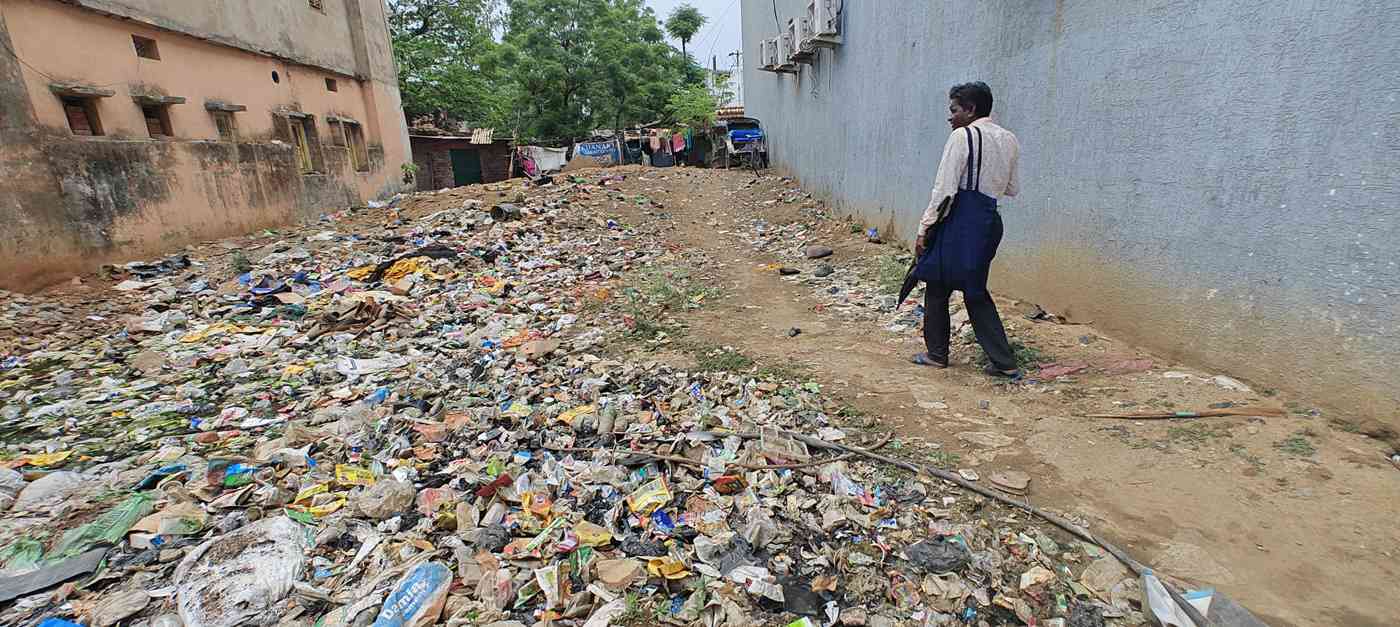
Getting in and out of the basti’s two entrances is also a challenge. One entrance is a narrow pathway right behind a parking lot for buses, which is typically crowded and filled with the chaotic activity of vehicles entering and leaving. The other entrance is a vacant lot that serves as a garbage dump.
Kujur, who goes out of the neighbourhood almost daily, recounted one distressing incident that occurred a few weeks ago, when he and Dhan were walking back home from near the bus stand. As they walked, a large auto suddenly reversed into them, knocking them down. Furious, the two got back on their feet and shouted at the driver who, in turn, began arguing with them.
Others, too, joined both sides of the fight. This further enraged Kujur, who began waving his cane around and accidentally struck someone, who began to bleed. It was only with the intervention of others that the argument was finally stopped. “They made the driver realise his mistake, but he did not apologise,” Kujur said. “All this could be avoided if people just paid better attention on the road.”
The basti’s women residents feel an even greater sense of risk in navigating the cramped routes. “I’ve lived here for over 15 years but I never go out alone,” said Mahima Ekka, a blind resident in her fifties. “It’s either with my husband, my daughters or neighbours.”
Monica Kujur, a former resident who lived in the basti for some four years, before moving out and living in the outskirts of the city, echoed this sentiment. “It is dangerous to walk out of the basti, as you always find giant buses speeding by,” she said. “There were also many nefarious people in the area who drink illicit alcohol and do drugs.”
“Even though the basti was safe, I felt the overall area was not safe for me as a blind woman,” she added.
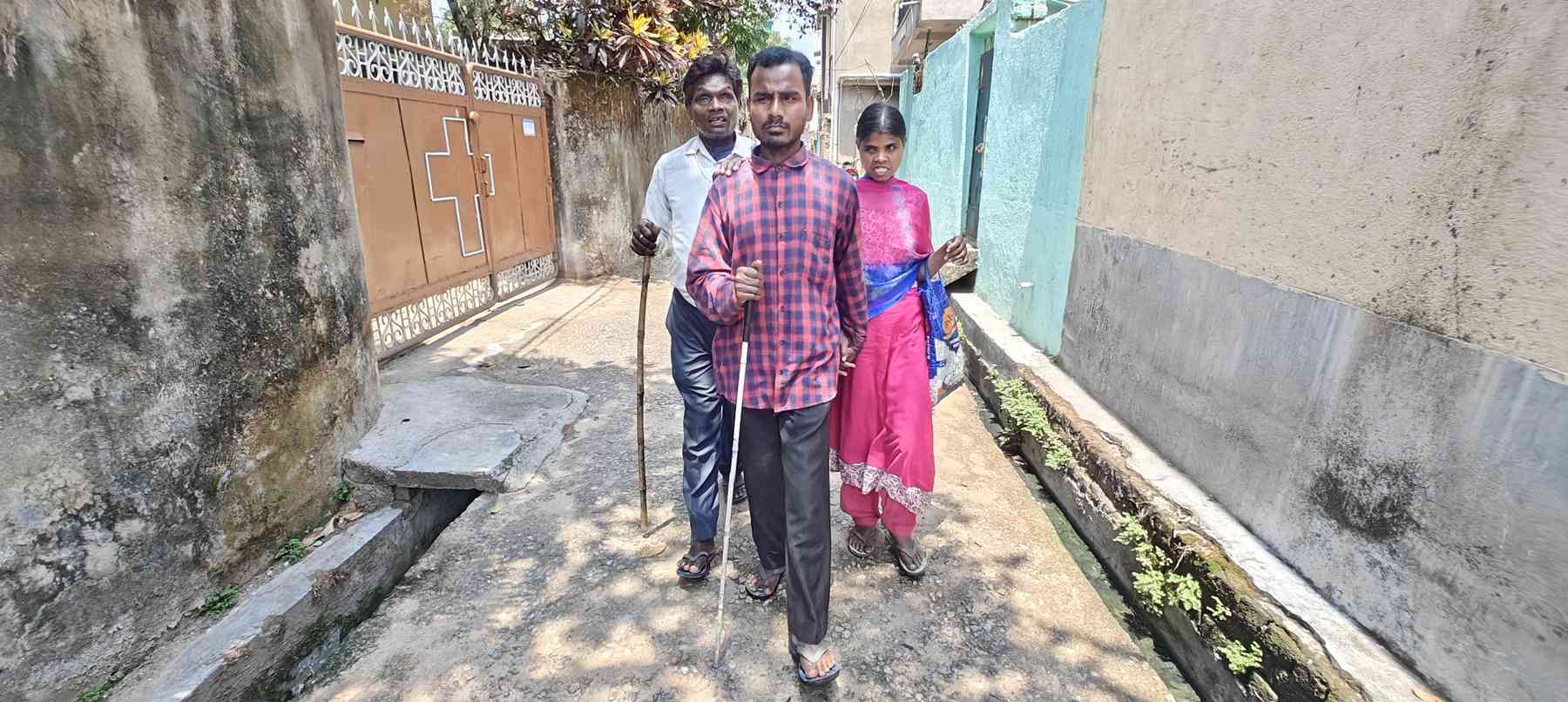
Residents also struggle for some basic amenities – the basti does not have a proper drainage system, and residents have had to fashion a rudimentary drain line on their own. Despite this, another former resident, who did not want to share his name, said that the basti often flooded with rainwater, leading to the accumulation of sludge in the narrow path connecting the houses. “The path becomes very dirty and slippery,” he said. “So, a few years ago I moved to another basti a few blocks away. But I visit regularly.”
In April and May when I was reporting the story, the weather had turned unpredictable. Days would begin with blistering heat only to suddenly break into scattered thunderstorms. Most residents had thus taken a pause from their work. Dhan was busy with preparations for an upcoming wedding in his family.
But Kujur set out every morning as he always did to St Mary’s Cathedral. He and others said they earn between Rs 150 and Rs 200 on a good day. Some days they return empty handed. “There are people who show up every day to give me money,” he said. “When I don’t turn up they ask me how I’m doing and why I didn’t turn up. It’s because of them that I try to go daily and don’t like to skip days.”
Most of the community’s residents did not have a path open to a more comfortable life because in earlier years, they did not have the means to pursue higher education. “We didn’t have enough food to eat or money to buy new clothes at home, so education was an afterthought,” said Dhan.
When Kujur finished his Class 8 studies in St Michael’s, he went to Delhi to continue his education – the Ranchi school did not have higher grades at the time. “I managed to stay there and attend classes for a few months with the support of friends,” he said. “But it did not work out financially.”
Mahima Ekka recounted that she did not even have the option to consider this. “The men were still able to go to Delhi, supported by their friends’ circles,” she said. “But I couldn’t afford to go to another city without support on my own.”
The other three blind women in the basti – Alka Kerketta, Ashrita Kujur and Tara Oraon – never had a chance to attend school. “I had wanted to study and learn braille, but my mother was too scared to send me out of the house because I was blind,” said Alka Kerketta.
It was only after her mother passed away that Kerketta began, in her early twenties, to seek out opportunities for an education – but her search was unsuccessful. Likewise, her husband George Surin, a blind Munda Adivasi man from Odisha’s Sambalpur district, did not receive an education while growing up. “My village is deep in the interiors of Odisha,” he said. “There were no opportunities for blind persons to receive an education there. So the question of attending school never came up.”
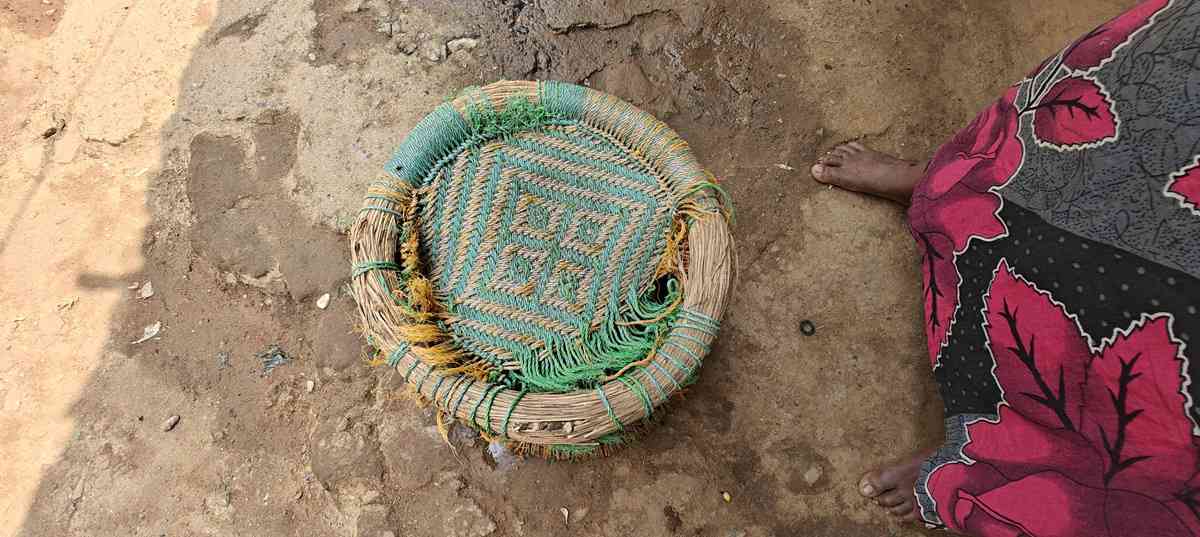
Earlier, St Michael’s School had also sought to help those who could not complete their higher education become independent – for instance, it put the group of men who set up the basti through training in making cane furniture. In the 1980s, after leaving the school, Dhan along with other blind friends rented a space in the city where they could make cane chairs and sell them. However, after a few years, cheaper plastic furniture entered the market. “The demand for cane furniture decreased,” he said. “And by the early 1990s, we did not have the capital to continue our business, so we had to stop our work.”
He added, “We would have liked to take up some or the other work to stand independently on our own two feet, but we never got a chance to do so.”
Today, the basti’s residents struggle to find even other, more general, work. “I looked very hard for cleaning work such as mopping floors or washing dishes,” Kerketta said. “But people tell me I’ll break their vessels while washing them because I’m blind.”
Sandeep and Mohri Munda, a blind couple, lived at the basti from 2006 to 2019, but then decided to move back to a village. Along with three other blind friends, Bhagwan Kujur, Ajay Oraon and Kamri Pandu, they decided to return to Mohri’s ancestral village of Maheshpur, on the outskirts of the city. There, they staked claim to her parents’ land, which they said had been captured by outsiders.
“Around Ranchi, a lot of Adivasi land which is protected by laws like the Fifth Schedule has been captured by the diku,” Sandeep said, using a local language word for non-Adivasis. “We are also fighting for one such parcel of land that was grabbed.” He said that a court case about the ownership of the land was reaching its conclusion, and that they hoped for an order in their favour.
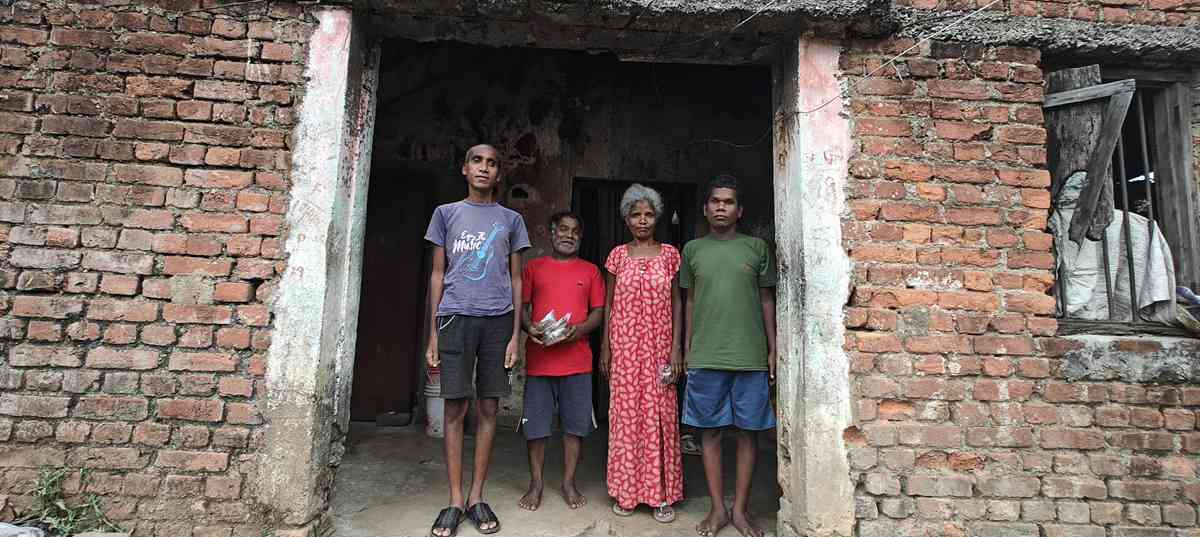
The five live with the Mundas’ sighted daughter Nilima in a rundown house in the village. “When we came here, we found this abandoned house that seems to have served as some sort of factory earlier, so we began living here,” said Sandeep. “We hope to earn money and build our own house.” They wanted to apply to the Pradhan Mantri Awas Yojana scheme for funds for this work, he added, but had not been able to do so because of the ongoing case over the land.
Mohri said that she preferred the village to the noisy neighbourhood of the basti, where people often drank alcohol, did drugs and fought. “One time Kamri got hit by a bus, she wasn’t grievously injured but she did get hurt,” she said. “That area is dangerous for blind people.”
The five said that while they liked having several blind neighbours around in the basti, they left because they wanted to become financially independent. “How long should we survive on alms given by others?” said Sandeep. “As blind people, we had been forced to become beggars. We came here to start our own business.”
Years ago, Sandeep had received training in manufacturing paper plates through a programme organised by the National Federation of the Blind in Faridabad. When he moved with his family and friends to Maheshpur, he was confident that they would be able to earn a living by making and selling the plates.
The group saved money, asked for donations and even took loans from others to invest in a paper-plate-making machine. They bought the machine last year, but a few months after starting operations, they realised they were not finding buyers. “Everywhere we went, we were told that our paper plates are too thin and nowadays consumers want thicker plates,” Bhagwan said.
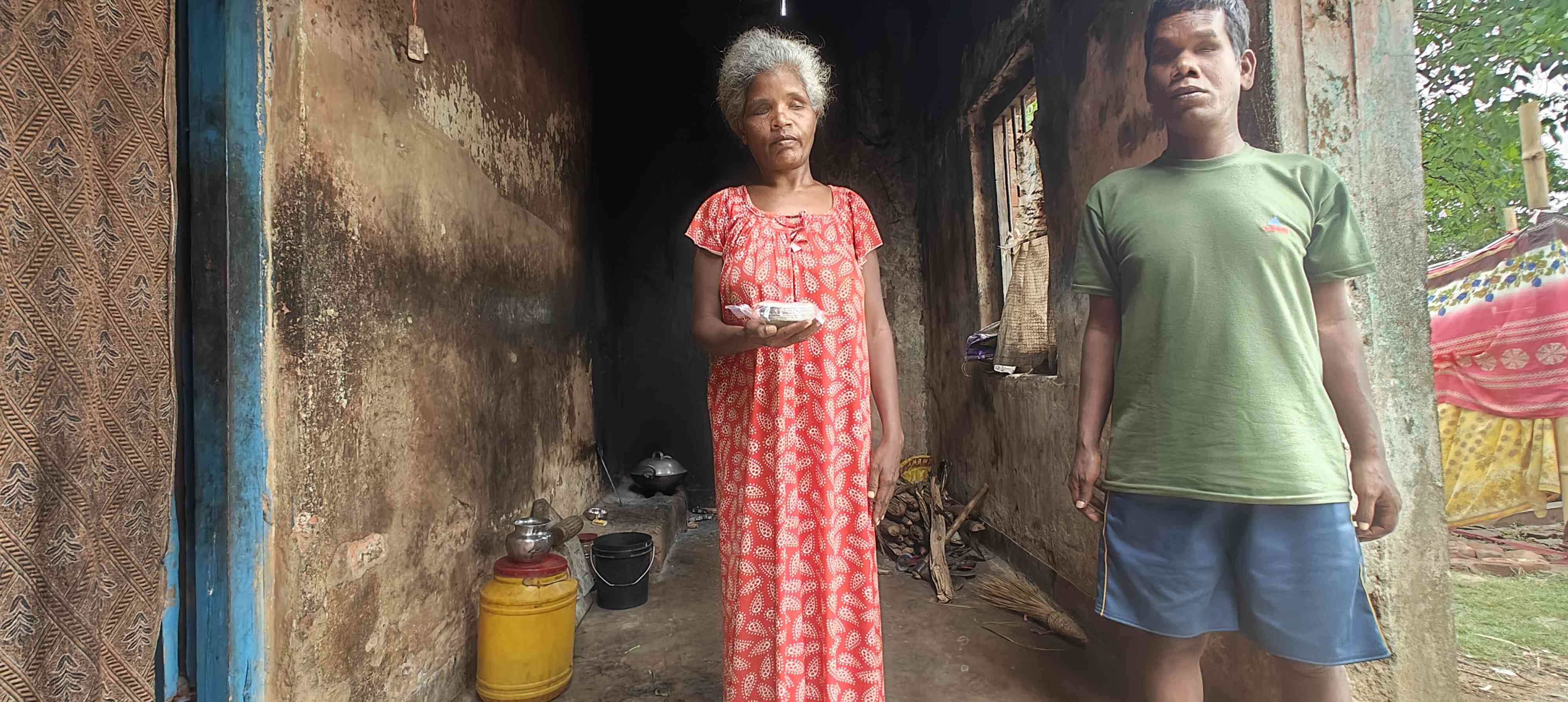
For now, they have paused the business. Bhagwan noted that they can still make smaller paper bowls that chaat vendors use, but that the plates were their key product. The five hope that if they obtain a judgement in their favour in the land case, they can lease or sell some of the property to raise capital to develop further business plans.
Almost every Sunday, the five visit the blind basti in the city to meet their friends.
“We still feel a sense of community at the basti,” Mohri said. “So we go there often and celebrate events together.”
In January this year, the city administration announced that informal settlements near the bus stand would be razed so that it could be expanded. While the andra basti itself did not receive any official notice, when announcers from the municipality arrived to warn people to empty their homes, they also visited the basti. “We got scared that we too will be kicked out of our homes, which we have built over the years with so much hard work,” said Kujur. The residents felt somewhat reassured that they would not be evicted when Roshni Xalxo, then a mayoral candidate for Ranchi, and now the city’s mayor, spoke in support of the basti.
Nonetheless, because the residents do not have papers documenting their ownership of their homes, they remain anxious that they might be relocated elsewhere in the future. But Dhan struck a note of hope about the situation. “If we are moved,” he said, “then I hope it is to a bigger place, where other blind people can join us and we can all live together.”
This story was supported by the International Foundation for Disability Inclusion’s (IFDI) Journalism Fellowship on Disability Inclusion.
