






The Supreme Court’s recognition on June 19 of the right to walk safely as part of the right to life has implications that extend well beyond pedestrian safety. It raises a broader question about what Indian cities choose to build and what they continue to neglect.
Walking remains the most common mode of transport in Indian cities, accounting for roughly one-quarter to one-third of all trips according to the Institute for Transportation and Development Policy India. Yet pedestrians receive among the least attention in urban planning and public investment.
For decades, urban development has been measured through highways, flyovers, expressways and metro corridors. New roads and projects completed are announced frequently, while the public spaces people use every day – pavements, crossings, bus stops and road edges – remain poorly planned or absent altogether.
The result is that Indian cities have invested heavily in roads without investing enough in the streets that make those roads usable.
This distinction is important because roads and streets serve different purposes. Roads are designed to move vehicles efficiently. Streets support everyday urban life. Every metro journey begins and ends with a walk. Children walk to school, workers walk to bus stops and elderly citizens walk to neighbourhood markets.
Streets simultaneously accommodate public transport, utilities, drainage, vending and green cover. They are among the most intensively used public assets in any city, yet they are rarely planned or managed as complete public systems.
Ownership gap
Around the locality in which I live in Delhi, metro construction has continued for several years. Along one stretch that I walk regularly, I instinctively cover my face as vehicles pass because construction material remains exposed and dust accumulates along the edge of the road. Pavements disappear without warning and walking becomes an exercise in avoiding debris, traffic and uneven surfaces.
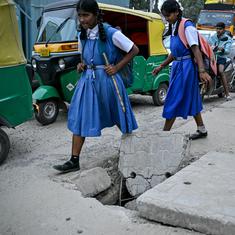
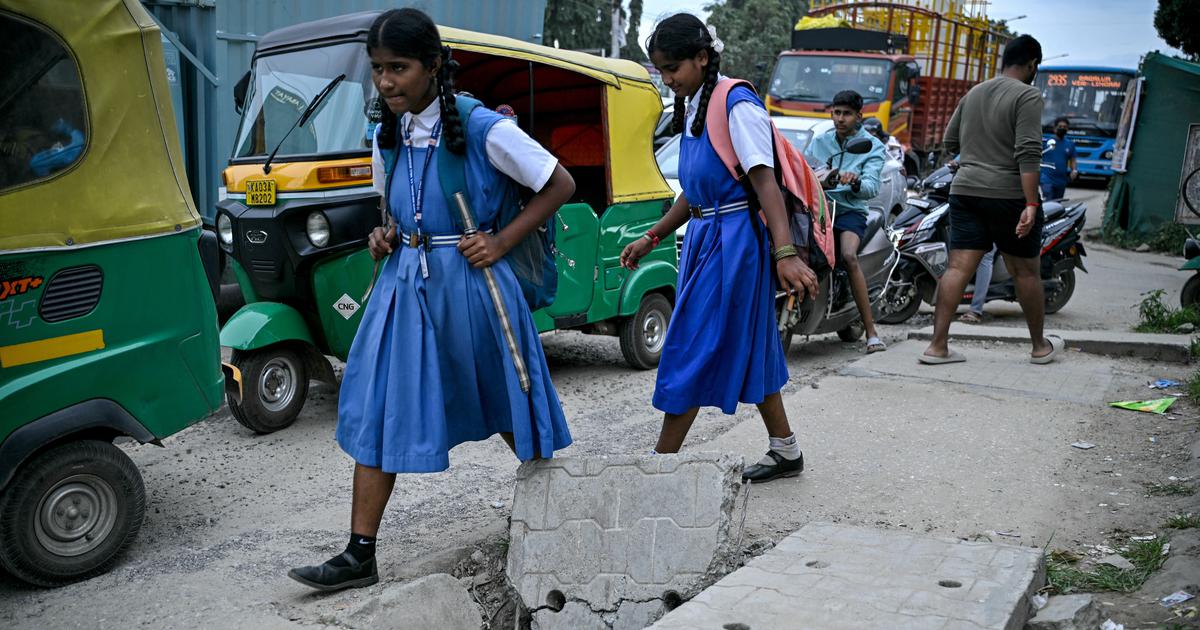
This experience is hardly unique to Delhi. Across our cities, pedestrians navigate roads where footpaths were never built or exist only in fragments. Dusty shoulders become informal walking space until they are occupied by parked vehicles, shop spillover or construction material.
Where pavements do exist, they are frequently blocked by electric poles, transformers, utility trenches or encroachments. These are often treated as isolated civic complaints, but together they point to a complex governance challenge.
Indian cities and pavements are basically an obstacle course — this level comes with extra bollards 😂🤣😳😁
— Aravind Unni (@aravindunni23) May 13, 2026
📍Punjagutta, Hyderabad pic.twitter.com/VdzTHczyiY
Responsibility for streets is divided among several agencies. Municipal corporations build and maintain pavements; Public Works Departments construct roads; the Traffic Police regulate movement; metro agencies restore roads after construction; electricity distributors install poles and transformers; water, sewerage and telecom agencies repeatedly excavate the same corridors; and contractors complete projects and leave.
Each agency manages one component, but none is responsible for the street as a whole.
Construction receives political attention because it is visible and measurable. Maintenance, coordination and street management rarely receive the same attention despite determining how citizens experience the city every day.
Good economics
The problem begins even before maintenance. Most road projects are still conceived around the carriageway, with pedestrian infrastructure added later, if at all, by different agencies. As a result, many roads are tendered without pavements, shade, drainage, accessible crossings or organised space for utilities, parking and vending.
India’s next challenge is therefore not simply building more roads but building complete streets. A complete street treats the entire public realm as infrastructure by integrating carriageways, continuous footpaths, drainage, lighting, tree cover, accessible curbs, vending zones, parking management and road-edge treatment within a single project rather than leaving each element to different agencies.
The returns from this approach extend far beyond mobility and infrastructure. Better-managed streets reduce dust pollution by limiting exposed road edges and construction spillover. An IIT Delhi study found that interventions such as paving unpaved roads, repairing potholes and fixing broken footpaths reduced local PM2.5 concentrations by between about 15% and 27% across three pollution hotspots in Delhi.
This video is part of The News Minute and Newslaundry’s investigative series on how pavements across Indian cities are being taken over, misused, or erased, leaving pedestrians with shrinking space to walk. @samrahattar reports pic.twitter.com/oZJeJzqZPV
— TheNewsMinute (@thenewsminute) February 24, 2026
Tree-lined streets reduce heat exposure during increasingly frequent heatwaves. Walkable neighbourhoods increase footfall for local businesses and improve access to public transport by making first- and last-mile journeys easier. Street maintenance is also labour-intensive, creating employment in landscaping, sanitation, repairs and public space management while improving the performance of infrastructure that cities already possess.
Good streets also make cities safer. Places where people can comfortably walk tend to support more active public life, stronger neighbourhood commerce and greater natural surveillance. Infrastructure that is safe for children, elderly citizens and persons with disabilities invariably creates a safer environment for women, workers, students and everyone else.
Creating an opportunity
Transport, air pollution, public health, climate resilience and road safety are usually discussed as separate policy challenges. In practice, they intersect on the same streets.
The Supreme Court’s judgment should become more than a direction to improve footpaths. It should encourage governments to rethink how streets are conceived, designed, tendered, financed and managed.
India’s next phase of urban development should be judged not only by how many roads are built, but by whether those investments create streets that are safe, accessible and usable for everyone.
The court has recognised the right to walk safely as part of the right to life. Delivering that right now requires Indian cities to recognise streets as essential public infrastructure rather than treating them as the leftover space beside roads.
Kabeer Arora works on urban policy, climate resilience and public institutions. The views expressed are personal.
