










Since Umar Khalid first told me during one of our meetings at Jawaharlal Nehru University that he was working on the history of Adivasis in Singhbhum district for his doctoral thesis, I had looked forward to reading it. Much has happened in the intervening years. He was first vilified, arrested and prosecuted for his alleged role in the JNU protest meeting over Afzal Guru in 2016, and even survived an armed attack by a fanatic two years later. His name also surfaced briefly in the Bhima Koregaon case, though it disappeared when the case was recast as an alleged Maoist conspiracy under the UAPA, leading to the arrest of 16 of us from across the country.
A few months after my own incarceration, Khalid himself landed in prison in another politically charged prosecution arising out of the protests against the Citizenship Amendment Act in Delhi and continues to be in jail, now in his sixth year, without trial. Despite these extraordinary ordeals, he completed his doctoral thesis and, after JNU refused to accept it, secured its submission through judicial intervention.
Seeing it finally published as Fractured Communities: Adivasi Histories and the Politics of Power was therefore a source of immense satisfaction. The foreword by Ramachandra Guha and the Afterword by Nandini Sundar are fitting tributes to a work of scholarship that combines archival rigour with a deep commitment to the lives and histories of India’s most marginalised communities.
Shunning oversimplification
History is particularly important when we go to it for reasons provided by present times. This is particularly applicable to Jharkhand, where Adivasi history has come to our attention because of continuing controversies over mining, forests, and displacement—leading to questions of constitutional protection. What arose in the colonial past is now part of today’s political battles, as is evident from, among others, amendments to the Chotanagpur Tenancy Act and the Santhal Parganas Tenancy Act. The implementation of the Panchayats (Extension to Scheduled Areas) Act or PESA, and protests against displacement caused by mining project are added examples.
But the issues have often been oversimplified. The opposition has been framed as a conflict between the harmonious relationship of egalitarian Adivasis with land and forests and the aggression of the state intent on capturing these resources and dispossessing those who live there. This appeals to a sense of moral justice but is seldom adequate in exploring the complexities of the conflict.
Khalid’s work, researched with great attention to detail, shakes this particular framing. Using extensive research, his book examines the formation of the state in Singhbhum over two hundred years. It tracks how relationships have changed between the colonial administration and postcolonial governance on the one side and land and forests on the other. Khalid argues that the colonial state did not replace indigenous institutions with a modern bureaucracy in Singhbhum – specifically, the Kolhan region inhabited by the Ho people. Instead, it used those very same institutions into instruments of its own authority.
Khalid begins with an original question as he tries to define Singhbhum. His contention is that the region was a mixture of various political formations, with connections forged through shifting relationships of tribute, kinship, warfare and customary authority. What it was not, then, was a unified geographical and administrative awaiting colonisers. Indeed, the British did not discover Singhbhum, they constituted it.
The book dismantles the contention that Adivasi societies are isolated and self-contained, practically living outside time, as it were. This contention presents exceptional governance as a necessary response to primitivity, glossing over the possibility that it is actually a political response to the difficulties of conquest. But Khalid shows that people of the Hos tribe never occupied a space beyond history. They were part of regional networks of exchange, which meant they negotiated relationships with neighbouring polities. In fact, they possessed their own institutions that had evolved through their own historical experience.
How hierarchies began
The East India Company’s repeated military efforts against Kolhan revealed how far conventional conquest could go. Long occupation by the army was very expensive because of the difficult terrain, decentralised social organisation, and strong resistance. So the colonial administration reconfigured state power.
In the existing model, the manki exercised authority over a cluster of villages, while the munda as village headman. This configuration was absorbed into the colonial administrative structure. Their customary functions were expanded to include revenue collection, maintenance of order and implementation of government directives. And their authority now came from official recognition, written regulations, and administrative accountability. It no longer flowed from the community.
Many historians said that tribal communities acquired internal hierarchies only because of colonial intervention. Khalid’s more sophisticated analysis concludes that colonial rule intensified existing hierarchies. The recognition accorded to mankis and mundas enhanced their authority, facilitated the accumulation of land and prestige, and produced new forms of social differentiation. Colonial domination operated by changing relations among the ruled.
The present through the past
What we learn is that even beyond Singhbhum, the modern state rarely encounter societies as blank slates. They inherit complex formations, which they have to manipulate to create stable mechanisms of political rule. This process is visible far beyond the tribal frontier.
So, the Fifth Schedule of Constitution, protective tenancy laws, autonomous councils, and PESA represent a democratic reconstitution of colonial policies, redirecting them towards emancipation. A parallel process is visible in the state’s relationship to caste. The Constitution abolished untouchability and created reservations and affirmative action. Yet caste did not disappear from public life, because the democratic state reorganised it through new institutional forms. Both caste and tribe have been incorporated, with changes, into new institutional structures.
Jharkhand is a distinct example of this paradox at play. The regions with the strongest constitutional protections against land alienation have simultaneously witnessed some of the largest episodes of displacement through mining, dams, industrial projects and infrastructure development. The same state that appears as the constitutional guardian of Adivasi rights repeatedly becomes as the principal agent of acquisition. This contradiction is built into the developmental: the simultaneous Constitutional obligation to protect historically vulnerable communities comes up against the compulsion to promote economic development through resource extraction.
Khalid’s historical reconstruction provides a genealogy for understanding this contradiction. But it also leads us to the principal limitation of the analytical framework of the book. Administration is the focus, but the political economy is not examined in sufficient detail. Why did the state invest so much effort in governing this apparently remote frontier? The answer lies beyond administration. Singhbhum was was a region of enormous economic significance, providing as it did timber, mineral wealth, iron ore and copper.
This absence is more significant in the postcolonial sections of the book. The transition from colonial extraction to developmental planning and neoliberal accumulation led to changes that the administrative analysis employed in the book cannot explain adequately. A fuller integration of political economy would have considerably strengthened the book'’s otherwise compelling argument.
Was this so-called administrative exceptionalism was truly exceptional? The British governed through zamindars in Bengal, taluqdars in Awadh, village headmen across much of the countryside, and customary institutions across many frontier regions. The argument that pre-existing authority was incorporated into state structures everywhere appears far too general. Administrative exceptionalism may be only be one historically specific instance of a broader principle of colonial state formation.
These limitations arise from the conceptual richness of the study itself. The best historical works generate questions larger than those they set out to answer. Khalid equips the reader with a richer vocabulary for understanding the tensions that continue to shape postcolonial India – between constitutional protection and developmental dispossession, between equal citizenship and differentiated governance, between the democratic aspiration to overcome inherited hierarchy and the institutional reality that such hierarchies are more often reorganised than abolished.
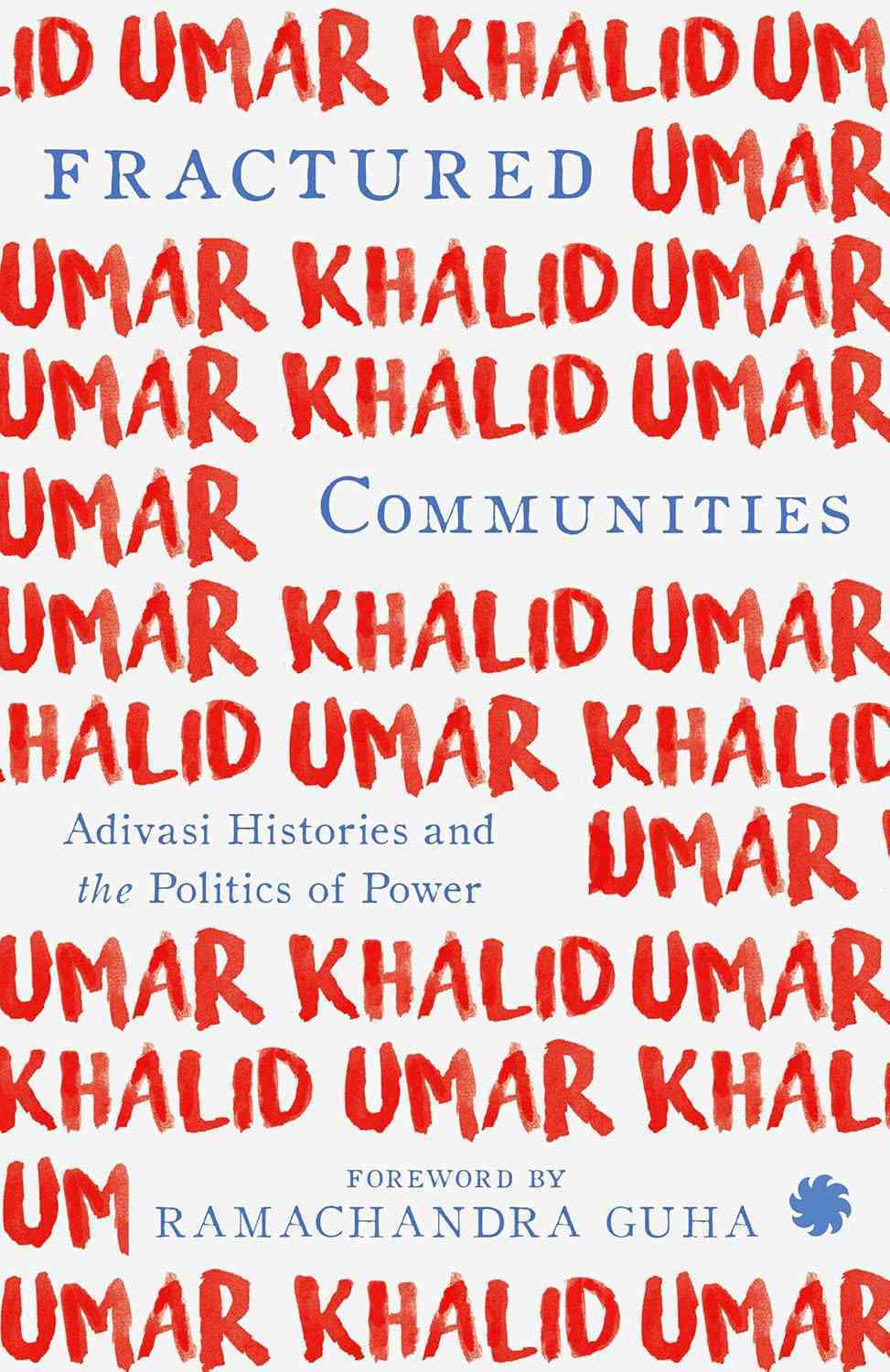
Fractured Communities: Adivasi Histories and the Politics of Power, Umar Khalid, Juggernaut.
