









Only senior officials will be allowed to issue content takedown orders: Centre
IT Rules will be amended to ensure that the authorities give a ‘reasoned intimation’ whenever such directives are passed, said Union minister Ashwini Vaishnaw.
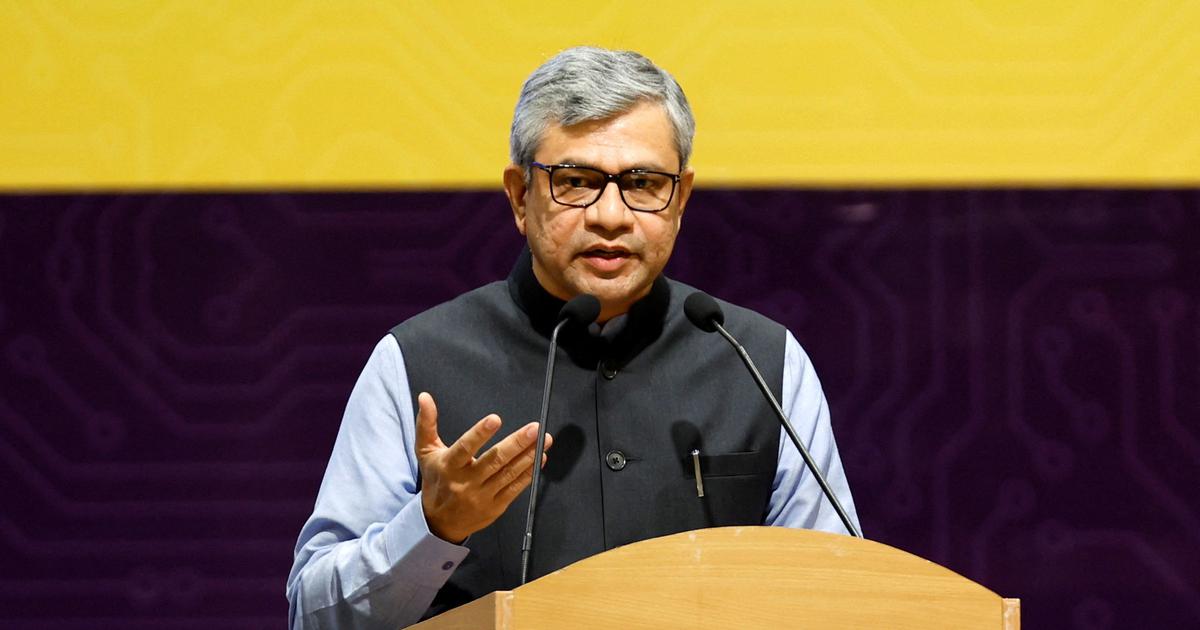
The Union government will amend the 2021 Information Technology Rules to specify that orders to take down social media content can only be issued by senior officials at the Centre and state levels, The Hindu quoted Electronics and Information Technology Minister Ashwini Vaishnaw as saying on Wednesday.
The officials will also be required to give a “reasoned intimation whenever any such order is passed”, added Vaishnaw.
“The accountability of the government increases with this change,” the minister was quoted as having told reporters.
The amendments are yet to be notified and will specifically pertain to Rule 3(1)(d) of the Information Technology Rules, under which social media platforms are required to remove content upon receiving a court order or a government notification.
After the notification, all such orders will be reviewed monthly by an official not below the rank of secretary of the government, reported The Indian Express.
The orders will also be required to specify the legal basis and statutory provision, the nature of the unlawful act, and the specific link or other electronic location of the content that is to be removed, according to the newspaper.
The amendments are being brought after it was noticed that orders to take down content were also being issued by police officers at the rank of sub-inspectors and assistant sub-inspectors, an unidentified official was quoted as saying by The Indian Express.
The official said that the amendments were not related to social media platform X’s petition filed earlier this year.
X had approached the Karnataka High Court after receiving several takedown orders from the Ministry of Railways related to posts about a stampede at the New Delhi Railway Station in February.
The petition challenged the Union government’s powers to revoke safe harbour provisions under Section 79(3)(b) of the Information Technology Act.
The provision states that online intermediaries, such as social media platforms, can lose their safe harbour status if they fail to remove or disable access to content that is used to commit an “unlawful act” despite being told to do so by the authorities.
Removing this status would mean that the platforms would be liable for the content in question.
X, in its petition before the High Court, argued that the government was misusing this section to bypass the requirements of Section 69A of the Information Technology Act to censor online content.
Section 69A states that online content can be blocked on grounds such as national sovereignty, security of the state, friendly relations with foreign countries or public order. In contrast, Section 79(3)(b) does not define an “unlawful act”, and does not contain a review mechanism.
In September, the High Court ruled in favour of the Union government.
