











Supreme Court refuses to extend waqf registration deadline
The bench asked the petitioners to approach the Waqf Tribunal, which can make exemptions on a case-by-case basis.
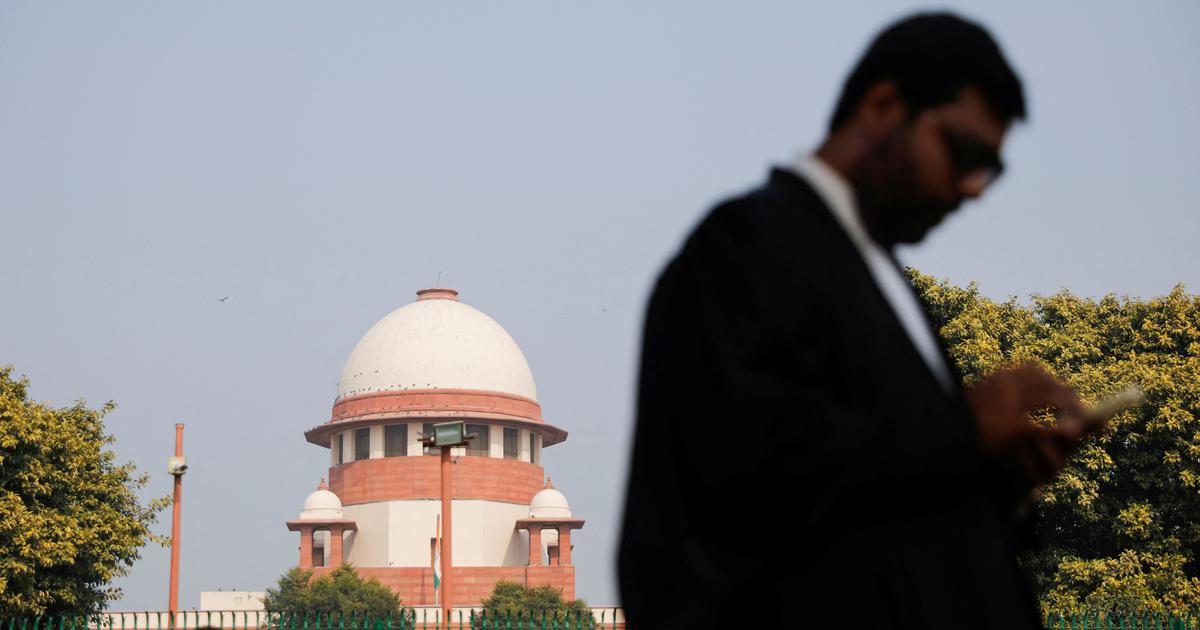
The Supreme Court on Monday refused to extend the December 6 deadline for waqf properties to be registered on the UMEED portal as required by the 2025 Waqf Amendment Act passed in April, Live Law reported.
The Unified Waqf Management, Empowerment, Efficiency and Development portal was developed by the Union Ministry of Minority Affairs to create a digital inventory of waqf properties by geo-tagging them.
A waqf is an endowment under Islamic law dedicated to a religious, educational or charitable cause. Each state has a waqf board led by a legal entity vested with the power to acquire, hold and transfer property.
On Monday, a bench of Justices Dipankar Dutta and AG Masih said that petitioners seeking an extension can approach the Waqf Tribunal. Section 3B of the Act gives the tribunal the power to extend the time limit, it noted.
Advocate Kapil Sibal, representing the petitioners, had said that while the amendment to the waqf law took effect on April 8 and the portal was operationalised on June 6, the rules were framed on July 3.
The court’s interim order on pleas challenging the amendments to the contentious Waqf Act came on September 15, he added.
The managers or trustees of waqf properties had only six months to register the details on the portal.
Sibal contended that the time provided to register the properties was “very less” because not all details were available.
“We do not know who the waqif [who creates the endowment] is for waqfs of 100, 125 years old,” Live Law quoted Sibal as having said. “Without these details, the portal won’t accept.”
Advocate Abhishek Manu Singhvi said that the portal had several glitches and that the petitioners were only seeking more time to comply with the registration requirement.
Solicitor General Tushar Mehta told the court that as per Section 3B of the Act, the tribunal can extend the deadline. The tribunal can make exemptions on a case-by-case basis, he was quoted as saying.
Sibal said that this would mean 10 lakh representations being made to the tribunal for extension of the deadline, Live Law reported.
On September 15, the Supreme Court stayed several provisions of the Act but said that no case had been made to stay the entire amendment.
The court had also declined to stay the requirement for all waqfs to be registered, saying that the requirement existed before the amendment, Bar and Bench reported.
The court was, at the time, hearing a batch of petitions challenging the amendments made to the Waqf Act, which critics say discriminate against Muslims and interfere with waqf property management. The Union government has defended the law, saying it aims to prevent misuse of waqf provisions to encroach on public and private land.
Also read: How the Supreme Court ruling on Waqf act puts properties in administrative limbo
