









As Israel, US attack Iran, over 50 killed in strikes on elementary school
While Tel Aviv said it had identified missiles launched from Iran, Tehran struck US military installations across West Asia.
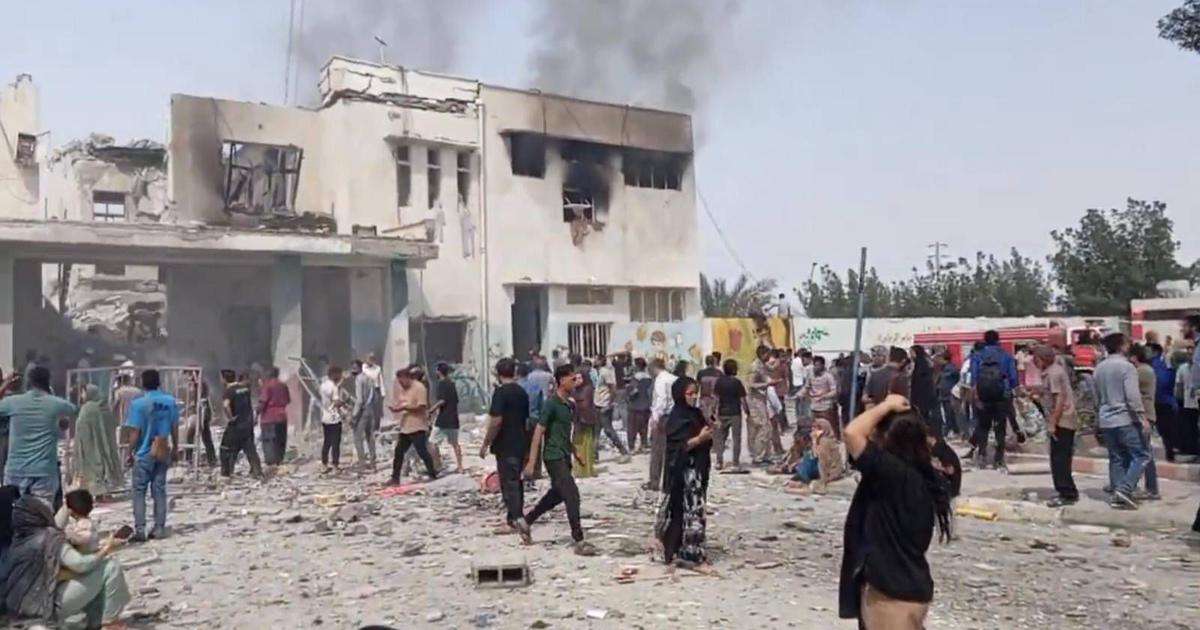
At least 53 persons were killed after the Israeli strike hit an elementary girls’ school in Minab, a city in southern Iran’s Hormozgan province, on Saturday, Al Jazeera reported quoting state media.
Workers were clearing the wreckage from the site, where 63 others were also reportedly injured.
This was part of a joint military attack by Israel and the United States against Iran.
On Saturday morning, the Israeli military said it had attacked Iran as a “preventive strike”.
An hour later, United States President Donald Trump said that the US military was also involved in the attack.
The Iranian government stated later in the day that “malicious attacks” by the US and Israel took place during “the course of negotiations, reflecting the enemy’s mistaken belief that the steadfast nation of Iran would surrender to their ignoble demands through such cowardly actions”.
“The Armed Forces of the Islamic Republic of Iran have commenced a decisive response to these hostile acts and will continuously keep the honourable people informed,” it added.
The Israeli Defense Forces said that it had identified missiles being launched from Iran toward Israel and that defensive systems were “operating to intercept the threat”.
Iran had also reportedly launched strikes on US military installations in Bahrain, Kuwait and Qatar, according to AP.
Sharing a photo of the school that was hit in the Israeli strike, Iranian Foreign Minister Abbas Araghchi said that “these crimes will not go unanswered”.
The attacks came amid tensions between the three countries over Tehran’s nuclear programme. Washington acts as a guarantor of Israel’s security.
‘Major combat operations’
In a video message, Trump said that the US had begun “major combat operations” in Iran. The objective was to “defend the American people by eliminating threats from the Iranian regime”, he said.
The activities of the Iranian government “directly endanger” the US, its soldiers, overseas military bases and allies, Trump stated.
Trump said that the US will destroy Iranian missiles, “raze their missile industry to the ground” and “annihilate their Navy”.
The US will ensure that Iran does not obtain a nuclear weapon, Trump said.
He urged the members of Iran’s Islamic Revolutionary Guard Corps, the armed forces and the police to lay down their weapons to be treated with “total immunity”.
Trump also asked the people of Iran to “stay sheltered” and urged them to “take over your government”, saying that the US was backing them.
Israel has been claiming that Iran is “closer than ever” to obtaining a nuclear weapon, which could alter the regional security balance.
Iran has long maintained that its nuclear programme is for civilian purposes.
However, amid fears of a potential attack, with a heavy US military deployment off its coast in recent months, Tehran had been forced to reopen negotiations with Washington about its nuclear programme.
Shortly after the attack on Tehran, Israeli Prime Minister Benjamin Netanyahu said the joint operation by Tel Aviv and Washington would “create the conditions for the brave Iranian people to take their fate into their own hands”.
“The time has come for all parts of the Iranian people – the Persians, Kurds, Azeris, Baloch, and Ahwazis – to cast off the yoke of tyranny and bring freedom and peace-loving values to Iran,” Netanyahu said in a social media post.
He added: “I call on you, citizens of Israel, to heed the instructions of the Home Front Command. In the coming days, during Operation ‘Lion’s Roar’, we will all be called upon to show patience and strength of spirit.”
The Israeli Defense Forces said on Saturday that sirens were sounded throughout Israel as a “proactive alert to prepare the public” for a possible Iranian retaliation.
The airspace of Israel and Iran was closed for commercial flights.
The Iranian government also told its citizens that the operations by the US and Israel in Tehran and other cities were “expected to continue”.
“Therefore, while maintaining calm, citizens are advised – where possible – to travel to other areas or cities accessible to them in order to remain safe from the aggressions of these two regimes,” it stated.
It added that schools and universities will remain closed until further notice, while banks will continue to operate. “Government offices will operate at 50% capacity for the time being,” it said.
Indians asked to exercise caution
The Indian embassy in Tehran asked Indian citizens to “exercise utmost caution, avoid unnecessary movements and remain indoors”.
It asked citizens to wait for further guidance from the embassy.
The Indian embassy in Tel Aviv urged Indian citizens in Israel to “exercise utmost caution and remain vigilant at all times”.
The diplomatic mission urged Indians to “strictly adhere” to the safety instructions issued by the Israeli authorities and remain in proximity to shelters.
Indians were also advised to avoid non-essential travel within Israel.
According to reports, Air India has stopped flights to West Asia amid heightened tensions.
Tehran, #Iran pic.twitter.com/C1qZ1n933E
— Shin (@hey_itsmyturn) February 28, 2026
The tensions
The US has repeatedly demanded that Iran give up its nuclear programme, threatening that Tehran must meet its terms or face consequences.
Iran’s Supreme Leader Ali Khamenei had warned on February 1 that an attack by the US would spark a “regional war”.
Israel had been preparing for a possible conflict with Iran for several weeks.
In June, Tehran and Tel Aviv agreed to a ceasefire after 12 days of hostilities.
At the time, the Israeli military had struck what it claimed were nuclear targets, and other sites, in Iran with the aim of stalling Tehran’s nuclear programme. Iran retaliated with missile attacks on Israel.
Both countries had later accused each other of violating the ceasefire.
The two countries had been nudged by the US to accept the ceasefire after Washington on June 22 joined Israel’s war against Iran. The US military had carried out what Trump had described as a “very successful attack” on Iranian nuclear sites in Fordo, Natanz and Esfahan.
While Trump had claimed at the time that Iran’s nuclear facilities had been “completely obliterated” in the attacks, Washington’s preliminary intelligence assessment had said that the strikes only set it back by a few months, and did not destroy its nuclear programme.
Read more on the June 2025 Israel-Iran conflict here.
Trump’s fresh focus on Iran came after the US’ military operation in Venezuela. On January 3, the US military abducted Venezuelan President Nicolás Maduro and his wife, Cilia Flores, for alleged drug trafficking.
Almost simultaneously, on December 28, protests erupted in Iran initially focused on discontent about rising inflation. However, they later expanded as demonstrations in more than 100 towns demanded an end to clerical rule.
More than 5,000 persons were killed in the crackdown on the protests, according to international rights groups.
Following this, Trump had announced that the US military was moving warships towards Iran “just in case” he wants to take action, saying that he was “watching them very closely”.
Also read: How the Israel-Iran conflict could impact India
