








Top updates: Oil prices above $100 a barrel, Bahrain energy firm Bapco declares force majeure
More than 1,250 persons have been killed and 12,000 injured in Iran since the conflict started, says Tehran.
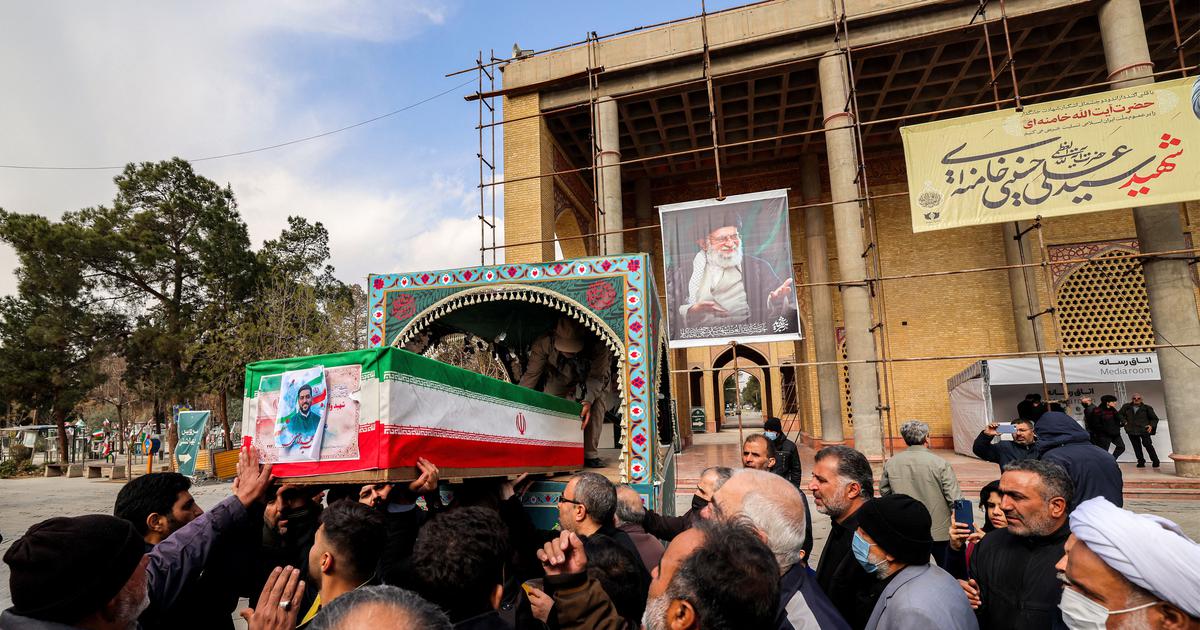
A fire erupted at an oil complex in Bahrain’s Al Ma’ameer on Monday after it was allegedly struck in an Iranian attack amid the conflict in West Asia, the country’s state-run Bahrain News Agency reported.
The fire was contained. While there were no casualties, the incident led to material damage, the agency reported.
The conflict in West Asia began on February 28 after Israel and the United States launched a joint operation to “degrade the capabilities” of the Iranian government.
Tehran retaliated by striking Israel and US military bases in the region, and targeting major cities in other Gulf countries and some ships.
Here are more top updates from the conflict in West Asia:
- Global oil prices crossed the $100 per barrel-mark on Monday, the highest since July 2022. The oil prices have risen by about 20% since the conflict broke out as the escalating tensions raised fears of disruption to shipments through the Strait of Hormuz. The narrow waterbody connects the Gulf to the Arabian Sea. About 20% of global petroleum liquids consumption traverses the maritime chokepoint.
- More than 1,250 persons have been killed and 12,000 injured in Iran since the conflict started, the country's Deputy Health Minister Ali Jafarian told Al Jazeera on Monday.
- Iran’s foreign ministry spokesperson Esmaeil Baghaei on Monday alleged that it was “quite obvious” that the US intends to partition the country and “take illegal possession of our oil riches”, Al Jazeera reported. “Their objective is to violate our sovereignty, defeat our people and undermine our humanity,” Baghaei said.
- The Turkish defence ministry on Monday said that the North Atlantic Treaty Organization’s air defence system in the eastern Mediterranean region intercepted an Iranian ballistic missile after it entered Turkish airspace. There were no casualties, it added. Turkey is among 32 North American and European countries, which form the military alliance, who promise to protect each other if any one of them is attacked.
- On Monday, Bapco Energies, the kingdom’s state-owned energy company, served a force majeure notice on the operations of the group, Bahrain News Agency reported. The company said that its operations had been hampered by the conflict and a recent attack on its refinery complex. The company was quoted as saying that the supply in the local market would not be impacted. Force majeure is a contract provision that exempts companies from fulfilling their obligations because of unforeseen and uncontrollable events such as wars and disasters.
- Bahrain’s health ministry said on Monday that an Iranian drone attack, which targeted the Gulf nation’s island of Sitra overnight, wounded 32 civilians, AFP reported. All of those injured were Bahraini citizens and there were four “serious cases”, including children, stated the ministry.
- The US State Department on Monday ordered non-essential government staff and their family members to leave Saudi Arabia citing security risks. The announcement came amid increasing Iranian attacks on Saudi territory.
- Iran’s Assembly of Experts appointed Mojtaba Khamenei to replace his father, Ayatollah Ali Khamenei, as the country’s supreme leader, state media reported on Sunday. Ali Khamenei was killed on March 1.
- Following the announcement of the appointment of a new supreme leader, the Israeli military said on Monday that it had launched a new wave of attacks targeting “regime infrastructure” in central Iran, AFP reported. On March 4, Israeli Defence Minister Israel Katz said that whoever is chosen to succeed Ali Khamenei as Iran’s supreme leader will be “an unequivocal target for elimination”.
- The killing of Ali Khamenei further escalated an already volatile situation in the region. He was a significant figure among Shia Muslims globally, and had controlled all branches of the Iranian government and the armed forces since 1989.
- The Lebanese militant group Hezbollah said on Monday that it was engaging Israeli forces that landed in eastern Lebanon by helicopter from the Syrian side of the border, AFP reported. Hezbollah stated that about 15 Israeli helicopters “infiltrated” the country. Lebanon’s state-run National News Agency had earlier reported “fierce clashes...towards the outskirts of the town of Nabi Sheet to repel Israeli forces” in the area.
- Lebanon was drawn into the conflict on March 2 after Hezbollah fired rockets and drones into Israel in response to the killing of Ali Khamenei. The authorities in Lebanon have said that since then, at least 394 persons have been killed, including 83 children, Al Jazeera reported. Around half a million persons have been displaced by Israeli strikes on southern towns.
- As Iran expanded its retaliatory strikes across the Gulf, several explosions were heard in the Qatari capital Doha on Monday, AFP reported. Qatar’s defence ministry said its forces intercepted a missile attack.
- Stock markets across the Asia-Pacific region fell sharply in early trading. Japan’s Nikkei closed 5.2% lower, South Korea’s Kospi fell 5.9% and Australia’s ASX 200 2.8%.
The tensions
The joint attacks by Israel and the US on Iran came amid tensions between the three countries over Tehran’s nuclear programme. Washington acts as a guarantor of Israel’s security. Israel has been claiming that Iran is close to obtaining a nuclear weapon, which could alter the regional security balance.
Tehran has long maintained that its nuclear programme is for civilian purposes.
The US has repeatedly demanded that Iran give up its nuclear programme, threatening that Tehran must meet its terms or face consequences.
In June, Tehran and Tel Aviv agreed to a ceasefire after 12 days of hostilities.
At the time, the Israeli military had struck what it claimed were nuclear targets, and other sites, in Iran with the aim of stalling Tehran’s nuclear programme. Iran retaliated with missile attacks on Israel.
Both countries had later accused each other of violating the ceasefire.
The two countries had been nudged by the US to accept the ceasefire after Washington on June 22 joined Israel’s war against Iran. The US military had carried out what Trump had described as a “very successful attack” on Iranian nuclear sites in Fordo, Natanz and Esfahan.
While Trump had claimed at the time that Iran’s nuclear facilities had been “completely obliterated” in the attacks, Washington’s preliminary intelligence assessment had said that the strikes only set it back by a few months, and did not destroy its nuclear programme.
Trump’s fresh focus on Iran came after the US’ military operation in Venezuela. On January 3, the US military abducted Venezuelan President Nicolás Maduro and his wife, Cilia Flores, for alleged drug trafficking.
Almost simultaneously, on December 28, protests erupted in Iran initially focused on discontent about rising inflation. However, they later expanded as demonstrations in more than 100 towns demanded an end to clerical rule.
Following this, Trump had announced that the US military was moving warships towards Iran “just in case” he wants to take action, saying that he was “watching them very closely”.
