











Top updates: Indian hurt in Dubai drone incident, US denies escorting oil tanker through Hormuz
Iran’s Revolutionary Guards said that movement of the ‘US fleet and its allies’ through the strait ‘will be stopped by our missiles and drones’.
An Indian citizen was among four persons injured after “two drones fell” near the Dubai airport on Wednesday, the city authorities said.
This came amid the conflict in West Asia that began on February 28 when the United States and Israel launched an attack on the Iranian government. Tehran has retaliated by launching missiles and drones at targets in the Gulf, including US bases and major cities in the region.
Here are more top updates from the conflict in West Asia:
- An Indian citizen suffered “moderate injuries” while two Ghanaian and one Bangladeshi national sustained minor injuries on Wednesday when two drones “fell” in the vicinity of the Dubai International Airport, the media office of the city government said on social media. However, it added that air traffic was operating normally.
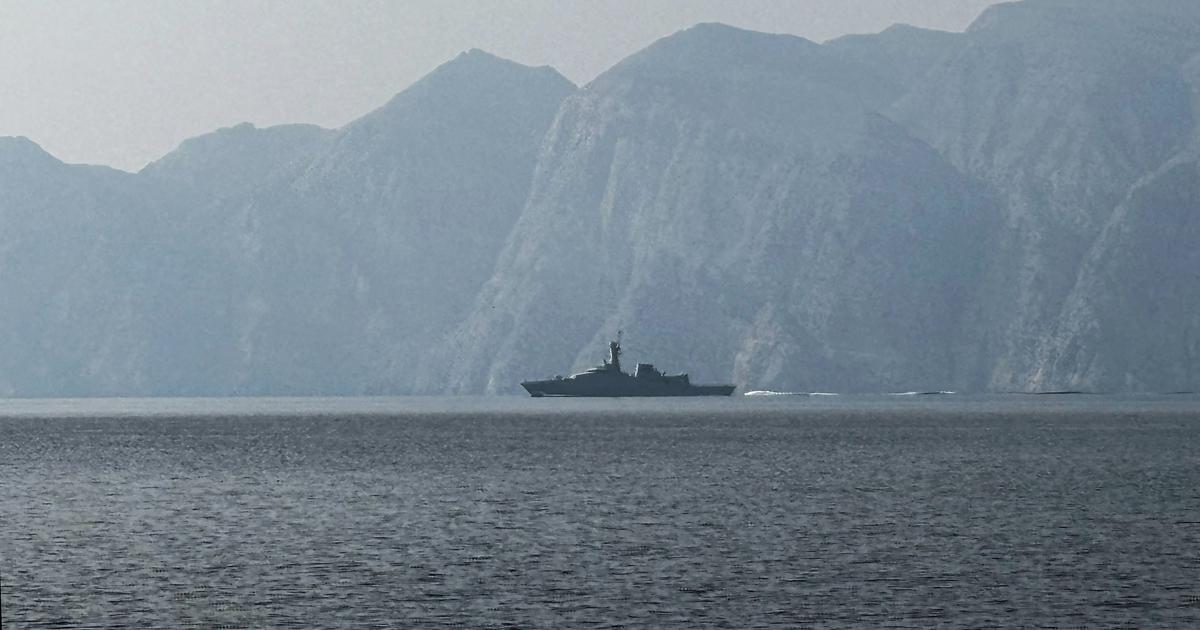
- The US said that it had struck multiple Iranian naval vessels, including 16 minelaying vessels operating near the Strait of Hormuz. The narrow waterbody connects the Gulf to the Arabian Sea. About 20% of the global petroleum supply passes through the maritime chokepoint.
U.S. forces eliminated multiple Iranian naval vessels, March 10, including 16 minelayers near the Strait of Hormuz. pic.twitter.com/371unKYiJs
— U.S. Central Command (@CENTCOM) March 10, 2026
- On Tuesday, the White House said that the United States military has not yet escorted any commercial ships through the Strait of Hormuz, Reuters reported. White House Press Secretary Karoline Leavitt made the statement hours after US Secretary of Energy Chris Wright claimed in a social media post that the country’s Navy had successfully escorted an oil tanker through the waterway. He deleted the post later. The clarification came amid the West Asia conflict that has disrupted shipments through the Strait of Hormuz.
- On Tuesday, the US Secretary of Energy claimed in a now-deleted social post that the country’s Navy had escorted an oil tanker through the Strait of Hormuz “to ensure oil remains flowing to global markets”, On March 3, US President Donald Trump said that Washington would provide protection for oil tankers passing through the Strait of Hormuz.
- Commenting on Wright’s remarks, a spokesperson for Iran’s Revolutionary Guards denied that any oil tanker had been escorted through the Strait of Hormuz, Reuters reported. “Any movement of the US fleet and its allies will be stopped by our missiles and drones,” Ali Mohammad Naini said in remarks carried by Iranian state media.
- Iran on Tuesday said that it is not seeking a ceasefire in the war against Israel and the US. “Certainly we aren’t seeking a ceasefire,” Mohammad Bagher Ghalibaf, a former top commander in Iran’s Revolutionary Guards, said in a social media post. “We believe the aggressor must be punished and taught a lesson that will deter them from attacking Iran again.” He added: “The Zionist regime has consistently perpetuated a vicious cycle of ‘war, negotiations, ceasefire, then war again’ throughout its disgusting history. We will break this cycle.”
1/ Certainly we aren't seeking a ceasefire. We believe the aggressor must be punished and taught a lesson that will deter them from attacking Iran again.
— محمدباقر قالیباف | MB Ghalibaf (@mb_ghalibaf) March 10, 2026
- The largest oil refinery in the United Arab Emirates, operated by Abu Dhabi National Oil Company in Ruwais, has suspended operations following a drone strike that sparked a fire in the industrial area, Bloomberg reported on Tuesday. Several energy facilities in the Gulf have been hit in retaliatory strikes by Tehran following the joint military operation by Israel and the US on February 28.
- A container ship was hit off the coast of the United Arab Emirates on Wednesday by an unidentified projectile, AFP quoted the United Kingdom Maritime Trade Operations as saying. The British maritime security agency, however, said that there were no reports of any environmental impact, and that the crew members were safe and well. The attack took place about 50 nautical miles northwest of Dubai, the security agency was quoted as saying.
- Saudi Arabia’s energy ministry said some operations at its Ras Tanura refinery on the Gulf coast were halted on Monday after an attack caused a fire at the complex, AFP reported. Iranian strikes have also forced state-owned QatarEnergy, one of the world’s largest producers of liquefied natural gas, to halt production last week and declare force majeure, the news agency reported.
- Energy producers in Kuwait issued similar declarations, warning that events beyond their control could prevent them from meeting export targets.
- Air India and its low-cost subsidiary Air India Express have said that they will together operate 58 scheduled and non-scheduled flights to and from West Asia on Wednesday. The two carriers will continue to operate their respective scheduled services to and from Jeddah and Muscat on March 11, Air India stated on Tuesday.
- Qatar Airways on Wednesday said that it will operate 29 flights to and from Doha on Thursday after receiving temporary government authorisation. The flights include departures to London, New York and Madrid.
- Around 1,000 Indian nationals stranded in Qatar were flown to New Delhi, Mumbai and Kochi on Tuesday, The Indian Embassy in Doha said in a social media post. The embassy coordinated with Qatar Airways to facilitate the travel of stranded Indian nations and emergency cases, it added.
Qatar Airways Operates Limited Flight Schedule to and from Doha
— Qatar Airways (@qatarairways) March 10, 2026
With Qatar Airways flights still temporarily suspended due to the closure of Qatari airspace, we are doing everything possible to support affected passengers and help reunite them with family and loved ones. We… pic.twitter.com/a8zuKMzJw0
The tensions
The conflict in West Asia began on February 28 after Israel and the United States launched a joint operation to “degrade the capabilities” of the Iranian government.
Tehran retaliated by striking Israel and US military bases in the region, and targeting major cities in other Gulf countries and some ships.
The joint attacks by Israel and the US on Iran came amid tensions between the three countries over Tehran’s nuclear programme. Washington acts as a guarantor of Israel’s security. Israel has been claiming that Iran is close to obtaining a nuclear weapon, which could alter the regional security balance.
Tehran has long maintained that its nuclear programme is for civilian purposes.
The US has repeatedly demanded that Iran give up its nuclear programme, threatening that Tehran must meet its terms or face consequences.
In June, Tehran and Tel Aviv agreed to a ceasefire after 12 days of hostilities.
At the time, the Israeli military had struck what it claimed were nuclear targets, and other sites, in Iran with the aim of stalling Tehran’s nuclear programme. Iran retaliated with missile attacks on Israel.
Both countries had later accused each other of violating the ceasefire.
The two countries had been nudged by the US to accept the ceasefire after Washington on June 22 joined Israel’s war against Iran. The US military had carried out what Trump had described as a “very successful attack” on Iranian nuclear sites in Fordo, Natanz and Esfahan.
While Trump had claimed at the time that Iran’s nuclear facilities had been “completely obliterated” in the attacks, Washington’s preliminary intelligence assessment had said that the strikes only set it back by a few months, and did not destroy its nuclear programme.
Trump’s fresh focus on Iran came after the US’ military operation in Venezuela. On January 3, the US military abducted Venezuelan President Nicolás Maduro and his wife, Cilia Flores, for alleged drug trafficking.
Almost simultaneously, on December 28, protests erupted in Iran initially focused on discontent about rising inflation. However, they later expanded as demonstrations in more than 100 towns demanded an end to clerical rule.
Following this, Trump had announced that the US military was moving warships towards Iran “just in case” he wants to take action, saying that he was “watching them very closely”.
Also read: In US-Israel war on Iran, India picks a side but could wind up as a big loser
