






SIR conducted smoothly in all states except Bengal: Supreme Court
The bench also took note of the pressure on judicial officers tasked with adjudicating voter claims in the state.
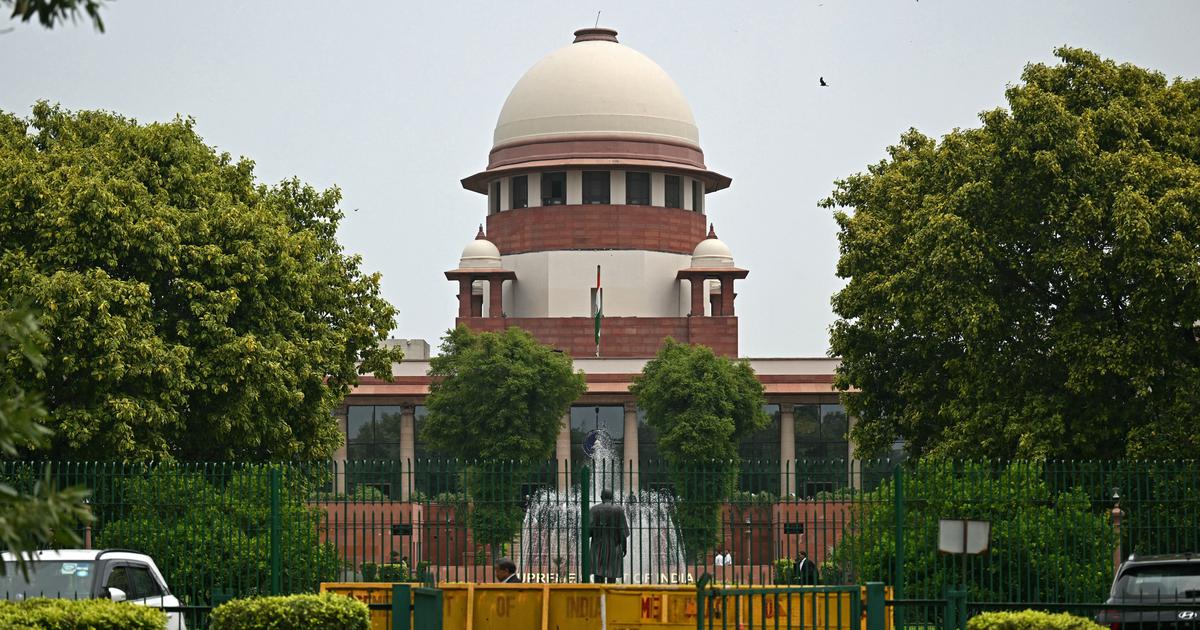
The Supreme Court on Tuesday verbally observed that the special intensive revision of the electoral rolls had been conducted smoothly in all states except in West Bengal, Live Law reported.
A bench of Chief Justice Surya Kant and Justice Joymalya Bagchi was hearing a batch of petitions against the special intensive revision in the state. During the hearing, the chief justice said that he had read an article about the exercise across the country.
“Apart from West Bengal, everywhere it happened smoothly,” Bar and Bench quoted Kant as saying.
In response, advocate Kalyan Banerjee, representing the West Bengal government, said that certain developments in the state were unusual. He said that the Election Commission had not published a “logical discrepancy” list or issued administrative notifications at unusual hours during the process in other states.
“Logical discrepancies” flagged by the poll panel during the voter list revision included mismatches in parents’ names, low age gap with parents and the number of children of the parents being above six.
However, the chief justice noted that there had been equally complicated problems in other states, but the revision “by and large” went on smoothly there, Live Law reported.
The bench also noted the pressure on judicial officers tasked with adjudicating claims in the state. “Do you realise we have put so much pressure on the judicial officers to complete 60 lakh cases within 45 days?” the legal news portal quoted Bagchi as saying.
In response, Banerjee said that the pace of the exercise was “inhuman”, reiterating that such an exercise could realistically take two to three years.
The bench also acknowledged that the exercise had thrown up “unique challenges” in West Bengal.
West Bengal is among the 12 states and Union Territories where the special intensive revision of electoral roll was undertaken.
On February 28, the Election Commission published the final electoral roll for West Bengal, indicating the exclusion of more than 61 lakh voters. However, the process continued with about 60 lakh “doubtful and pending” cases remaining “under adjudication” based on their objections to their exclusions from the draft rolls published in December.
A batch of names approved by judicial officers were added to the rolls through the first supplementary list published on Monday. Of the 60 lakh pending cases, 29 lakh had been adjudicated. However, the poll panel did not specify how many voters had been dropped and or included in the list.
On February 20, the Supreme Court ordered that judicial officers of the rank of district judge or additional district judge be appointed to help complete the revision exercise in the state amid a tussle between the Trinamool Congress government and the Election Commission.
Four days later, it allowed judges from Odisha and Jharkhand to also be deployed to decide on the claims and objections raised during the process.
At the hearing on Tuesday, Banerjee told the bench that the entire supplementary list had not yet been made available to stakeholders and requested that soft copies be provided to all political parties, Live Law reported.
Advocate DS Naidu, representing the Election Commission, told the Supreme Court that the poll panel was willing to publish supplementary lists on a daily basis and had placed a proposal before the chief justice of the Calcutta High Court.
Advocate Shyam Divan, appearing for Chief Minister Mamata Banerjee, raised concerns about the impact of pending voter claims on the Assembly elections, Bar and Bench reported.
The elections will be held in two phases on April 23 and April 29. The votes will be counted on May 4.
Divan told the bench that about 14 candidates for the polls were on the adjudication list. This could affect their ability to file nominations before the deadline, he added.
The deadline for filing nominations for the first phase is April 6 and April 9 for the second.
The advocate added that the electoral roll in the state must be frozen seven days before polling.
In response, the chief justice said that these concerns appeared to be administrative in nature and should be taken up before the High Court.
The Supreme Court is tentatively scheduled to take up the matter again on April 1, Live Law reported.
