




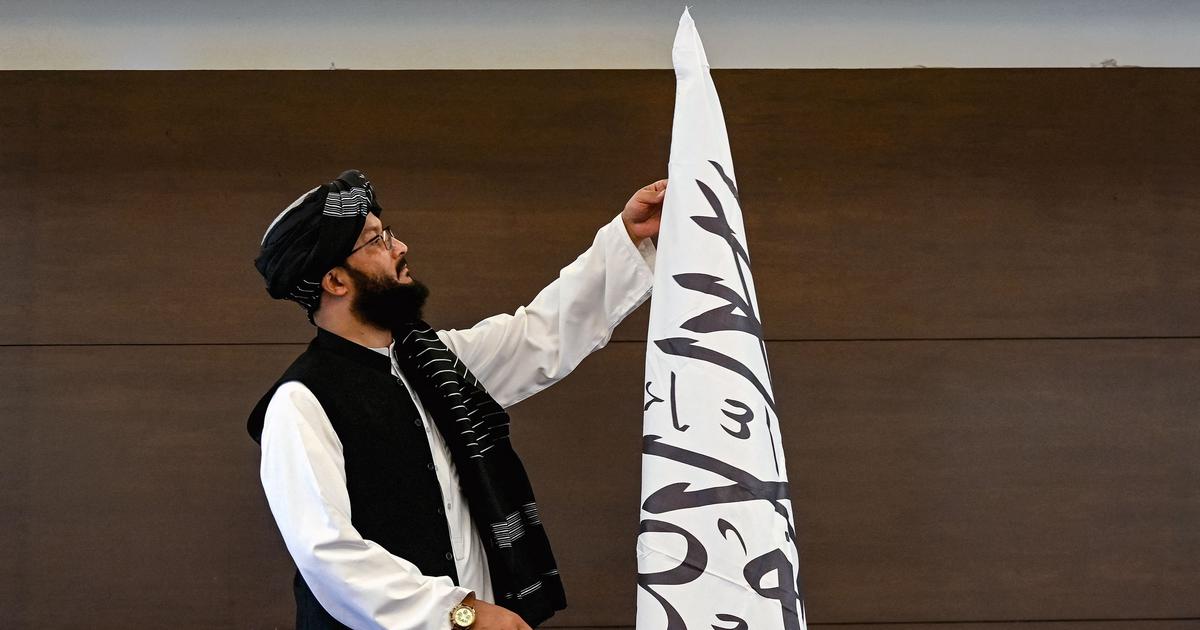
Thank you, Moska, for an insightful article contrasting the Taliban with Tagore’s ‘Kabuliwala’ (“When a Taliban minister invokes Tagore’s ‘Kabuliwala’: An Afghan imagines the poet’s quiet response”). It was thought-provoking and truthful to the core. The contrast between the two Afghans can not be greater. – Malcolm R Printer
***
This is a thoughtful and timely essay. The travesty of the Talibani presence on Indian soil could perhaps be somewhat justified in the context of the quicksand of realpolitik and the geopolitics of the moment. We are trying to survive and operate among forces much larger than just the Afghan-India equation. But nothing justifies the acquiescence to the terms of the press conference. The exclusion of women was unacceptable. Male journalists should have boycotted the conference. As for the Taliban minister evoking Tagore’s timeless classic, the writer has said all that needs to be said in prose and poetry. What more can one add? Thank you for publishing this. – Radha Biswas
***
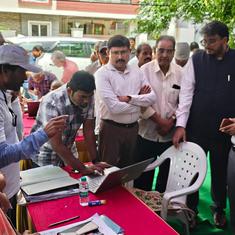
Reports said that women journalists were conspicuously absent at a press conference addressed by the Taliban administration’s Foreign Minister Amir Khan Muttaqi in New Delhi, ostensibly because the visiting Taliban contingent refused to permit women journalists to cover their press meet (“Women journalists complain they were barred from Afghan minister’s Delhi press conference”). I am surprised as to why India’s male journalists did not boycott the press meet. The fault lies on them and not the Afghans. They have insulted all Indian women. – Sushil Prasad
No easy choice
Any day, one has to choose between the greater evil – an American product – and the lesser evil – the Indian one (“How the Palestine conflict is powering Ambani’s cola dreams in India”). Politics and economics gel well in the case of Campa Cola. Indians are good at selling “karma” cola to the West. Sometimes, the contextual compulsions decide the market. – Yalamudik
Muslims are not a minority
This is an unnecessary fear because Muslims are not a minority in India (“For India’s Muslims, the Hindutva applause for Israel’s war on Gaza is especially chilling”). They are a part of a large majority. – Sudhir Goel
More Kidderpore stories
The name “Khizr”, apart from its Quranic relevance, is the epithet of Hazrat Syed Baba whose mausoleum is near the dockyard of the port, after the Swing Bridge, at 5A Garden Reach Road, Kolkata (“The wandering al-Khidr or English mispronunciation? Stories behind the name of a Kolkata locality”). The place “Khizirpur” then, may have been originally named after Hazrat Syed Baba, a Sufi saint and mystic whose tomb is maintained by his descendants from his nephew’s side. The tomb has been present in the area for around 700 years and the fishermen and sailors paid homage to Syed Baba – as he is now referred to – before going on their voyages.
When the British were building the port on the river before 1890, they tried removing the structure but the workers refused after seeing the broken walls bleed. The family then reached an understanding with the officers, and a boundary to demarcate the land as well as documents was made. During World War II, the Port was bombed and two of those bombs, now preserved in Fort Williams Museum, fell on the grounds of the dargah but did not burst and the port was saved. – Iqbal Hussain
Tanzania’s avocados
Well done on this great research which I relate to 100% (“Tanzania’s avocado exports are booming but much of the fruit goes to waste”). I am a farmer in Mufindi district in Tanzania’s Iringa and supply my harvest to one park house. The challenges and proposed solutions provided at the end are valuable insights for the efforts of our country in supporting this sub-sector. We truly appreciate your valuable academic but practical contribution. Asante sana. We will use this as a guide for efficiency improvement. – Ephraim
Detailed article on art festival
This was a detailed article, elaborating on concepts and content (“Sarngadeva Samaroh: A model for curating performing arts festivals?”). Though a tad long, it brings out the methodologies of curating and what it entails. What is possible in moffusil India may not be so easy in metro India. This article evokes the atmosphere and explains the eco-system of this unique gathering where, over community lunch and dinners, performances, discussions and the four aspects – shastra, prayog, parampara and anusandhan – are focused on at one wholesome place and event. Kudos to Parwati Dutta. – Ashish Mohan Khokar
